
Reviewed · HIKING & TREKKING
Sapa: Ta Phin Village Trek & Red Dao Herbal Bath
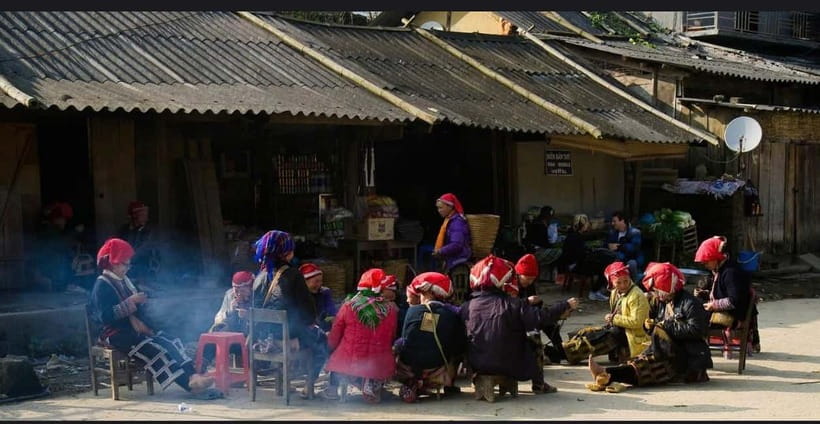
Ta Phin is the reward at the end of this Sapa day walk. After passing rice terraces, pine-covered hills, and the villages of Suoi Ho and Ma Tra, you settle into a Red Dao herbal bath in a wooden tub. It is a fine way to finish a day on your feet.
I like two things here: the route focuses on ordinary village life rather than a packed attraction, and guides such as Su and Gao add useful context about farming, food, family life, and local customs. The main consideration is the distance. At roughly 12 to 14 kilometers, this is easy to moderate, but you still need comfortable shoes and a reasonable level of fitness.
In This Review
- Key points at a glance
- Why this Sapa trek feels different
- 9:00 at Sapa Stone Church
- Suoi Ho and the Black H’mong way of life
- Ma Tra, school stops, and a slower pace
- Lunch in a village setting
- Ta Phin and the Red Dao tradition
- The Red Dao herbal bath at 2:00
- The return to Sapa at 3:30
- What the $26 price gets you
- Who should book this walk
- Should you book the Ta Phin trek?
- FAQ
- How long is the Sapa village trek?
- Which villages does the route visit?
- Is the trek difficult?
- Is lunch included?
- What is included in the Red Dao herbal bath?
- Who can guide the tour?
Key points at a glance
- A quieter route from Sapa: Walk through Suoi Ho, Ma Tra, and Ta Phin rather than spending the day around the busiest viewpoints.
- Two distinct cultures: Learn about the Black H’mong in Suoi Ho and Ma Tra, then the Red Dao traditions of Ta Phin.
- A guide-led walk with real context: Su is praised for clear English, a little French, and his easy way of explaining village life. Gao also leads the experience.
- Lunch with a view: Eat a picnic or a meal at a local homestay, with traditional Vietnamese dishes and vegetarian choices available at the lunch stop.
- The bath is part of the experience: Soak in hot water scented with medicinal herbs after the walk, not as a separate spa visit.
- Good value at $26: The price covers the guide, food, bath, and the ride back to Sapa.
Why this Sapa trek feels different
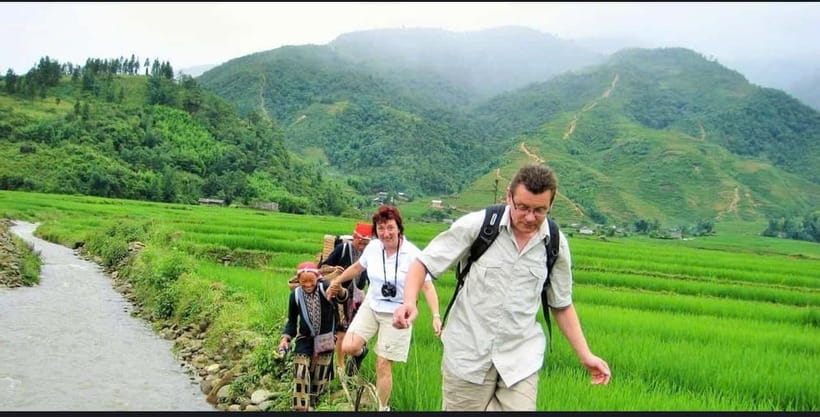
Many Sapa outings are built around one famous village or a quick viewpoint stop. This one gives you a full day on foot, linking three communities and ending with a Red Dao bathing ritual. You get more time to notice how people farm, keep animals, make clothing, and organize daily life.
The route is also small in scale. Groups are limited to 10 people, so you can ask questions without shouting across a crowd. That matters here. The best part of the walk is not simply seeing a rice terrace. It is understanding what the terrace means to the family working it.
Your guide is central to the day. Su is the name most often associated with this experience, and he speaks English well, with some French as well. He explains food, culture, family life, crops, and village customs in a relaxed way. Gao also guides the route. The difference between a pleasant walk and a useful cultural day often comes down to this kind of local conversation.
You should keep your expectations sensible. This is not a wilderness hike, and it is not a formal museum visit. You will walk through lived-in communities, where scenery and daily work sit side by side. The route can feel less polished than a standard sightseeing stop, which is part of its appeal and part of what makes sturdy footwear worthwhile.
More Hiking Tours in Sapa
- Sa Pa: Muong Hoa Valley Trek and Local Ethnic Villages
★ 4.6 · 864 reviews - Sapa: Eco Adventure Terrace Fields and Local Villages Trek
★ 4.9 · 636 reviews - From Sapa: 1-Day Guided Trek to Lao Chai & Ta Van with Lunch
★ 4.9 · 416 reviews
9:00 at Sapa Stone Church
The day begins at Nhà Thờ Đá Sapa, usually called Sapa Main Church, at 9:00. This central meeting point is easy to recognize, and you meet your local guide there before setting off on foot.
The first section is a short walk toward Suoi Ho Village. It gives you a gentle start instead of dropping you straight into the longest part of the route. Bring water in a small daypack, since the total walk is substantial even though the grade is described as easy to moderate.
Sapa weather can change quickly, so dress for the conditions on the day. Comfortable shoes matter more than stylish ones. Insect repellent is also on the useful packing list, especially when you are walking through fields and wooded areas.
Suoi Ho and the Black H’mong way of life
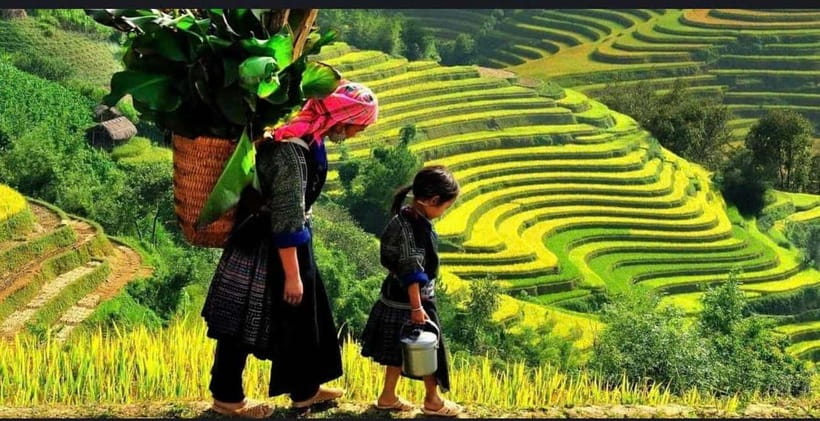
Suoi Ho is a peaceful village associated with the Black H’mong people. This is where the experience begins to explain the human side of the countryside. Your guide can point out traditional farming, animal husbandry, and the work that supports village households.
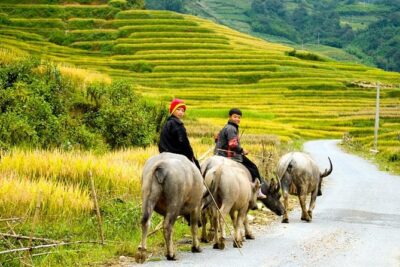
The setting includes rice terraces and lush mountain scenery, but try not to treat the views as the entire attraction. The value of this stop is learning how the land is used. Crops are cultivated and harvested according to local rhythms, and animals form part of household life.
This is a good place to ask direct questions. You can ask what crops are grown, how they are harvested, and how village families use the surrounding land. The guide’s explanations make the walk more than a pleasant route through the hills.
The word peaceful is accurate, but do not read it as empty. You are walking through a working village. People may be tending fields, moving around their homes, or going about ordinary tasks. The experience asks you to observe respectfully rather than treat every person as a photo subject.
Ma Tra, school stops, and a slower pace
From Suoi Ho, you continue to Ma Tra Village. The route passes through more rice terraces and rural scenery, with pine forests adding a different feel to the walk. The combination keeps the day from becoming one long stretch of identical views.
A possible stop is a local school, or you may spend time talking with villagers about customs and crafts. The exact shape of this part can vary, but the purpose is clear: to connect the scenery with the people who live here.
I like this middle section because it leaves room for conversation. A guide who explains local crafts or family life can answer the small questions that make a place memorable. You may learn more from asking about an everyday object or meal than from simply collecting another photo.
The walk is not presented as strenuous, but the distance adds up. One person described it as very easy and picturesque, while another noted that you still need a good physical condition. Both points are fair. There are no claims that this is a demanding mountain climb, but 12 to 14 kilometers is still a full walking day.
More Sa Pa trips worth a second look
- Sapa 1 Day Long Trek: Trek to Hau Thao and Sa Seng Villages
★ 4.6 · 344 reviews - EXPLORE SAPA: 2D1N TREKKING & HMONG CULTURE WITH DINH
★ 4.9 · 191 reviews - Sa Pa: 6-Hours Muong Hoa Valley Trek with Local Ethnic guide
★ 4.5 · 178 reviews - Sa Pa: 2-Day Trekking Trip with Ethnic Minority Homestay
★ 4.7 · 145 reviews
Lunch in a village setting
Lunch comes around 11:30, either as a picnic or at a local homestay. The meal includes traditional dishes, and the food may be shared in a simple setting with a view. The lunch stop is an important pause because it breaks the walk before the final stretch to Ta Phin.
The meal is not uniformly a fine-dining event, and you should not book this day for elaborate cuisine. One account describes the food as good rather than exceptional, while other meals included tasty dishes and even a fresh sturgeon hotpot. Vegetarian choices are available at the local restaurant used by at least one group.
That range tells you what to expect: a local meal, not a fixed restaurant menu with a guaranteed signature dish. The setting and the chance to eat traditional Vietnamese food are the main draw. If you have dietary needs, tell the operator in advance, since the supplied information confirms vegetarian options at the lunch stop but does not spell out every dietary arrangement.
This is also a good time to ask your guide for food advice. Su has suggested a family-owned restaurant and a local dish to people after the tour. That sort of recommendation can help you continue eating well in Sapa without relying only on the most obvious tourist restaurants.
Ta Phin and the Red Dao tradition
After lunch, the walk continues to Ta Phin Village, home to the Red Dao ethnic group. This is the cultural high point of the day, especially if you are interested in embroidery and herbal medicine.
Ta Phin is known here for its embroidery techniques and traditional plant-based remedies. Your guide explains the role these practices play in local culture, giving the final village visit more depth than a quick craft-shopping stop.
You may see colorful clothing and handmade details, but the useful part is learning how those details connect with identity and skill. Ask about the time involved in embroidery, the meaning of designs, and how herbal knowledge is passed on. The supplied information does not promise a formal demonstration, so think of this as a guided introduction rather than a workshop.
The village is also where the route feels less like a standard Sapa circuit. You are still visiting a place that receives visitors, but the day is structured around walking through rural communities and speaking with a guide, not rushing between commercial stops.
The Red Dao herbal bath at 2:00
At about 2:00, you trade your walking shoes for a wooden tub filled with hot water and aromatic medicinal herbs. The traditional Red Dao bath is designed as a soothing soak after the trek, and it is believed to ease muscle pain and improve circulation.
This is not just a decorative ending. After several hours and up to 14 kilometers on foot, warm water feels practical. The bath gives your legs time to recover before the car ride back to Sapa.
The experience is simple rather than luxurious. You are there for the traditional preparation and the sense of place, not for a modern spa treatment with a long list of services. The water can be very hot, so take care and tell the staff if you need the temperature adjusted.
The bath has earned its place in the schedule. It is what turns this from a straightforward village trek into a more complete day. You walk, eat, learn, and then rest in a local tradition connected directly to the Red Dao community.
The return to Sapa at 3:30
After the bath, transportation takes you back to Sapa, with the day ending around 3:30. That return ride matters. You do not have to walk the entire route back to the church or arrange your own transport from Ta Phin.
The timing also leaves part of the afternoon free. You could use the remaining day to rest, eat, or explore Sapa at an unhurried pace. Since the walk begins at 9:00 and ends around 3:30, this works well as a single full-day plan rather than an evening activity.
What the $26 price gets you
At $26 per person, this is strong value if you want both a guided walk and a cultural activity. The fee includes a local guide, lunch or a homestay meal, the Red Dao herbal bath, and transportation back to Sapa.
The guide is the biggest part of the value. You could walk through scenery on your own, but you would lose much of the explanation about Black H’mong and Red Dao life. You would also need to arrange transport from Ta Phin and find a suitable bath yourself.
There are some limits. Personal expenses are not included, so carry a little money for anything outside the stated package. The meal is included, but the exact format can be a picnic or a homestay meal, and the dishes may vary.
The small-group limit of 10 is another useful feature at this price. It should make it easier to hear the guide and ask questions, while keeping the day less crowded than a large coach excursion.
Who should book this walk
I would choose this tour if you want Sapa scenery with a strong local-life focus. It suits people who enjoy walking at a steady pace, asking questions, and seeing villages without needing a difficult summit hike.
It is especially good for couples and small groups. The walk is easy to moderate, and the bath gives the day a relaxing finish. It also works for anyone who has already seen Sapa’s central sights and wants a quieter outing into the surrounding communities.
You should think twice if you dislike long walks, uneven rural paths, or simple meals. The experience is not suitable for children under 6 or people with mobility impairments. It is also not the best choice if you want a tightly scripted sightseeing trip with guaranteed stops and a fixed menu.
Wear comfortable shoes, carry water, use insect repellent, and bring weather-appropriate clothing. A daypack keeps your hands free and avoids making the walk harder than it needs to be.
Should you book the Ta Phin trek?
Book it if you want a well-priced cultural day that combines three villages, a local guide, food, transport, and the Red Dao bath. The most praised parts are consistent: Su’s friendly explanations, the quiet rural route, the manageable pace, the mountain views, and the bath at the end.
Skip it if your priority is a short walk or a strenuous mountain challenge. The route is described as easy to moderate, but 12 to 14 kilometers is still enough to leave you ready for that wooden tub.
For most visitors with one spare day in Sapa, I think the combination works very well. You get scenery, conversation, local food, and a genuine reason to slow down. At $26, it offers more substance than a quick photo stop and a better finish than simply turning around at the village.
FAQ
How long is the Sapa village trek?
The full experience lasts about six hours, from 9:00 until around 3:30. The walking distance is approximately 12 to 14 kilometers.
Which villages does the route visit?
The route goes through Suoi Ho, Ma Tra, and Ta Phin. Suoi Ho and Ma Tra are associated with the Black H’mong people, while Ta Phin is home to the Red Dao community.
Is the trek difficult?
The trek is rated easy to moderate and suitable for most fitness levels. However, the 12 to 14 kilometer distance means you should have a reasonable level of physical fitness and wear comfortable shoes.
Is lunch included?
Yes. The experience includes either a picnic lunch or a meal at a local homestay with traditional dishes. Vegetarian choices are available at the local restaurant used for at least one lunch stop.
What is included in the Red Dao herbal bath?
The bath is a traditional soak in a wooden tub filled with aromatic medicinal herbs. It is believed to help relieve muscle pain and improve circulation.
Who can guide the tour?
The live guide service is available in English and Vietnamese. Guides named for this experience include Su, also called A Su, and Gao. The group is limited to 10 participants.
Recently reviewed around Sa Pa
- Sapa3D2N TrekkingAdventures,Valleys,Bambooforest,Waterfall★ 4.8 · 24 reviews
- Sapa: Y Linh Ho – Lao Chai, and Ta Van Trekking Day Tour★ 5.0 · 25 reviews
- Sapa Trekking Bargains With Local Guide★ 4.9 · 91 reviews
- Sapa: Muong Hoa Mountain Views and Villages Trek with Lunch★ 4.3 · 28 reviews
- From Sapa: Guided Full-Day Trekking with Lunch and Drop-Off★ 4.2 · 86 reviews
- Sapa: Private Highlights Day Tour with Lunch★ 4.8 · 61 reviews
- Sapa: Motorbike Tour 1 Day Visit Waterfalls & Local Villages★ 5.0 · 112 reviews
- Sapa: 3-Day Ha Giang Loop Motorbike Tour★ 4.9 · 34 reviews
Hiking & Trekking, compared.

Halong Bay Full Day with Kayaking, Hiking viewpoint, Cave – Deluxe To Luxury
Read our review →
Muong Hoa Valley Trek and Local Ethnic Villages
Read our review →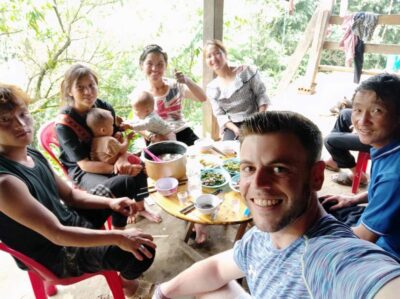
Sapa 3 Days 2 Nights Trekking Tour (1 Night In Ta Van Village, 1 Night In Hotel)
Read our review →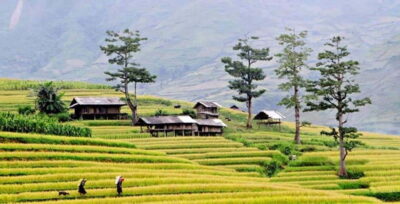
Eco Adventure Terrace Fields and Local Villages Trek
Read our review →
3-Day Trekking Adventure of Sapa from Hanoi – Stay Ta Van Village
Read our review →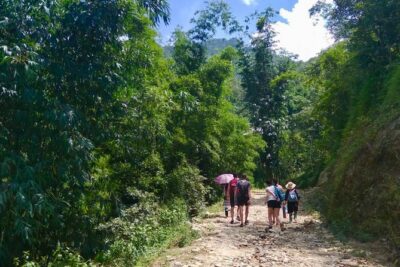
Number one top rated ethical cultural trekking and homestay by ETHOS
Read our review →
2-Day Sa Pa Ethnic Homestay Tour & Trek with Limousine Bus
Read our review →Browse the lists this tour appears in