
Reviewed · COFFEE EXPERIENCES
Hue: Brew Egg, Salt & Coconut Coffee
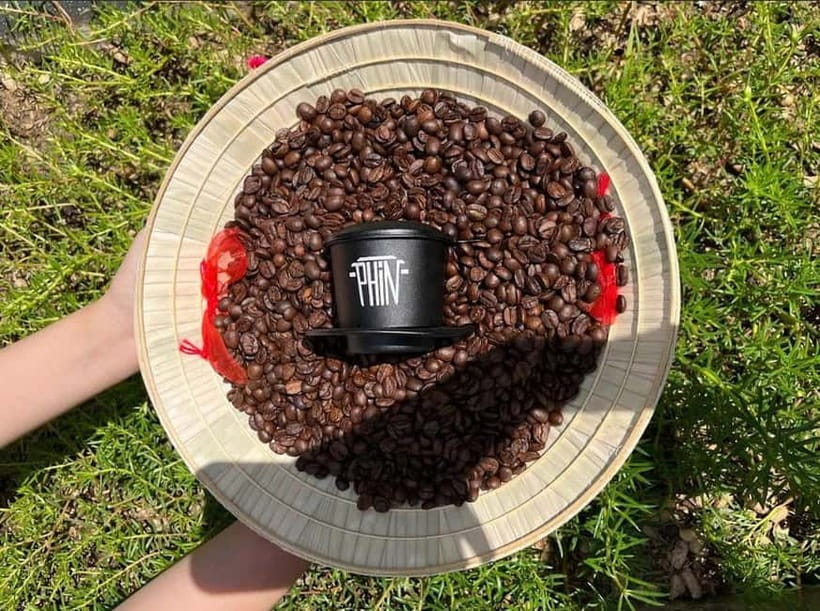
Vietnamese coffee is not just a quick caffeine stop. In this Hue workshop, you learn how a slow-dripping phin filter and strong Robusta beans become four very different drinks. Egg coffee tastes creamy and dessert-like, salt coffee brings out the coffee’s bitter edge, and coconut coffee is cool and sweet.
I like the hands-on format, and I like that the class connects each recipe to Vietnamese coffee culture rather than treating the drinks as random café tricks. Hosts including Duck and Uyen have been praised for their humor, care, and clear teaching. The main drawback is simple: you receive a lot of coffee in 90 minutes, so this may be too much for anyone sensitive to caffeine.
In This Review
- Key points at a glance
- Why Hue coffee deserves 90 minutes
- Starting with Robusta and the phin
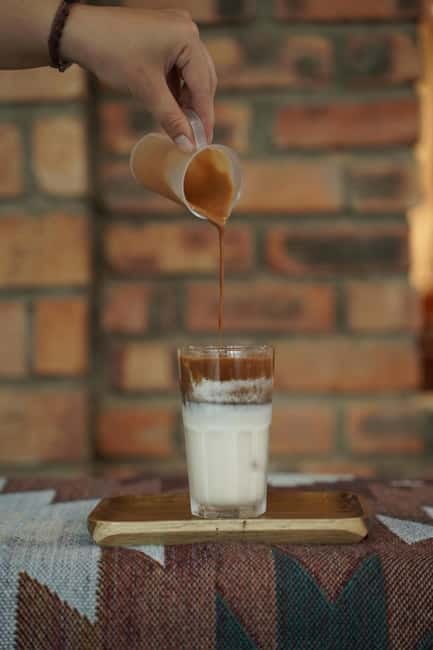
- Egg coffee: creamy, sweet, and almost dessert-like
- Salt coffee: a Hue specialty with a sharp edge
- Coconut coffee: cool, sweet, and easy to like
- The classic phin is the useful takeaway
- A small group makes the teaching personal
- How much coffee will you actually drink?
- Who will get the most from this workshop?
- Booking details that matter in Hue
- Is $18 a fair price?
- Should you book the Hue coffee workshop?
- FAQ
- How long does the Vietnamese coffee workshop last?
- How much does the experience cost?
- Which coffees will I make?
- Where is the meeting point?
- How many people can join the class?
- What languages does the instructor speak?
- Are ingredients and equipment included?
- Can I cancel for a refund?
Key points at a glance
- Four drinks in one sitting: Make and taste phin, egg, salt, and coconut coffee.
- Traditional brewing: Use a metal phin filter and bold Vietnamese Robusta beans.
- Small groups: With no more than eight participants, you get room to ask questions and try each step.
- Friendly local instruction: Hosts such as Duck and Uyen lead the class in English and Vietnamese.
- Useful souvenir: Take home the recipes, and you can also purchase a phin filter if you want to repeat the drinks at home.
- Good rainy-day choice: The 90-minute indoor workshop fits neatly into a Hue sightseeing schedule.
Why Hue coffee deserves 90 minutes
Hue is best known for its imperial monuments, royal tombs, riverfront views, and elaborate food. Yet coffee gives you another way to understand daily life here. Vietnam’s coffee culture is built around strong beans, slow brewing, condensed milk, ice, and inventive additions that turn one basic drink into several distinct styles.
This experience gives you time to see how that works. Instead of ordering a finished coffee and moving on, you handle the filter, ingredients, and preparation yourself. I like this because the small details become clear: how the coffee drips, how sweetness changes the balance, and how texture matters as much as flavor.
The setting is a cozy workshop reached through alley number 1 on Hoàng Quốc Việt Street. Walk about 50 meters and look for the Huế Experience signboard. That meeting point is worth noting because it is not simply a major street address. Have the directions ready before you arrive, especially if you are navigating Hue on foot.
The class lasts 90 minutes and costs $18 per person. That is fair value if you want more than a tasting. You are paying for instruction, four recipes, all ingredients and tools, the coffee you prepare, a recipe handout, and a small-group format. A single café visit costs less, of course, but it will not teach you how to repeat the drinks at home.
More Vietnamese coffee stops in Hue Vietnam:
- Hoi An: My Son Early Morning Tour with Banhmi and Coffee
★ 5.0 · 29 reviews - Hoi An: Vietnamese Coffee Culture and Coffee Making Class
★ 4.9 · 4,006 reviews - Hanoi Coffee Experience: 6 Brews, 9 Recipes & 3 Liquor Tastings
★ 5.0 · 2,945 reviews
Starting with Robusta and the phin
The workshop begins with an introduction to Robusta beans, the coffee at the center of Vietnamese brewing. Robusta is known for its firm, powerful character, which works well with sweet milk, egg, coconut, and even salt. If you usually drink light coffee, this style may seem intense at first.
The phin filter is the first important lesson. This compact metal brewer sits over your cup while hot water passes slowly through the coffee. It is simple, portable, and very different from the fast machines used in many modern cafés.
You will use the traditional filter and learn the basic process before moving to the flavored drinks. Pay attention here. The phin is not just equipment for this class. It is the method that gives Vietnamese coffee its slow pace and concentrated body.
I also appreciate that this opening gives non-coffee drinkers a point of entry. You do not need to arrive as a coffee expert. The host explains the beans and brewing method, then guides you through each stage. Several sessions have been especially well received by people who did not usually drink coffee, including one participant who found Vietnamese coffee much easier to enjoy than coffee at home.
Egg coffee: creamy, sweet, and almost dessert-like
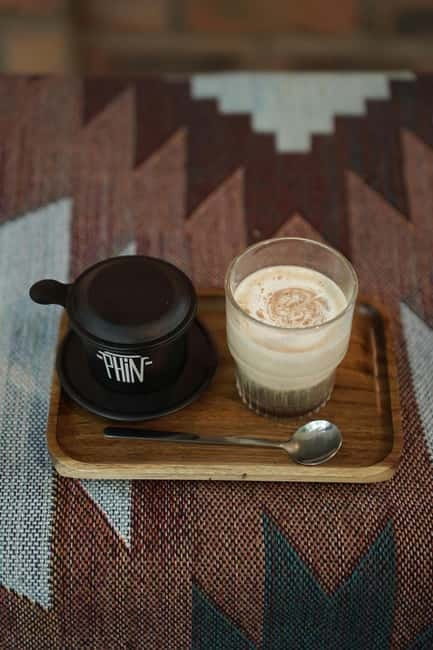
Egg coffee is usually the most surprising drink in the lineup. A whipped egg mixture gives the coffee a soft, creamy topping, changing the strong brew into something closer to a dessert.
You make the drink yourself, so you can see how the texture develops and how the topping sits above the coffee. The contrast matters: the coffee remains bold underneath while the egg mixture adds sweetness and richness.
This is a good part of the class for anyone who thinks black coffee is too bitter. It is also a useful reminder that Vietnamese coffee is not locked into one flavor profile. The workshop does not ask you to choose between coffee and dessert. It shows you how the two can meet in one cup.
The practical caution is portion size. You taste four drinks, and egg coffee is only one of them. If you are planning a large meal immediately afterward, keep that in mind.
Salt coffee: a Hue specialty with a sharp edge
Salt coffee is the drink most closely tied to Hue in this workshop. A small amount of salt can soften bitterness and make the coffee taste fuller. It sounds odd until you try the balance for yourself.
The point is not to make a salty drink. The salt works in the background, changing the way your palate reads the coffee. This is why making it yourself is useful. You can understand the recipe more clearly than you would from a short café menu description.
Salt coffee also gives the host a natural way to talk about local coffee habits and the story behind different Vietnamese preparations. The class is not a formal lecture, but conversation is part of its appeal. Hosts such as Duck have been praised for mixing cultural background with jokes and relaxed discussion.
If you prefer very sweet drinks, salt coffee may be less immediately familiar than egg or coconut coffee. Give it a proper taste before deciding. It is the most distinctive cup of the four and one of the main reasons to choose this workshop over a standard coffee tasting.
A different kind of day out, same stretch of Vietnam:
- Hue Customizable Tour with Imperial Citadel & Forbidden City
★ 4.9 · 937 reviews - Hue :Exploring Royal City with Multi Options and Dragon Boat
★ 5.0 · 675 reviews - Hue City Tour Full Day – Group Tour
★ 4.7 · 518 reviews - From Hue: DMZ Tour with Vinh Moc Tunnels and Khe Sanh Base
★ 4.9 · 503 reviews
Coconut coffee: cool, sweet, and easy to like
Coconut coffee brings a different mood to the table. Coconut adds sweetness and a creamy texture, often making the drink feel cooler and lighter than the straight phin coffee.
The workshop includes both hot and cold preparations, according to the class details and session descriptions. That variety helps keep the tasting interesting. You move from the direct strength of traditional coffee to drinks where texture, temperature, and sweetness play a larger role.
I would especially recommend this part to anyone traveling with a partner or family member who is not a serious coffee drinker. One couple found that even the less enthusiastic coffee drinker enjoyed the drinks. Coconut coffee is likely to be the easiest introduction for someone who prefers sweet, cold beverages.
You should still expect a clear coffee flavor. This is not simply a coconut drink with a little caffeine added. The Robusta base remains important, and the workshop shows how an assertive bean can work with softer ingredients.
The classic phin is the useful takeaway
After trying three flavored versions, the classic phin brings you back to the basic brew. This is the least decorated drink, but it may be the most useful lesson if you want to make Vietnamese coffee at home.
You learn the relationship between coffee, water, time, and the filter itself. The process is slow by design. That makes it a good contrast to the instant coffee habits many of us bring on holiday.
The recipe handout adds real value. You do not have to rely on memory after the class, and you can try the drinks again once you are home. One participant even bought a phin filter after the workshop, which makes sense if the experience changes the way you think about home coffee.
I would take a photo of the brewing setup as well as keeping the handout safe. The recipes are the main souvenir, but the method is what lets you recreate the experience.
A small group makes the teaching personal
The group is limited to eight people. That matters more here than it would on a basic sightseeing walk. You need access to tools, ingredients, and the instructor, and you may want help at several points while preparing the drinks.
A small group also leaves room for conversation. One session was attended by only two people, creating a quiet, personal atmosphere. Another included a family of five, so the class can work for couples, solo visitors, and families.
Hosts are listed as speaking English and Vietnamese. Recent sessions have been led by Duck, whose nickname has prompted a few friendly jokes, and Uyen, who has also received praise for her humor and teaching. Other sessions identify hosts as Daisy and Annie, so your instructor may vary.
The important thing is not a guaranteed name. It is the local, conversational format. You are not watching a distant demonstration. You are making the coffee and asking questions as you go.
How much coffee will you actually drink?
You will prepare and taste four drinks. That sounds manageable, but it adds up, especially if you drink every cup in full. One participant specifically found there was more coffee than they could finish.
I suggest arriving without a full stomach of coffee and taking the tasting at a sensible pace. The workshop includes complimentary drinking water, which is useful between samples. If you are highly sensitive to caffeine, pregnant, traveling with children, or simply do not drink much coffee, ask the host about portion sizes as you begin.
This is not a flaw in the experience. The whole point is to compare four recipes. Still, the caffeine level is an important practical detail that a booking page cannot make disappear.
Who will get the most from this workshop?
I would choose this class for:
- Coffee fans who want to understand Vietnamese brewing rather than just order a famous drink.
- Curious food lovers who enjoy making things with their hands.
- Couples looking for a relaxed indoor activity in Hue.
- Families with older children who can take part in the preparation.
- Solo visitors who like small groups and easy conversation.
- Anyone looking for a rainy-day plan that does not involve another monument.
It is also suitable for people who do not normally drink coffee, provided they are happy to taste several strong drinks. The sweet egg and coconut versions offer a gentler introduction, while salt and classic phin show the coffee itself more clearly.
I would hesitate to book it for someone who wants a short sample and no instruction. Ninety minutes is not excessive, but this is a workshop, not a quick café stop. You will spend time learning, preparing, tasting, and talking.
Booking details that matter in Hue
The experience is wheelchair accessible, which is useful to know when comparing activities. The host teaches in English and Vietnamese, and the group size is capped at eight.
You can reserve now and pay later, which helps if your Hue schedule is still shifting. Free cancellation is available up to 24 hours before the start time for a full refund. Check the available starting times when booking, since the schedule is not fixed in the information provided.
For arrival, enter alley number 1 on Hoàng Quốc Việt Street, walk roughly 50 meters, and find the Huế Experience signboard. I would allow a few extra minutes for this final approach rather than arriving exactly at the start time.
Is $18 a fair price?
Yes, if you value instruction and want a souvenir you can use. The fee covers four recipes, ingredients, equipment, tastings, water, a recipe handout, and a local English-speaking host. The small group makes the price easier to justify because you are not lost in a large demonstration.
The value is strongest for people staying in Hue for more than a day. You can enjoy the drinks during the class, then use the recipes and perhaps a phin filter later at home. That gives the experience a life beyond the 90-minute session.
If you only want to sample egg coffee or salt coffee once, a café will be cheaper. If you want to understand the method, compare four styles, and learn how to make them yourself, the workshop earns its price.
Should you book the Hue coffee workshop?
I would book it if you want a personal, practical break from Hue’s historic sights. The best parts are the four-drink comparison, the slow phin method, and the chance to learn from a friendly local host rather than simply consume a finished cup.
Go in ready to taste a lot of coffee. Bring curiosity, not expertise, and make use of the recipe sheet afterward. If you are caffeine-sensitive or do not enjoy sweet drinks, this may not be your ideal activity.
For most visitors, though, it is a smart 90-minute addition to a Hue itinerary. You leave with a better sense of Vietnamese coffee culture, a handful of recipes, and a simple brewing tool that can keep the memory going long after you leave Vietnam.
FAQ
How long does the Vietnamese coffee workshop last?
The workshop lasts 90 minutes.
How much does the experience cost?
The price is $18 per person.
Which coffees will I make?
You will make traditional phin coffee, egg coffee, salt coffee, and coconut coffee.
Where is the meeting point?
Enter alley number 1 on Hoàng Quốc Việt Street and walk about 50 meters. The meeting point is marked by the Huế Experience signboard.
How many people can join the class?
The activity is limited to eight participants.
What languages does the instructor speak?
The workshop is offered in English and Vietnamese.
Are ingredients and equipment included?
Yes. The activity includes all ingredients and tools for the four recipes, including traditional phin filters and Robusta beans.
Can I cancel for a refund?
Yes. You can cancel up to 24 hours in advance for a full refund. You can also reserve now and pay later.
Recently reviewed around Hue Vietnam
- Phong Nha National Park: Paradise Cave Half-Day Tour★ 5.0 · 23 reviews
- Official Hue: Dragon Boat, Imperial Citadel, & Market tour★ 4.7 · 32 reviews
- Hue to Hoi An/Da Nang: Private Scenic Motorbike Tour★ 4.9 · 63 reviews
- Hue: Royal Tombs Private Tour with 3 Best Tombs & Pagoda★ 4.9 · 213 reviews
- Hue: Private Transfer to/from Hoi An via Sightseeing Stops★ 4.9 · 111 reviews
- Hue Royal Tombs Tour: Visit Best Pagodas & Mausoleums★ 4.9 · 19 reviews
- Hue : Private Day Trip to DMZ : Vinh Moc tunnel & Khe Sanh★ 5.0 · 26 reviews
- Hue to Hoi An by bus: Hai Van Pass, Lang Co, Marble mountain★ 4.6 · 27 reviews
Coffee Experiences, compared.

Vietnamese Coffee Culture and Coffee Making Class
Read our review →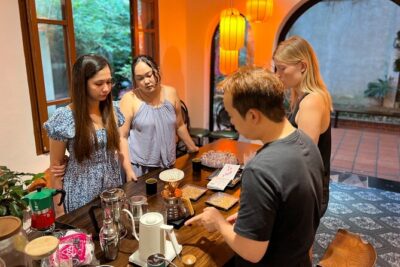
Hanoi Coffee Experience: 6 Brews, 9 Recipes & 3 Liquor Tastings
Read our review →
Hanoi Coffee Workshop: Taste Salt, Coconut and Egg Coffee
Read our review →
Salt Coffee Workshop Awake Your Senses With 6 Brews
Read our review →
Early Morning My Son Sanctuary Trip w. Champa Food & Coffee
Read our review →
Da Nang Cooking Class with Coffee Tasting and Market Visit
Read our review →Browse the lists this tour appears in