
Reviewed · IMPERIAL CITY TOURS
Hue Customizable Tour with Imperial Citadel & Forbidden City
Hue’s Imperial Citadel is easier to understand when someone explains what you are seeing. A local guide can turn the Nine Dynastic Urns, royal temples, palace ruins, and Forbidden Purple City into a story about emperors, ceremonies, family power, and daily court life. The walking option lasts about 2.5 hours and includes the main imperial sights.
I like the choice between a small-group walking tour and a private car day. I also like the guides’ personal approach: Misa has been praised for explaining symbolism and architecture clearly, while Ha, Nhi, Nhien, Duy, and Linh are known for friendly storytelling and good English. The main drawback is simple: entrance tickets cost extra, and the private car comes with a driver rather than a licensed guide.
In This Review
- Key points to know before booking
- Why the Citadel makes a better visit with a guide
- Starting at the Nine Holy Cannons
- Flag Tower and the ceremonial Noon Gate
- Supreme Harmony Palace and the center of imperial power
- Hien Lam Pavilion and the Nine Dynastic Urns
- The Mieu and the royal family’s ancestors
- The Forbidden Purple City and the remains of private court life
- Later royal buildings, gardens, and the theater
- The private car option for tombs and pagodas
- Price, tickets, and what the value really is
- Timing, weather, and meeting details
- Who should choose this experience?
- Should you book the Hue Customizable Tour?
- FAQ
- How long is the walking tour?
- Where does the walking tour meet?
- Is hotel pickup included?
- Are entrance tickets included?
- Are combo tickets available?
- Does the private car option include a tour guide?
- Which attractions can I visit by private car?
- Is the tour offered in English?
Key points to know before booking
- See the royal heart of Hue in 150 minutes: The walking route covers the Imperial City and Forbidden Purple City without taking up your whole day.
- Meet at the correct cannons: The guide waits at the four bronze cannons near Ngan Gate, not the five cannons on the opposite side.
- Choose more than a citadel visit: The private car option can include Thien Mu Pagoda, Minh Mang Tomb, Tu Duc Tomb, Khai Dinh Tomb, and Thuy Tien Abandoned Water Park.
- Learn what the buildings mean: Guides explain Nguyen emperors, court rituals, Confucian ideas, Feng shui, Buddhism, and royal symbols.
- Budget for admission: Imperial City entry is listed at 200,000 Vietnamese dong per adult, with combo tickets available for several sites.
- Start early in hot weather: Much of the citadel route is outdoors, so an early morning departure can make the walk easier.
Why the Citadel makes a better visit with a guide
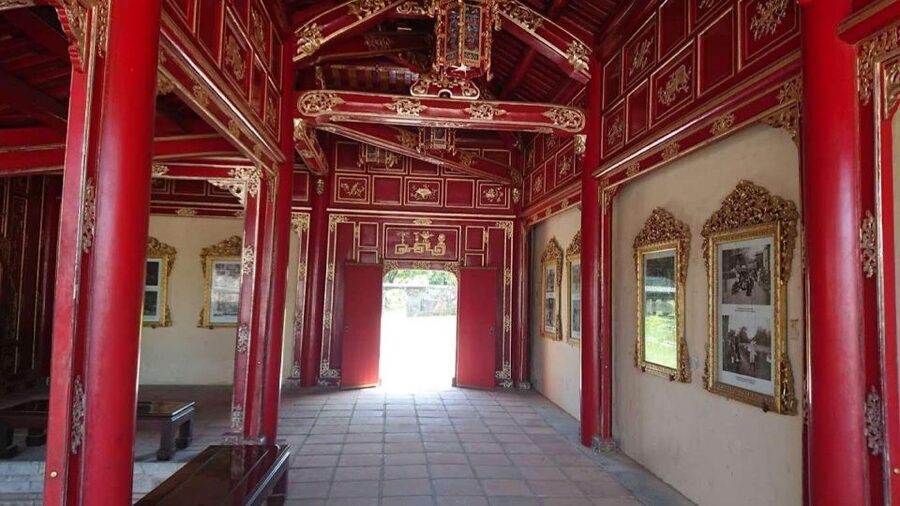
Hue’s Imperial City is not just a collection of attractive gates and weathered halls. It was the political and ceremonial center of the Nguyen Dynasty, Vietnam’s last imperial dynasty. Without context, it is easy to admire the tiles, courtyards, and surviving walls without grasping how the complex worked.
A guide gives you that missing framework. You learn which buildings served public ceremonies, which belonged to royal worship, and which were linked to the private lives of the emperor and his household. The story also includes the emperor’s wives, minor wives, concubines, eunuchs, and the strict rules that shaped life behind the palace walls.
The guides used on this experience include Misa, Ha, Nhi, Nhien, Duy, Linh, Hoa, Hung, and Minh. Names can vary by departure, but the strongest part of the experience is the human explanation. Misa, in particular, has been praised for using questions to keep people involved and for explaining the meaning of numbers, animals, and building details. Nhi has been noted for her clear account of the Nguyen family and her warm sense of humor.
This is useful if you are not already familiar with Vietnamese royal history. It is also valuable if you have visited the citadel before. A first visit lets you see the setting, while a guided visit helps you understand why each court, temple, and pavilion was placed where it was.
More City Tours in Hue
- Hue :Exploring Royal City with Multi Options and Dragon Boat
★ 5.0 · 675 reviews - Hue City Tour Full Day – Group Tour
★ 4.7 · 518 reviews - Hue Imperial Ancient City Walking Tour
★ 4.8 · 308 reviews
Starting at the Nine Holy Cannons
For the walking tour, you meet at the four bronze cannons near Ngan Gate, also called Cua Ngan. Look for a guide holding an A4 sheet with your name. Take care here: five cannons sit on the opposite side, so arriving at the wrong group can cause an avoidable delay.
The cannons were cast by Hue artisans in 1803, during the second year of Emperor Gia Long’s reign. They are more than old weapons. They are important bronze works connected to the formation of the Nguyen state, and their position near the citadel gives you an early reminder that Hue was both a royal residence and a fortified capital.
The stop is short, around 15 minutes, but it gives your guide a good opening to explain how the Nguyen rulers established control. It also makes a useful photo stop before you enter the main imperial grounds.
Flag Tower and the ceremonial Noon Gate
The Flag Tower, or Ky Dai, rises from the southern side of the citadel. It was connected to the royal court’s flag and remains one of the most recognizable structures in Hue. You spend only about five minutes here on the listed route, so expect an introduction and photographs rather than a long stop.
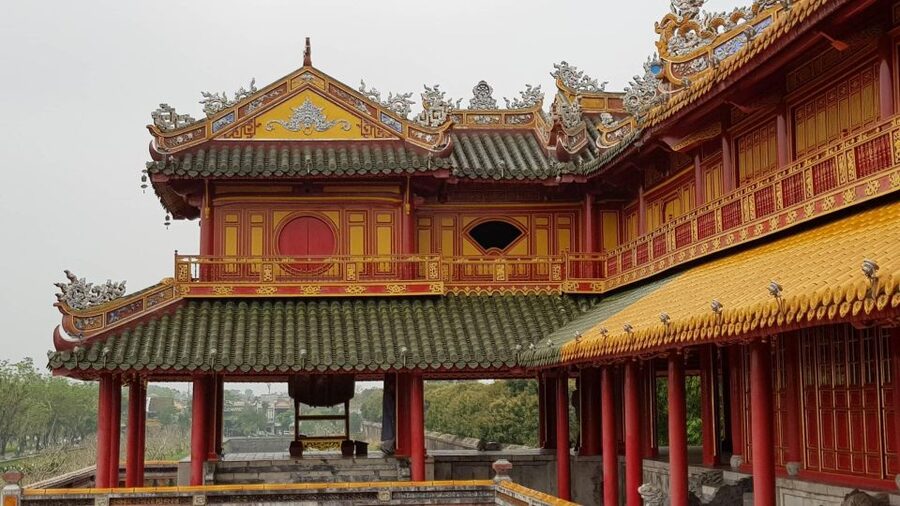
Next comes Noon Gate, known as Ngo Mon. Built in 1833 under Emperor Minh Mang, it was used for royal ceremonies and troop movements. The gate’s scale makes its purpose clear. This was not a casual entrance. It was a controlled threshold between the outside city and the world of the court.
Your guide can help you read the gate as architecture with a job to do. The arrangement of entrances, raised sections, and ceremonial space reflects rank and access. This is one of the places where a short explanation adds far more than a quick photograph.
Supreme Harmony Palace and the center of imperial power
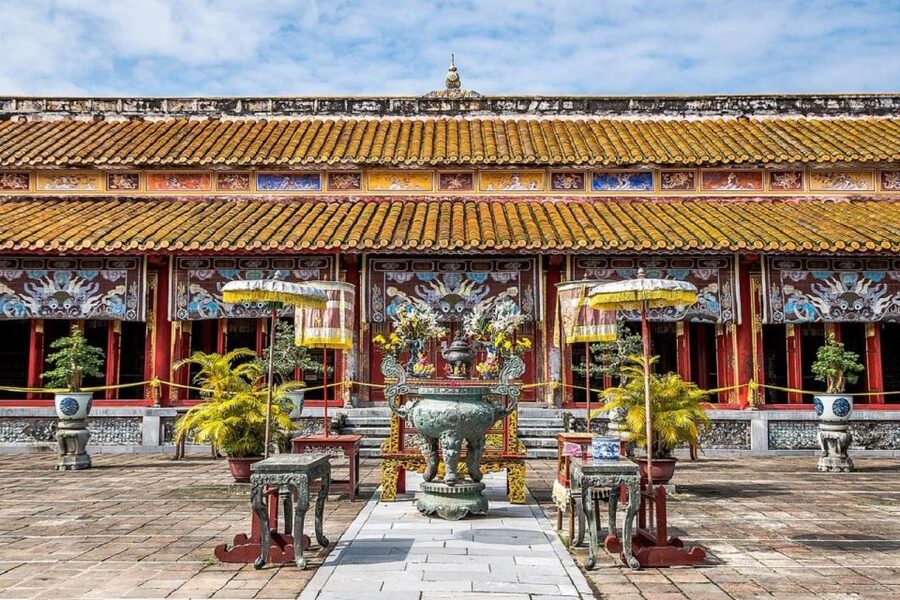
Supreme Harmony Palace, or Thai Hoa Palace, is one of the key stops. Thirteen Nguyen emperors, from Gia Long through Bao Dai, used this palace for coronations and major court ceremonies. The building represented the formal center of the country, not the private side of royal life.
You have about 15 minutes here in the planned sequence, though the full Imperial City visit allows more walking and explanation around the site. Ask your guide about the palace’s ceremonial role and the difference between public power and private court life. Guides such as Misa have also explained links between the site’s design and Confucian thought, Feng shui, and Buddhist ideas.
The palace and surrounding courtyards can be busy with visual details. A guide helps you decide where to look first, from roof decoration and symbolic animals to the layout used for official gatherings. If the day is hot, listen from the shade when possible. Much of the route has little cover.
More Hue Vietnam trips worth a second look
- From Da Nang/Hoian/Hue: Hue Imperial City Full-Day Tour
★ 4.8 · 295 reviews - Hue City Tour Full day – Small group tour
★ 4.7 · 137 reviews - Hue: City Sightseeing Hop-On Hop-Off Bus Tour
★ 3.7 · 63 reviews - Hue City: Cyclo, Market Tour & Cooking Class at Madam Thu
★ 5.0 · 48 reviews
Hien Lam Pavilion and the Nine Dynastic Urns
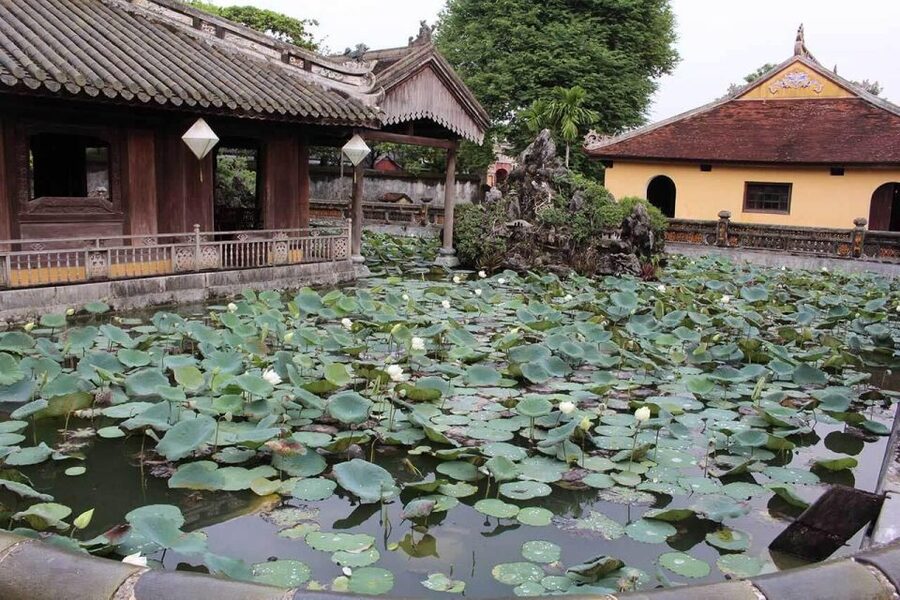
Hien Lam Pavilion sits near the Nine Dynastic Urns and forms part of the memorial area dedicated to Nguyen rulers. The pavilion is a graceful structure, but its role is also symbolic. It connects the achievements of the dynasty with the ancestral temples nearby.
The Nine Dynastic Urns are among Hue’s most memorable works. Emperor Minh Mang commissioned the nine bronze urns in 1835, and they were completed in 1837. Each urn is associated with an emperor and the authority of the dynasty. Their size, decoration, and careful placement make them more than ornaments.
This is another good moment to ask about symbols. The guides have been praised for explaining animals, numbers, and images that can otherwise look like decoration without a clear meaning. You get more from the stop when you slow down and listen, rather than treating the urns as a quick photo opportunity.
The Mieu and the royal family’s ancestors
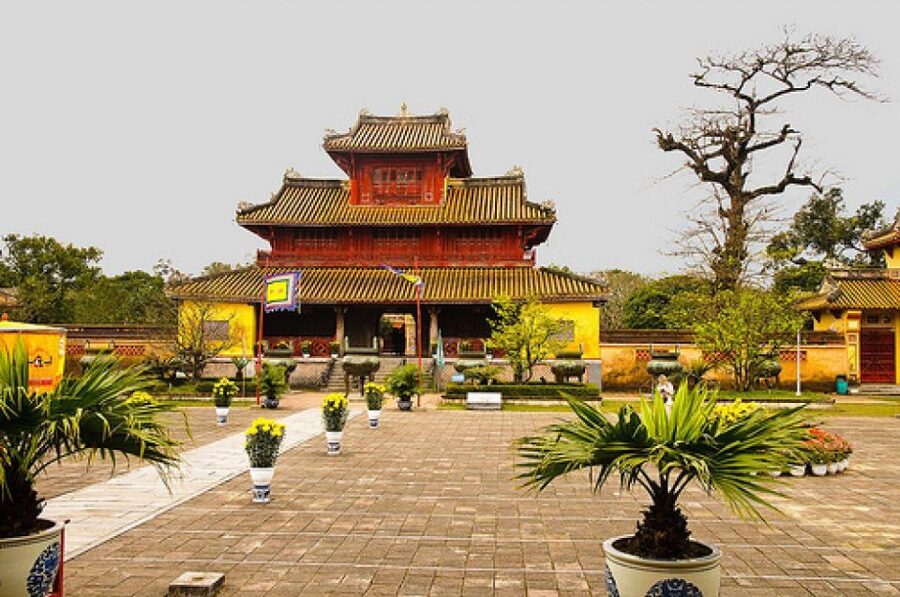
The Mieu, also called The To Mieu, was built in 1821 under Emperor Minh Mang. It is a temple for Nguyen emperors and gives the tour a different focus from the throne rooms and gates.
Here, the imperial family is not presented only through military victories or official ceremonies. Ancestral worship mattered greatly at court, and the temple reflects the dynasty’s need to honor its predecessors and preserve its legitimacy. The route also includes Hung To Mieu, Hung Mieu, and Trieu To Mieu, with shorter stops at some of these buildings.
You may find the temple area quieter and more reflective than the main gate and palace. It is worth paying attention to the arrangement of the courtyards and altars. Your guide can explain which members of the royal family were honored and how ancestor worship fitted into Nguyen court life.
The Forbidden Purple City and the remains of private court life
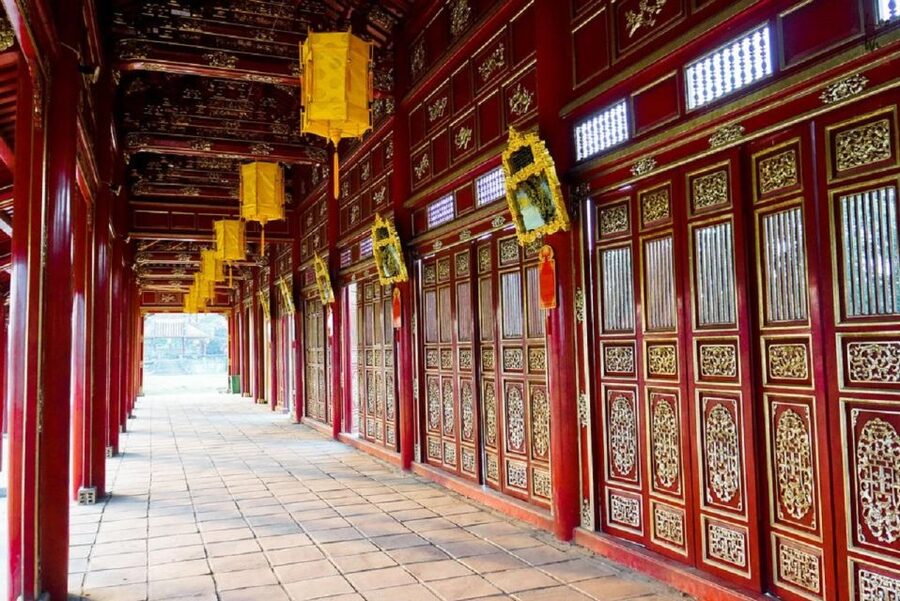
The Forbidden Purple City, or Tu Cam Thanh, was the private center of the emperor’s daily life. Gia Long began building it in 1804, and Minh Mang renamed it the Forbidden Purple City in 1822. It stood behind Supreme Harmony Palace and was reserved for the royal household and court staff.
This is where the tour moves from public ceremony to personal power. You hear about emperors, queens, minor wives, concubines, eunuchs, and the people who maintained the secluded court. The subject is fascinating because it brings the complex down to human scale. Behind the grand ceremonies was a highly controlled household with its own ranks, rules, and tensions.
The Forbidden City suffered heavy damage during the wars, so you should not expect every palace to survive intact. Some restored buildings sit beside ruins and open foundations. That contrast is part of the experience. It shows both the former scale of the court and the cost of later conflict.
The central Imperial City visit lasts around two hours, with the complete walking experience running about 150 minutes. That is enough time to cover the principal sights without turning the day into an endurance test. Guides such as Linh have been praised for allowing rests and good photo stops, while Misa has been noted for keeping the pace calm on hot days.
Later royal buildings, gardens, and the theater
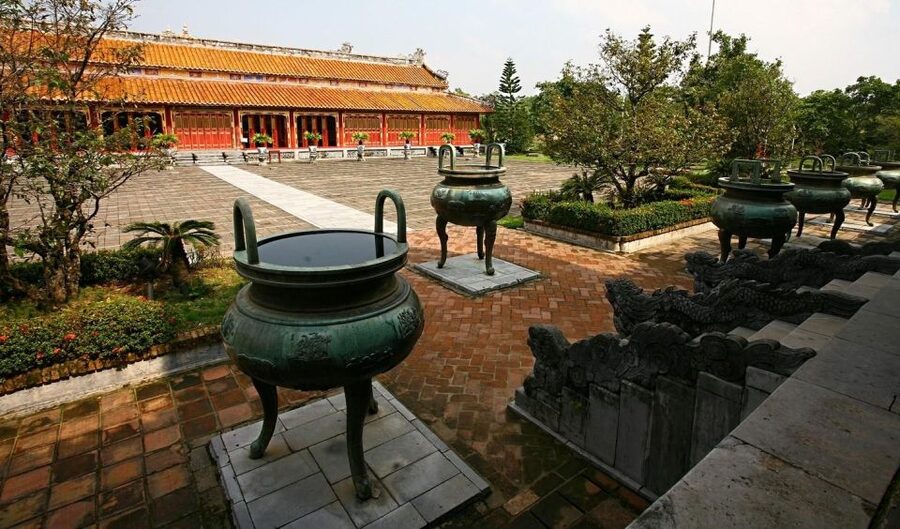
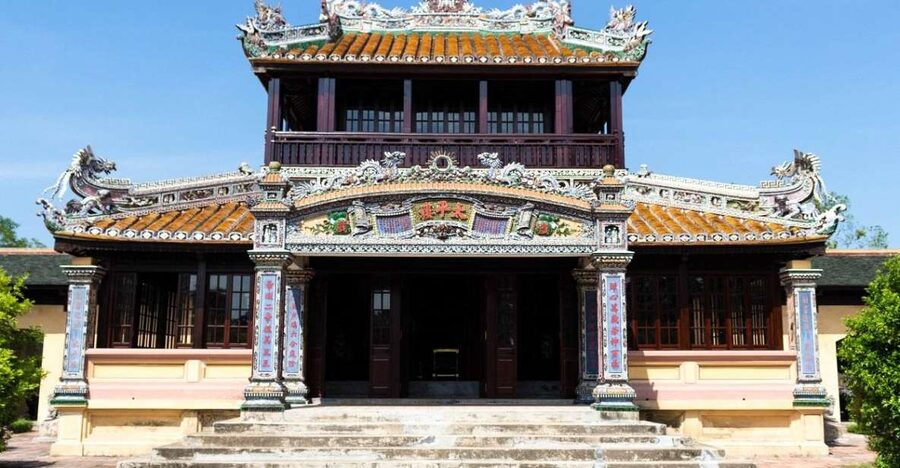
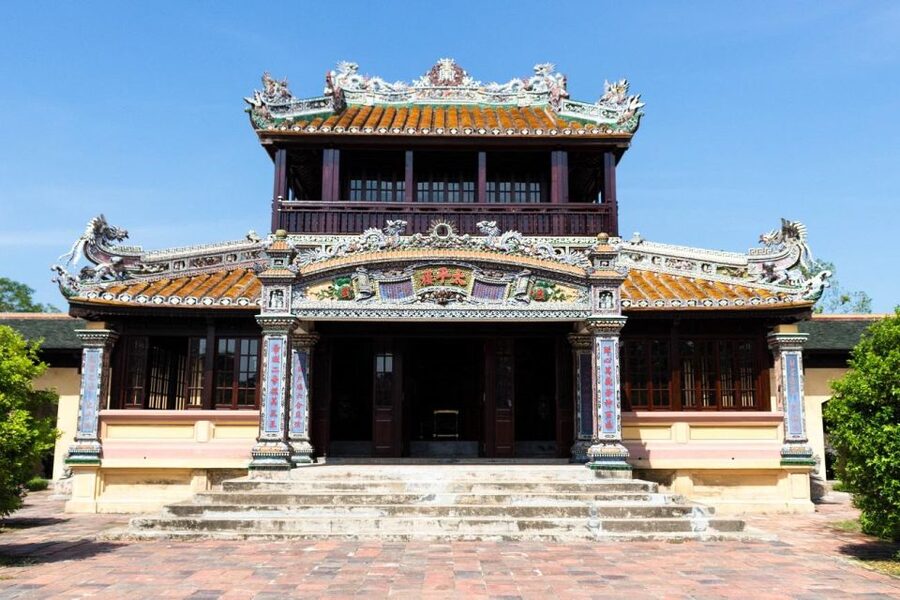
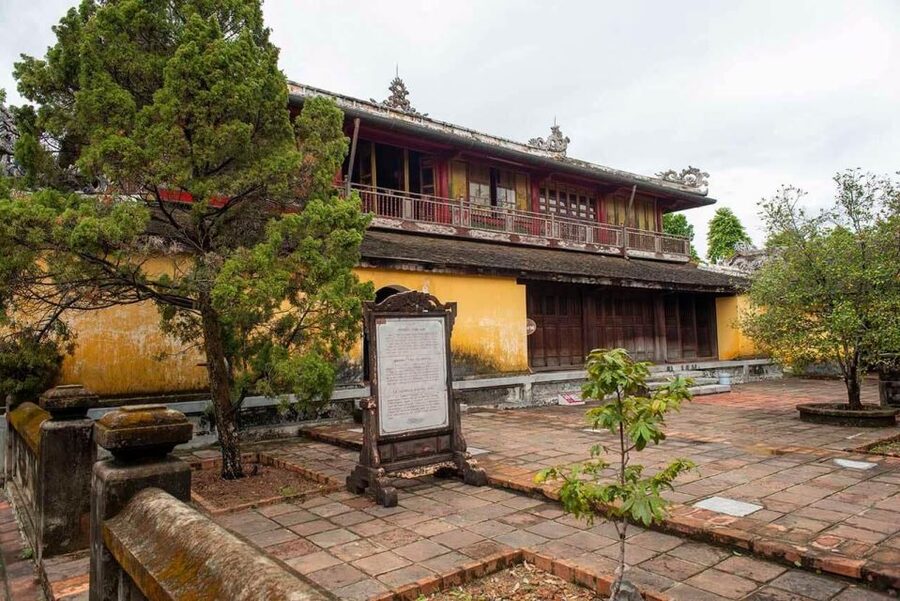
The route can include Kiến Trung Palace, Thai Binh Pavilion, Thieu Phuong Garden, and Duyet Thi Duong Royal Theater. Some stops are brief, around 10 to 15 minutes, and the condition of individual buildings varies.
Kien Trung Palace helps show the changing appearance of the royal complex. Thai Binh Pavilion and Thieu Phuong Garden point to the quieter, more private side of court life, where gardens and pavilions offered space away from formal duties.
Duyet Thi Duong was the royal theater. Its presence reminds you that music and performance were part of court culture, not just decoration around political events. You can ask about who attended performances and how the theater fitted into palace life, though the exact amount of time here depends on the guide and route.
The itinerary also lists Hien Nhon Gate, another citadel entrance. These later stops may appeal most to visitors who enjoy architecture and want more than the standard Noon Gate and Thai Hoa Palace circuit. If you have only a short time in Hue, confirm how much of this extended route your selected option includes.
The private car option for tombs and pagodas
The private car choice is designed for a much longer day, from the city center or Hue Railway Station. Your English-speaking driver can take you to selected sights at an agreed time, with the route adjusted around your interests.
Possible stops include:
- Imperial City
- Thien Mu Pagoda
- Minh Mang Tomb
- Tu Duc Tomb
- Khai Dinh Tomb
- Thuy Tien Abandoned Water Park
This option gives you useful control over distance and pacing. Hue’s imperial sights are spread across the city and surrounding area, so a car is practical if you want to combine the citadel with several tombs. It also suits families or small private groups that prefer not to arrange separate rides between sites.
The important limitation is that the driver is there for transport and basic communication, not as a licensed professional guide. You receive a private car and driver, but not the detailed historical commentary included with the walking option. If your main goal is to understand the Nguyen court, choose the walking tour or arrange a separate guide if available.
The tombs offer a different view of the emperors. The citadel shows official power, while the royal tombs reflect the tastes and personalities of individual rulers. Minh Mang, Tu Duc, and Khai Dinh each provide a distinct setting, but entrance tickets are also extra for these attractions.
Price, tickets, and what the value really is
The advertised price starts at $12 per person. That is strong value for a 2.5-hour guided walk through Hue’s main imperial complex, provided you remember that admission is not included.
Imperial City entry is listed at 200,000 Vietnamese dong per adult. Combo tickets may be better if you plan to visit tombs as well: the listed options are 420,000 dong for Imperial City plus two tombs, or 530,000 dong for Imperial City plus three tombs. These combo tickets are valid for two days, which gives you some breathing room instead of forcing every sight into one long day.
The walking price pays mainly for interpretation and structure. You could enter the citadel alone, but you would need to read signs, organize the route, and work out the symbolism yourself. I consider the guide especially worthwhile here because the grounds include many buildings with similar visual language but very different roles.
The private car option has a different value. It saves time and simplifies transport, but the final cost depends on the selected route and vehicle arrangement. Confirm the price, pickup point, drop-off point, and included attractions before departure.
Timing, weather, and meeting details
The walking tour does not include hotel pickup. You meet at the four cannons near Ngan Gate, and the guide will hold a paper with your name. City-center pickup and drop-off are included for the private car option at hotels in Hue or Hoi An, Hue Railway Station, and Phu Bai Airport in Hue. Locations outside the city center may cost extra.
Hue can be hot, and the route is mostly on foot. Wear comfortable shoes, carry water, and use sun protection. An early start is a smart choice. One morning departure mentioned in the experience begins at 8:30, before the strongest heat, but you should check the available starting times when booking.
Rain is also possible. The tour can still operate in wet weather, but the stone paths and open courtyards will feel less comfortable. A small group or private arrangement helps because your guide can adjust the pace, find covered spots, and leave time for questions.
The experience is offered in English, with private or small-group choices. That smaller format matters. You can ask about a particular emperor, pause for photographs, or request a simpler explanation without holding up a large crowd.
Who should choose this experience?
I would choose the walking option if you have never visited Hue’s Imperial City or if a previous self-guided visit felt confusing. It is a good fit for couples, families, solo visitors, and anyone who wants the main story in a manageable two and a half hours.
Families may appreciate the guide’s use of symbols, animals, and stories to keep younger visitors interested. The pace can also be adjusted for heat and questions. Solo visitors may gain the most from the tailored approach, since a guide can focus on personal interests and take photographs.
Choose the private car if you want to connect the citadel with pagodas and royal tombs, or if you are arriving by train or plane and need a practical transfer-based sightseeing plan. Just remember that this is transport with an English-speaking driver, not the same guided experience as the walking tour.
Should you book the Hue Customizable Tour?
Book it if you want the Imperial Citadel to make sense, not just look impressive. The $12 walking option is a sensible buy for clear explanations, a well-paced route, and access to details about court customs that are easy to miss alone.
Choose a guide such as Misa, Ha, Nhi, Nhien, Duy, or Linh when available, but focus less on requesting one specific name and more on choosing the right format. Pick the walking tour for history and interpretation. Pick the private car for flexibility across Hue’s scattered sights.
Skip it only if you prefer exploring completely alone and are happy to arrange your own transport and research. For most first visits, the guide adds enough context to justify the modest fee, while the customizable car option works well for a fuller Hue day.
FAQ
How long is the walking tour?
The Hue Imperial City walking option lasts about 150 minutes, or 2.5 hours.
Where does the walking tour meet?
You meet at the four bronze cannons near Ngan Gate, also called Cua Ngan, at the Hue Citadel. The guide holds an A4 paper with your name. Five cannons are on the opposite side, so check carefully.
Is hotel pickup included?
Pickup and drop-off are included for the private car option at city-center hotels in Hue and Hoi An, Hue Railway Station, and Phu Bai Airport in Hue. The walking tour does not include pickup, and locations outside the city center may require an extra charge.
Are entrance tickets included?
No. Entrance tickets are not included. Imperial City admission is listed at 200,000 Vietnamese dong per adult.
Are combo tickets available?
Yes. The listed combo options are 420,000 Vietnamese dong for Imperial City with two tombs, or 530,000 dong for Imperial City with three tombs. The combo tickets are valid for two days.
Does the private car option include a tour guide?
No. The private car option includes an English-speaking driver for communication and transport, but not a licensed professional tour guide.
Which attractions can I visit by private car?
The private car route can be customized around Imperial City, Thien Mu Pagoda, Minh Mang Tomb, Tu Duc Tomb, Khai Dinh Tomb, and Thuy Tien Abandoned Water Park.
Is the tour offered in English?
Yes. The activity is offered in English, with private and small-group choices available.
Recently reviewed around Hue Vietnam
- Phong Nha National Park: Paradise Cave Half-Day Tour★ 5.0 · 23 reviews
- Official Hue: Dragon Boat, Imperial Citadel, & Market tour★ 4.7 · 32 reviews
- Hue to Hoi An/Da Nang: Private Scenic Motorbike Tour★ 4.9 · 63 reviews
- Hue: Royal Tombs Private Tour with 3 Best Tombs & Pagoda★ 4.9 · 213 reviews
- Hue: Private Transfer to/from Hoi An via Sightseeing Stops★ 4.9 · 111 reviews
- Hue Royal Tombs Tour: Visit Best Pagodas & Mausoleums★ 4.9 · 19 reviews
- Hue Private Tour with Local Guide – Customize Your Itinerary★ 4.8 · 28 reviews
- Hue : Private Day Trip to DMZ : Vinh Moc tunnel & Khe Sanh★ 5.0 · 26 reviews
Imperial City Tours, compared.

Imperial City, Hue: Day Tour from Hoi An and Da Nang
Read our review →
Da Nang/Hoi An: Hue Imperial City via Hai Van Pass & Lunch
Read our review →
Imperial City Walk, Motorbike Tour & Private Car Options
Read our review →
Hue City and The Citadel via Hai Van Pass Daily Small Group Tour
Read our review →
Hue Citadel tour by authentic Train via Hai Van Pass from Da Nang
Read our review →
From Da Nang/Hoian/Hue: Hue Imperial City Full-Day Tour
Read our review →
Hue Imperial City Walking Tour: Citadel & Forbidden City
Read our review →
From Hoi An/Da Nang: Hue Imperial City Tour via Hai Van Pass
Read our review →Browse the lists this tour appears in