
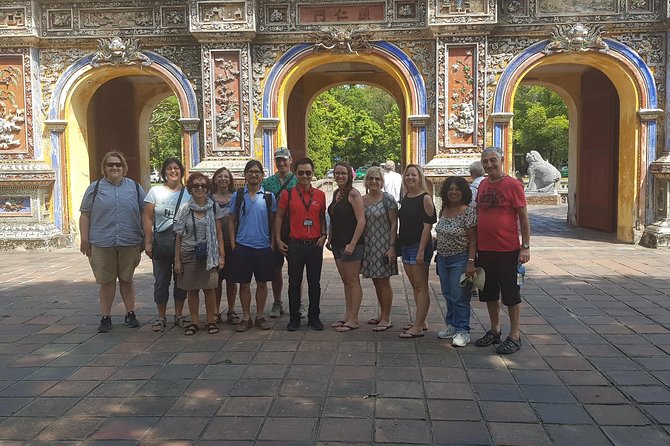
Reviewed · IMPERIAL CITY TOURS
Hue Imperial City Walking Tour: Citadel & Forbidden City
Hue’s Imperial City is easy to admire and surprisingly easy to misunderstand. Behind the red walls are royal halls, ancestral temples, bronze urns, gates with strict social rules, and a damaged but still powerful palace complex. This small-group walking tour gives those buildings a human story, not just a photo stop.
I like two things right away: the group is limited to eight, and the guides focus on the Nguyen emperors, royal rituals, and daily life inside the palace. Guides including Matthew, Ngoc, Linh, Hoa, Xi, and Florence have drawn especially strong praise for clear English, storytelling, and patience. The main consideration is cost: the $9 tour price is low, but group participants must also pay the 200,000 VND entrance fee.
In This Review
- Key points to know before booking
- Why a guide helps inside Hue’s vast citadel
- Starting at the Noon Gate, the royal front door
- Thai Hoa Palace and the ceremony of empire
- Hien Lam Pavilion and the Nine Dynastic Urns
- The Mieu Temple and royal ancestor worship
- Chuong Duc Gate and the palace’s rules for women
- Entering the Forbidden Purple City
- Kien Trung Palace, recently restored for a fresh look at royal life
- Thai Binh Pavilion and the royal garden
- Ending at Hien Nhon Gate
- Is $9 a good value once admission is added?
- Group, private, family, sunrise, and sunset choices
- What the guide quality means for your experience
- Timing, weather, and practical comfort
- Who should book the Imperial City walking tour?
- Should you book it?
- FAQ
- How long does the Hue Imperial City walking tour last?
- What is the tour price?
- How much is the Imperial City entrance fee for the group tour?
- Is the entrance ticket included?
- How many people can join the group?
- Where does the tour start?
- Where does the tour end?
- What places are visited?
- Are meals included?
- Can I cancel for a refund?
Key points to know before booking
- The tour visits 11 important sites: You’ll see the Noon Gate, Thai Hoa Palace, Hien Lam Pavilion, Nine Dynastic Urns, The Mieu Temple, royal gates, palace buildings, and gardens.
- The group maximum is eight people: That makes it easier to hear the guide and ask questions than on a large bus tour.
- The guide adds essential context: The complex is large, and without help, its buildings can blur into a series of ornate courtyards.
- Kien Trung Palace has recently reopened: Its restoration gives you one of the newer sights inside the historic compound.
- The group price excludes admission: The ticket costs 200,000 VND per person, though the operator says you may prefer a combo ticket covering the Citadel and royal tombs.
- You finish with time to explore on your own: The guided portion lasts about 2 hours and 30 minutes, after which you can revisit areas at your own pace.
Why a guide helps inside Hue’s vast citadel
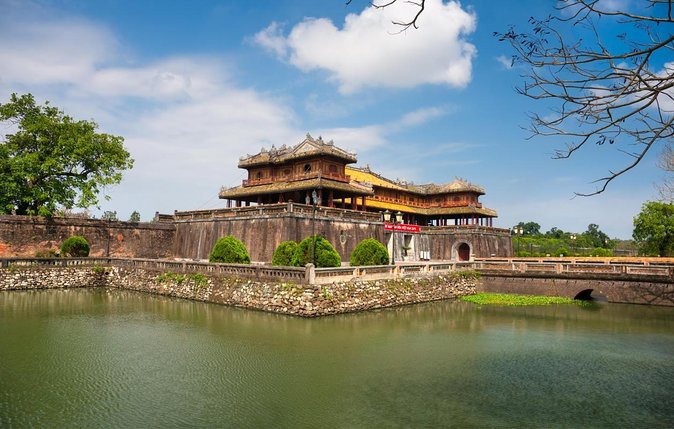
Hue’s Imperial City is not a single building. It is a large walled compound with formal gates, ceremonial halls, temples, gardens, and the remains of the Forbidden Purple City. That scale is the reason I favor a guide here.
On your own, you can see the bright roofs and carved details, but you may miss why one gate was used by women, another by mandarins, and another for major royal ceremonies. You may also walk past the Nine Dynastic Urns without realizing that each one represents a Nguyen emperor and the dynasty’s claim to lasting authority.
A good guide connects the buildings. Matthew, who is described as a history graduate with a particular interest in the Nguyen dynasty, has been praised for placing Hue’s rulers within the wider story of Vietnam. Ngoc is noted for his enthusiasm and storytelling, while Hoa has focused on what palace life meant for women. Linh has helped visitors navigate the large compound and has also taken photos during the walk.
That personal explanation is the real product here. The buildings are included in your visit to Hue, but the interpretation is what turns them into a story.
More City Tours in Hue
- Hue Customizable Tour with Imperial Citadel & Forbidden City
★ 4.9 · 937 reviews - Imperial City, Hue: Day Tour from Hoi An and Da Nang
★ 4.6 · 830 reviews - Hue: Imperial City Walk, Motorbike Tour & Private Car Options
★ 5.0 · 732 reviews
Starting at the Noon Gate, the royal front door
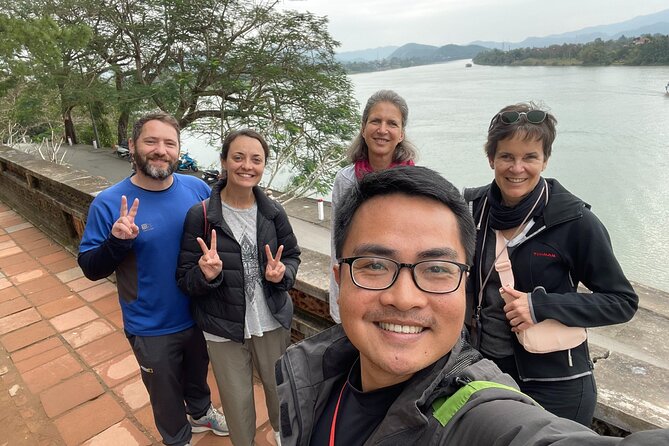
The tour begins at Hai Mươi Ba Tháng Tám in Thuận Hoà, near the Imperial City. From the meeting point, you walk to the Noon Gate, also called Cua Ngo Mon.
This is the grand ceremonial entrance to the walled city. The Nguyen court used it for important events, so it is a natural place to begin. Your guide explains the gate’s symbolic role before leading you farther inside.
You spend about 10 minutes here. That may sound brief, but it works as an introduction. The Noon Gate establishes the strict order of the court, where architecture, movement, and access all reflected rank.
This is also a good point to confirm the guide’s pace and ask questions early. The site is outdoors, and Hue can be hot, so comfortable shoes, water, and light clothing will make the next two hours easier.
Thai Hoa Palace and the ceremony of empire
Thai Hoa Palace is the most important hall on the route. Emperors held court sessions and coronations here, making it one of the key places for understanding how the Nguyen court presented power.
The visit lasts about 25 minutes, the longest stop on the first part of the tour. That gives your guide time to explain the hall’s architecture and the rituals that took place inside.
I find ceremonial buildings more interesting when you understand their rules. The hall was not simply a grand room. It was a stage for rank, protocol, and royal authority. Your guide can help you picture how officials approached the emperor and how a formal court session differed from ordinary palace life.
The tour information lists admission as free at each stop, but this means there is no separate charge at the individual building. Group visitors still need to buy the overall Imperial City entrance ticket, which is 200,000 VND per person.
Hien Lam Pavilion and the Nine Dynastic Urns
The next section shifts from royal ceremony to dynasty and memory. Hien Lam Pavilion is more than 200 years old and was built to honor the Nguyen emperors. Its surviving original design gives you a chance to see an older part of the compound among buildings affected by war and restoration.
You spend about 10 minutes here. Your guide points out its cultural meaning and explains why it mattered to the royal family.
Nearby, the Nine Dynastic Urns make the dynasty’s symbolism tangible. These large bronze urns represent the nine Nguyen emperors. They are imposing objects, but their meaning is more important than their size. They present the dynasty as a line of rulers with a shared legacy.
This is one of the places where a guide earns the fee. Without explanation, the urns are impressive bronze sculpture. With context, they become a statement about ancestry, continuity, and the authority of the imperial house.
More Walking Tours in Hue
- Hue Imperial Ancient City Walking Tour
★ 4.8 · 308 reviews - Half-Day Guided Street Food Walking Tour at Hue
★ 5.0 · 116 reviews - Eat like a local with a local – Walking Tour
★ 4.9 · 57 reviews - Hue Imperial City and Forbidden City Walking Private Tour
★ 4.9 · 42 reviews
The Mieu Temple and royal ancestor worship
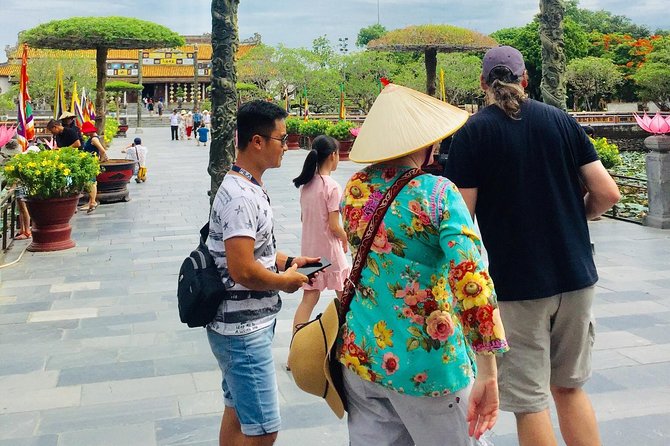
The Mieu Temple is the ancestral temple for past Nguyen kings. You spend about 10 minutes here learning how royal traditions were preserved.
The stop adds a spiritual layer to the tour. Thai Hoa Palace shows public power, while The Mieu shows the dynasty looking backward toward its own rulers. The combination helps you understand that the Imperial City was both a working court and a sacred family center.
Look closely at how the spaces feel different. Ceremonial halls are designed for display and order. Temples carry a quieter purpose, centered on remembrance and ritual. Your guide can explain the traditions that shaped the temple’s use and its place in the royal compound.
Chuong Duc Gate and the palace’s rules for women
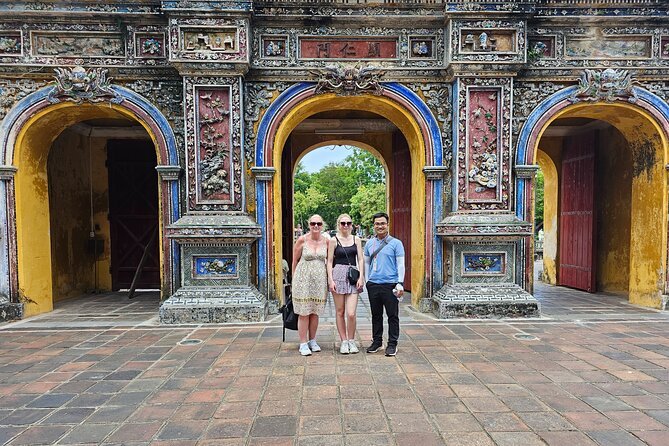
Chuong Duc Gate is one of the four gates of the Imperial City and was reserved for women. The stop lasts about 10 minutes, but the detail is memorable because it reveals how carefully palace movement was controlled.
Hue’s royal complex was not open in the modern sense. Access depended on status, gender, role, and relationship to the emperor. This gate gives you a clear example of that system.
Hoa has been praised for explaining palace life from a woman’s point of view. If your guide takes a similar approach, this may be one of the more useful parts of the walk, especially if you want more than a succession of emperor names and construction dates.
Entering the Forbidden Purple City
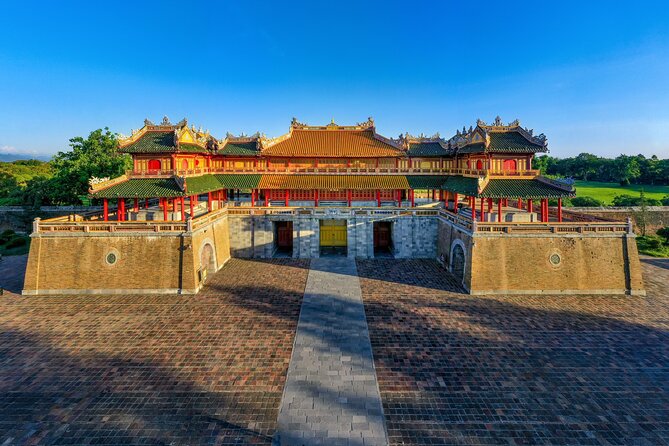
The Hue Royal Palace section introduces the Forbidden Purple City, the third enclosure within the larger Imperial City. This was the private world of the king’s family, including his wives and children.
You spend about 20 minutes here. The name can make the area sound like one intact palace, but it is better understood as a private royal enclosure with many structures and courtyards. Much was damaged, so the experience includes both surviving architecture and signs of loss.
That contrast matters. Hue is not a perfectly preserved court frozen in time. It is a historic site shaped by age, conflict, restoration, and changing ideas about heritage. A guide helps you read the empty spaces and partial remains instead of treating them as disappointing gaps.
The strongest guides bring this section to life through stories about emperors, family life, court duties, and the people who served within the walls. Matthew is especially praised for making the rulers and their lives understandable through anecdotes rather than a dry list of dates.
Kien Trung Palace, recently restored for a fresh look at royal life
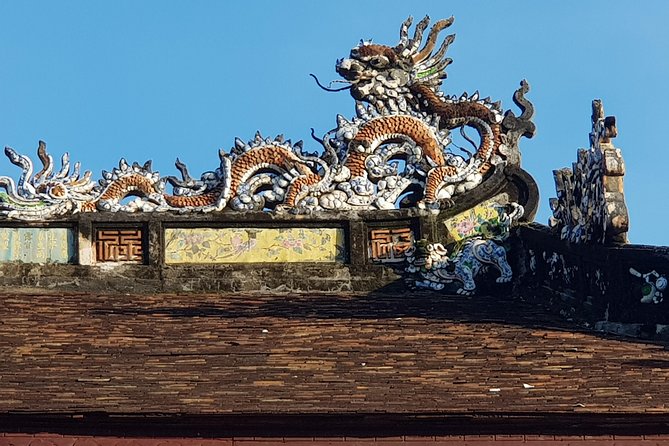
Kien Trung Palace is one of the most anticipated stops because it has recently reopened after years of careful reconstruction. You spend about 20 minutes touring the restored building.
This stop gives the tour a link between the past and present. Much of Hue’s Imperial City carries the marks of damage and repair, while Kien Trung Palace lets you see what a restored imperial residence can look like.
Restoration also calls for a little caution. A newly reconstructed building is not the same as an untouched original, and the tour is most useful when it explains that difference. Here, you can appreciate the scale and design while remembering that the site’s story includes both original fabric and modern conservation work.
For photographers, this should be one of the more attractive stops. Still, allow your guide to finish the explanation before focusing only on pictures. The palace’s value is not just its appearance, but what its reopening says about Hue’s effort to preserve the royal compound.
Thai Binh Pavilion and the royal garden
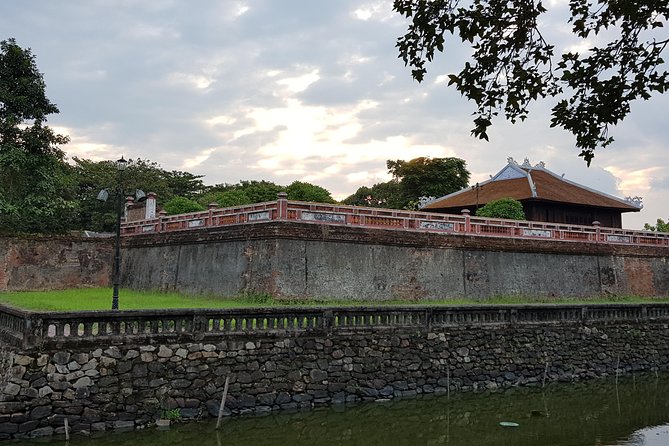
Thai Binh Pavilion, or Thai Binh Lau, was a place where the king read books and enjoyed the scenery. You spend about 10 minutes here.
The building offers a welcome change from formal court halls and temples. It shows a private, quieter side of royal life. The emperor was not always receiving officials or carrying out ritual duties. There were also spaces for reading, reflection, and enjoying views within the palace grounds.
The nearby Thieu Phuong Garden, also called the Royal Garden, receives another 10 minutes. It has been restored with eye-catching scenery and was used by the king and his family for strolling.
These two stops work well together. Thai Binh Pavilion gives you the indoor retreat, while the garden shows how the royal family used outdoor space. If you enjoy architecture and garden design, this section may be more appealing than the formal halls.
Ending at Hien Nhon Gate
The tour concludes at Hien Nhon Gate, an entrance used by mandarins. It provides a final look at the social structure of Vietnam’s last royal dynasty.
Ending here is useful because it returns you to the question of rank and access introduced at the Noon Gate. The route has shown the emperor’s ceremonial hall, ancestral temple, private family enclosure, women’s gate, and garden. Hien Nhon Gate completes that picture by pointing to the officials who made the court function.
The listed end point is 46 Dinh Cong Trang in Hue City. From there, you can continue exploring on your own, and one past participant especially liked having free time after the guided portion to see more of the grounds independently.
Is $9 a good value once admission is added?
The advertised price is $9 per person, but group participants pay an additional 200,000 VND entrance fee. Meals are not included, and tips are optional.
That makes the true cost higher than the headline price, so compare it with the total price of other guided options before booking. Even so, the value is strong if you care about history. You are paying for a 2.5-hour walk, a small group capped at eight, navigation through a large site, and explanations that are difficult to get from signs alone.
The operator does not include the ticket because you may prefer a combo ticket covering the Citadel and royal tombs. That is practical if you plan to visit the tombs during your time in Hue. The private tour option includes the Imperial City entrance ticket, but its price is not provided here, so check the final total carefully.
I would not book this solely to save money. I would book it because Hue’s architecture makes more sense with context, and because the difference between a quick walk and an informed visit is large.
Group, private, family, sunrise, and sunset choices
The standard experience is a small-group tour with a maximum of eight people. That is small enough for questions and clear explanations without the price of a fully private outing.
Upgrade choices include a family-friendly tour, private tours, sunrise or sunset departures, and an option with a meal. The supplied details do not give the prices or exact schedules for those versions, so compare the inclusions at checkout.
Families may appreciate the shorter format and the chance to ask questions, but the site remains a walking tour through a large historic compound. Your comfort will depend on the weather and your child’s interest in architecture and history.
The standard meeting point and end point are in Hue’s Thuận Hoà and city-center areas. The tour is near public transportation, but no hotel pickup or vehicle transfer is listed. Plan to reach the start point yourself.
What the guide quality means for your experience
Guide quality is the biggest variable in a history tour. The strongest guides on this experience are described as clear in English, patient with questions, and good at connecting the Nguyen dynasty to broader Vietnamese history.
Matthew receives repeated praise for his historical training, calm delivery, storytelling, and care for group comfort. Ngoc is noted for passion and strong knowledge of the royal buildings and family. Linh has been helpful with navigation and photos, while Xi has led an excellent tour for a solo participant. Florence and Sue are also named as guides who offered strong explanations.
There is one important warning. One participant found the guide pleasant but too distracted by a phone and not informative enough. Another wanted more detail about the site and palace life. That tells me you should not assume every departure will feel identical.
You can improve the odds by asking questions. Ask about the emperors, the role of women, restoration, palace servants, or the meaning of a building. Guides who welcome questions can shape the walk around your interests.
Timing, weather, and practical comfort
The tour takes about 2 hours and 30 minutes, with stops ranging from 10 to 25 minutes. It is a steady walking experience, not a vehicle tour.
The site requires good weather. If poor weather cancels the tour, you are offered another date or a full refund. On a hot day, water and sun protection matter, and one highly praised guide made a point of checking that the group was comfortable.
Wear shoes suitable for walking on historic grounds. You may also want to leave time after the tour because the Imperial City is large and the guided route cannot show every corner in detail.
Most people can participate, and the meeting area is near public transportation. Confirmation arrives when you book. Cancellation is free up to 24 hours before the start time; cancellations or changes inside that window are not refunded or accepted.
Who should book the Imperial City walking tour?
I would choose this tour if you have only a short time in Hue and want the Imperial City to mean more than an attractive collection of roofs and walls. It suits history fans, first-time visitors, solo travelers who want help finding the main sites, and families who prefer a focused visit.
It is also useful if you tend to get lost in large compounds. The route covers the essential ceremonial, religious, private, and garden areas without asking you to plan your own sequence.
You may prefer to visit independently if you want to linger for hours, work at a photographer’s pace, or avoid a fixed route. You should also check the final cost if you want a private guide or a tour with a meal.
Should you book it?
Yes, if you want the Nguyen dynasty, royal rituals, and palace life explained as you walk. The $9 base price is appealing, but remember to add the 200,000 VND group entrance fee and consider a combo ticket if royal tombs are on your plan.
Book it for the guide’s interpretation, not just the entrance. With a strong guide such as Matthew, Ngoc, Linh, Hoa, Xi, or Florence, the Imperial City becomes easier to navigate and far easier to understand. If your main goal is complete freedom and long photo stops, go on your own instead. For most visitors, though, two and a half hours of focused history is time well spent in Hue.
FAQ
How long does the Hue Imperial City walking tour last?
The tour lasts approximately 2 hours and 30 minutes.
What is the tour price?
The listed group tour price is $9 per person. The Imperial City entrance fee is extra.
How much is the Imperial City entrance fee for the group tour?
The entrance fee is 200,000 VND per person for the group tour option.
Is the entrance ticket included?
No. The group tour does not include the Imperial City entrance ticket. The private tour option includes the entrance ticket.
How many people can join the group?
The group has a maximum of eight travelers.
Where does the tour start?
The meeting point is on Hai Mươi Ba Tháng Tám, Thuận Hoà, Hue City, Vietnam.
Where does the tour end?
The tour ends at 46 Dinh Cong Trang, Ward, Hue City, Vietnam.
What places are visited?
The route includes the Noon Gate, Thai Hoa Palace, Hien Lam Pavilion, Nine Dynastic Urns, The Mieu Temple, Chuong Duc Gate, the Forbidden Purple City, Kien Trung Palace, Thai Binh Pavilion, Thieu Phuong Garden, and Hien Nhon Gate.
Are meals included?
Meals are not included unless your selected option specifically mentions a meal.
Can I cancel for a refund?
You can cancel at least 24 hours before the start time for a full refund. Cancellations and changes made less than 24 hours before the start time are not refunded or accepted.
Recently reviewed around Hue
- Phong Nha National Park: Paradise Cave Half-Day Tour★ 5.0 · 23 reviews
- Official Hue: Dragon Boat, Imperial Citadel, & Market tour★ 4.7 · 32 reviews
- Hue to Hoi An/Da Nang: Private Scenic Motorbike Tour★ 4.9 · 63 reviews
- Hue: Royal Tombs Private Tour with 3 Best Tombs & Pagoda★ 4.9 · 213 reviews
- Hue: Private Transfer to/from Hoi An via Sightseeing Stops★ 4.9 · 111 reviews
- Hue Royal Tombs Tour: Visit Best Pagodas & Mausoleums★ 4.9 · 19 reviews
- Hue Private Tour with Local Guide – Customize Your Itinerary★ 4.8 · 28 reviews
- Hue : Private Day Trip to DMZ : Vinh Moc tunnel & Khe Sanh★ 5.0 · 26 reviews
Imperial City Tours, compared.
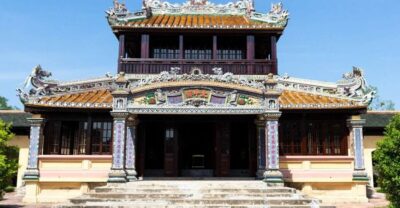
Hue Customizable Tour with Imperial Citadel & Forbidden City
Read our review →
Imperial City, Hue: Day Tour from Hoi An and Da Nang
Read our review →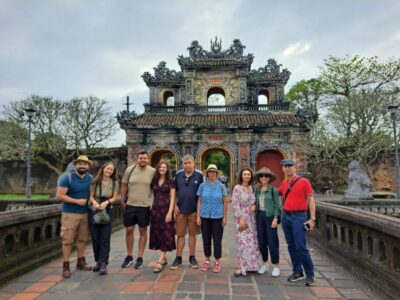
Da Nang/Hoi An: Hue Imperial City via Hai Van Pass & Lunch
Read our review →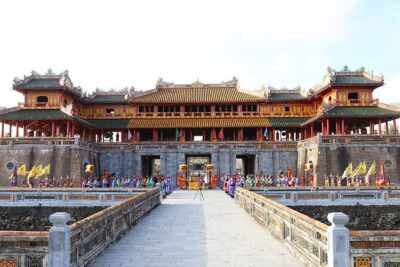
Imperial City Walk, Motorbike Tour & Private Car Options
Read our review →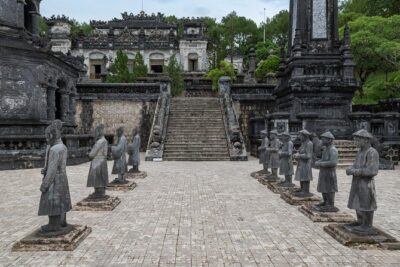
Hue City and The Citadel via Hai Van Pass Daily Small Group Tour
Read our review →
Hue Citadel tour by authentic Train via Hai Van Pass from Da Nang
Read our review →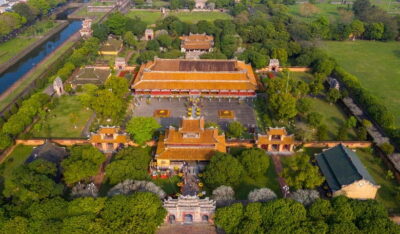
From Da Nang/Hoian/Hue: Hue Imperial City Full-Day Tour
Read our review →
From Hoi An/Da Nang: Hue Imperial City Tour via Hai Van Pass
Read our review →Browse the lists this tour appears in