
Reviewed · COFFEE EXPERIENCES
Hoi An: Vietnamese Coffee Making Workshop at Local Roastery
Vietnamese coffee is not just a strong drink poured over ice. At this small workshop in central Hội An, you learn why the phin filter, whipped egg, coconut, and even salt all have a place in Vietnam’s coffee culture. The class mixes a short coffee lesson with hands-on work, so you do not simply watch a barista make your drink.
I like two things here. First, you choose two of four drinks, which lets you focus on the styles that interest you most. Second, the recipes use ordinary ingredients and simple tools, so you can repeat the coffee at home. The main consideration is pace: some sessions last closer to 75 or 90 minutes, but a busy shop can make the practical part feel a little rushed.
In This Review
- Key points to know before booking
- Four Vietnamese coffees, one small classroom
- The opening lesson, from beans to roasting
- Choosing your two drinks in five minutes
- Making the coffee, step by step
- Sitting down with the two coffees you made
- A short question period and optional bean shopping
- Is $16 good value for an hour in Hội An?
- Timing, meeting point, and practical planning
- Who should book this coffee class?
- Should you book it?
- FAQ
- Where does the Vietnamese coffee workshop take place?
- How long does the activity last?
- Which coffees can I make?
- Do I need previous coffee-making experience?
- Is the workshop conducted in English?
- What is included in the price?
- Is transportation from my hotel included?
- What should I bring?
- Can I cancel the booking?
Key points to know before booking
- Make two drinks yourself: Choose from phin, egg, coconut, and salt coffee, then prepare both with help from an English-speaking barista.
- Start with Vietnam’s coffee story: Learn about beans, roasting methods, brewing styles, and the path from coffee plant to cup.
- Expect a small, practical class: The setting is a local roastery and coffee shop, with tools and ingredients prepared for beginners.
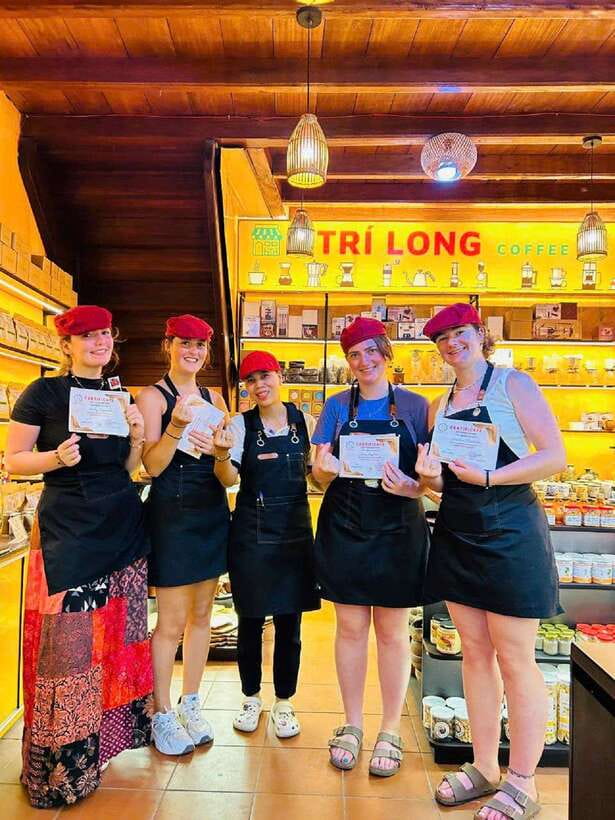
- Leave with useful takeaways: Some sessions include printed recipes and a certificate, giving you more than two coffees to remember the class by.
- Budget about an hour to 75 minutes: The advertised duration is one hour, but the class may run longer depending on questions and the group.
- Meet in central Hội An: Trí Long Coffee is at 88 Phan Châu Trinh Street. Look for the guide outside wearing a red hat.
Four Vietnamese coffees, one small classroom
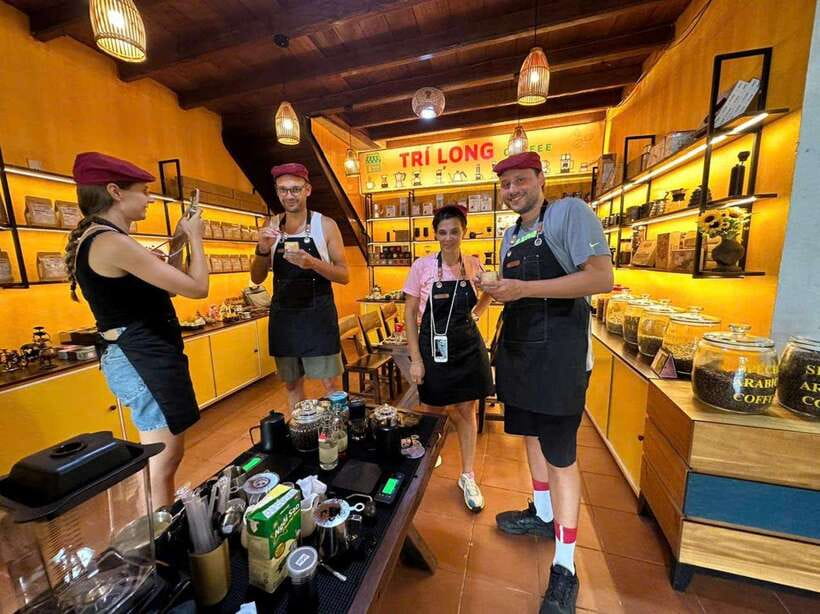
The appeal of this activity is its scale. You are not sent through a large demonstration kitchen or handed a coffee and a quick explanation. You sit at a coffee shop and work through the drinks with a barista beside you.
The class is aimed at complete beginners. You do not need to know the difference between a light and dark roast, own a phin filter, or have any experience foaming egg cream. The instructor sets out the equipment and ingredients, then explains each step before you try it.
The four choices give the class a useful range:
- Phin coffee: This is the traditional Vietnamese filter method. You use a small metal phin placed over a cup, allowing coffee to drip slowly. It is the best choice if you want to understand the basic brewing method behind much of Vietnam’s coffee culture.
- Egg coffee: This combines coffee with a sweet, creamy egg mixture. It is more of a dessert-style drink and gives you a chance to learn how the topping is prepared and balanced with the coffee.
- Coconut coffee: This is a cold, refreshing style with coconut. It was a favorite for several people who took the class, and it is a good pick if you prefer a smoother, sweeter drink.
- Salt coffee: A small amount of salt changes the drink’s flavor and helps balance its bitterness and sweetness. It is an unusual choice if you have only tried standard Vietnamese iced coffee.
You select two drinks. If you are traveling with a partner, you can choose different combinations and taste four styles between you. That is a smart way to get more variety without making the class longer.
More Coffee Tours in Hoi An
- Hoi An: Vietnamese Coffee Culture and Coffee Making Class
★ 4.9 · 4,006 reviews - Early Morning My Son Sanctuary Trip w. Champa Food & Coffee
★ 5.0 · 629 reviews - Vietnamese Culture and Coffee Making Class
★ 5.0 · 497 reviews
The opening lesson, from beans to roasting
The first five minutes are for meeting your barista and getting settled. The guide waits outside Trí Long Coffee wearing a red hat, a useful detail because Phan Châu Trinh Street has several cafés and shops.
Next comes a short introduction to Vietnamese coffee culture. You hear how coffee is grown, roasted, and brewed, along with stories about the origins of the drinks on the menu. The exact depth depends on the questions you ask and the pace of your group, but the session gives enough context to make the recipes feel connected to local life rather than random café inventions.
The roasting section is especially useful if you normally think of coffee only as a finished drink. The barista explains different roasting methods and shows how roast choices affect flavor. You also learn about the beans and processing behind the cup.
I would not book this as a full coffee-tasting seminar. The history and roasting talk is brief, usually around ten minutes. Its purpose is to prepare you for the hands-on section, not to cover every coffee-growing region or technical roasting method.
Still, this short introduction adds real value. Once you know a little about the bean, the roast, and the brewing tool, you can pay attention to how each drink is built. The phin coffee shows the basic extraction method, while the egg, coconut, and salt styles show how Vietnamese cafés turn coffee into something softer, sweeter, or more unusual.
Choosing your two drinks in five minutes
You have around five minutes to make your choices. Take this part seriously, since you cannot prepare all four individually during one standard booking.
For a first visit to Vietnam, I would choose phin and egg coffee if you want the clearest contrast between traditional brewing and a dessert-style drink. Choose coconut and salt coffee if you want two distinctive cold or sweet-leaning styles. If you are traveling as a couple, split your choices and share the results.
The selection also lets you match the class to your taste. The phin style is the most direct route into Vietnamese coffee. Egg coffee is creamy and unusual. Coconut coffee is refreshing, while salt coffee offers the most surprising flavor change.
The workshop is not only about drinking the final result. You prepare the ingredients and follow the method, so your choice affects the work you do. That makes the activity more personal than ordering four drinks from a menu.
Making the coffee, step by step
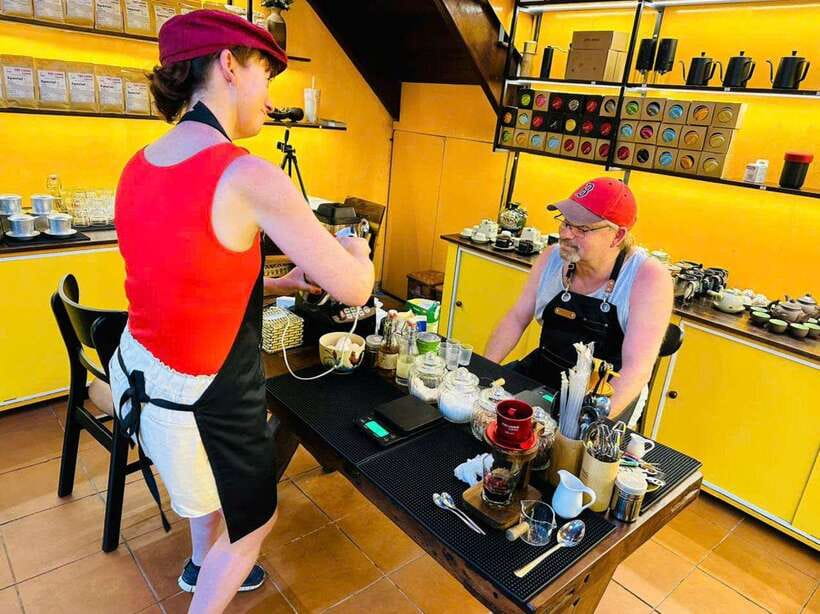
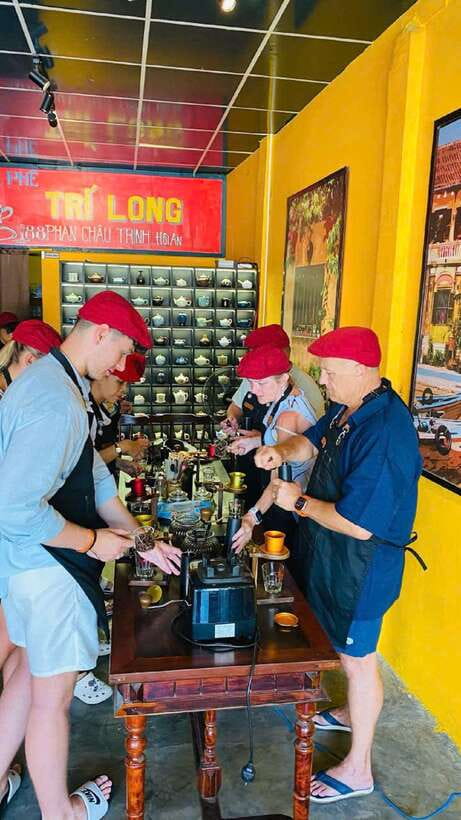
The main part takes about 25 to 30 minutes. Your barista demonstrates each recipe, then guides you as you repeat the process.
Expect clear instructions rather than a formal cooking lesson. The tools and ingredients are supplied, and the setup is arranged to keep the process easy to follow. The guides have been praised for being friendly, patient, and able to answer questions in English. Individual instructors vary, but names that have appeared in recent sessions include Tee, Thi, and Houng.
The class works well because you can ask questions while your coffee is being made. You might ask about the type of beans, the roast, the order of ingredients, or how to recreate the drink at home. The instructor can correct your method before you move to the next step.
For phin coffee, the key lesson is patience. The metal filter slows the brewing process, and that pause helps explain why Vietnamese coffee is often treated as a small ritual rather than a drink grabbed in a hurry.
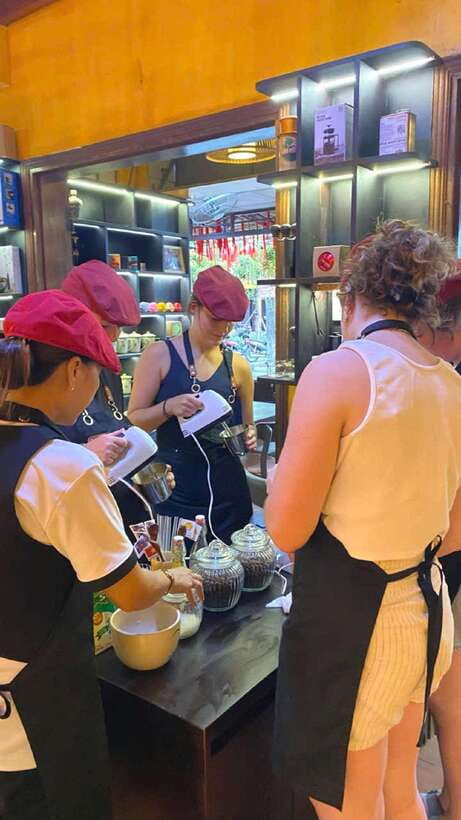
Egg coffee gives you a different task. The creamy topping needs to be prepared carefully so it sits well with the coffee. You are shown how to combine the ingredients and how the layers work together.
Coconut and salt coffee are more accessible if you like sweet or cold drinks. The ingredients are not complicated, and one particularly useful point from the class is that they can be sourced in many places. You do not need a special machine or a long list of hard-to-find products to try them again.
The atmosphere is informal. Trí Long Coffee functions as a roastery, café, and shop, so you are not in a silent classroom. Music may be playing, and other customers or groups may be nearby. That gives the experience a real café feel, but it also means the space is not fully private.
More Vietnamese coffee stops in Hoi An:
- Hoi An: My Son Early Morning with Banh My and Coffee 6 am
★ 4.7 · 205 reviews - Hoi An: Lantern and Coffee Making Class
★ 5.0 · 154 reviews - Hoi An: Hands-on Vietnamese Coffee Making Class with Long
★ 4.8 · 66 reviews - Hoi An: Vietnamese Coffee Making Course
★ 4.9 · 25 reviews
Sitting down with the two coffees you made
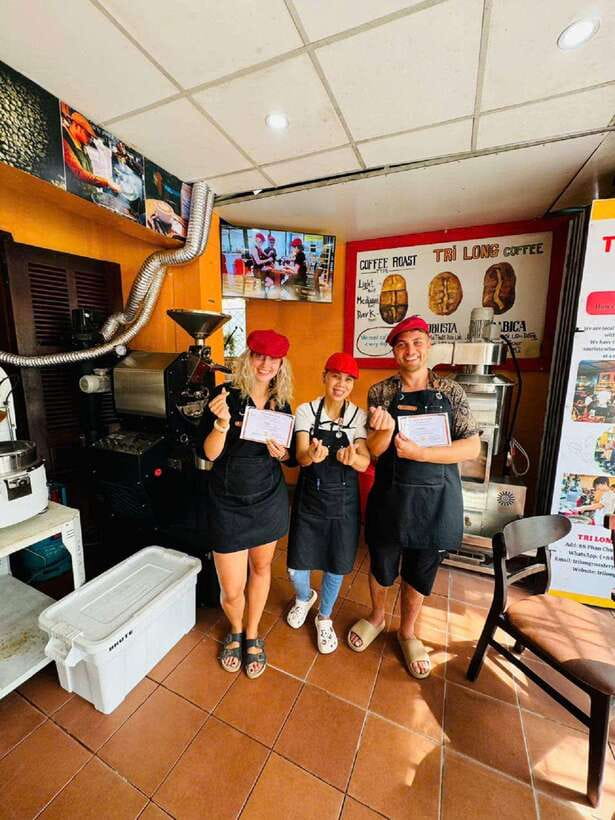
Once both drinks are ready, you sit back and enjoy them for roughly 10 to 15 minutes. This is an important part of the activity. You get to taste the result, compare the two recipes, take photos, and ask follow-up questions.
I like that the coffee you drink is the coffee you prepared. Even a simple recipe feels more memorable when you know which steps produced the texture, sweetness, or strength in the cup.
The final tasting also helps you decide what you might order elsewhere in Hội An. After making egg coffee, for example, you will have a better sense of whether you want another rich, creamy drink. After preparing salt coffee, you can recognize how a small ingredient changes the balance of the cup.
Some sessions finish with a printed recipe sheet and a certificate. These are useful extras, but they should not be treated as guaranteed inclusions because the formal inclusions list focuses on the instructor, equipment, ingredients, and two drinks. If a take-home recipe matters to you, ask during the class.
A short question period and optional bean shopping
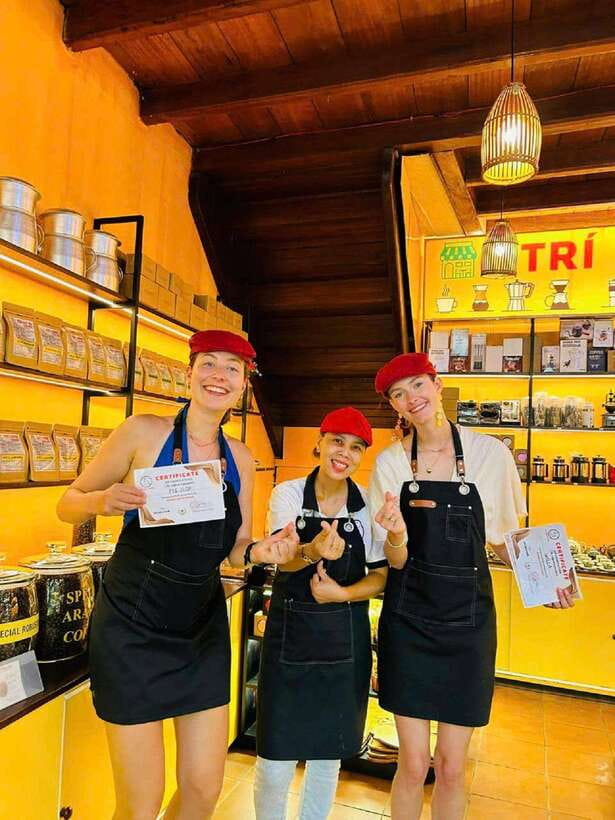
The last part gives you time to ask about beans, roasts, and brewing. You can also look at coffee products in the shop.
The experience does not require you to buy anything. One useful feature is the low-pressure feel around the shop, with no strong push to purchase beans or equipment. If you want to continue experimenting at home, this is a convenient time to ask which roast or tool suits the recipes you enjoyed.
Do not expect a long shopping tour. The optional bean-buying opportunity is simply a chance to browse and ask for advice after the class.
Is $16 good value for an hour in Hội An?
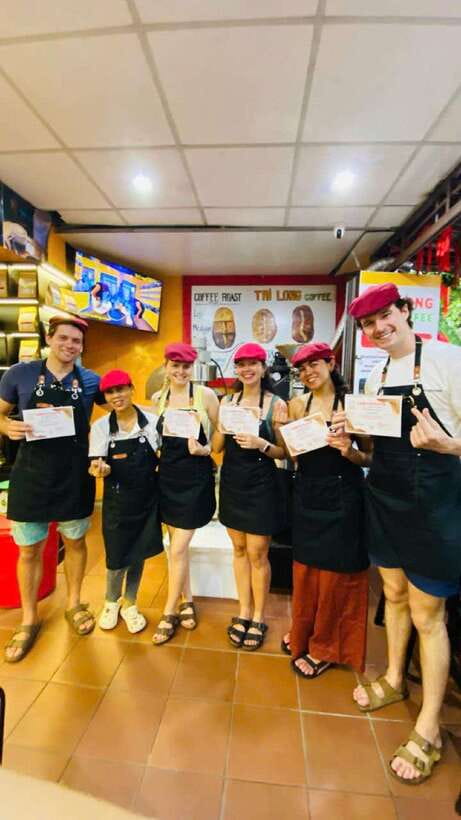
At $16 per person, the price is fair for a focused activity that includes instruction, equipment, ingredients, and two drinks. You are paying for participation rather than just a tasting, which makes the cost easier to justify.
The value is strongest if you are curious about coffee and want a skill you can take home. The recipes are not built around complex equipment, and the class explains enough of the method for you to try them again. That gives the hour a longer life than a normal café stop.
It is also a sensible choice for a rainy afternoon or a break from walking around Hội An. The activity is indoors at a central coffee shop, and you do not need transportation or a half-day commitment.
The value is weaker if you dislike sweet drinks, already know Vietnamese coffee well, or want a detailed professional course. You make only two of the four styles, and the coffee lesson remains introductory. Someone looking for advanced roasting theory or a long tasting flight should choose a different activity.
At the same time, the workshop can be a good deal for couples and families. Each person makes two drinks, and children can take part with adult help. One family used the class to prepare coconut and salt coffee, while another couple selected different recipes to cover all four styles between them.
Timing, meeting point, and practical planning
The meeting point is Trí Long Coffee, 88 Phan Châu Trinh Street, Hội An, in the city center. Arrive five minutes early. The guide should be outside wearing a red hat, which makes the meeting easier.
If you use a taxi or Grab, follow the provider’s directions carefully. One useful tip from the experience is to enter the address accurately rather than relying on a vague search for the café name.
The stated duration is one hour, but plan for 60 to 75 minutes. One session took about 90 minutes, while another felt slightly rushed because other groups were waiting in the shop. Your timing may depend on the group size, questions, and how quickly the drinks are prepared.
Small groups are the best fit. They make it easier to ask about ingredients and get help with the practical steps. Some bookings have had only two people, while family groups and shared sessions are also possible.
Wear comfortable shoes, and bring water, sunscreen, a hat, and a camera. The activity is indoors, but those items are useful for getting to and from the venue in Hội An. Smoking is not allowed.
English is the listed language, and the guides are selected to explain the process and answer questions in English. Instructor names vary by session. Tee, Thi, and Houng have all led classes, so do not worry if your guide is not the person you expected from another booking.
You can cancel up to 24 hours before the start time for a full refund, and the reserve-now, pay-later option keeps your plans flexible. Check the available start times when booking, since the one-hour duration does not mean the workshop runs continuously all day.
Who should book this coffee class?
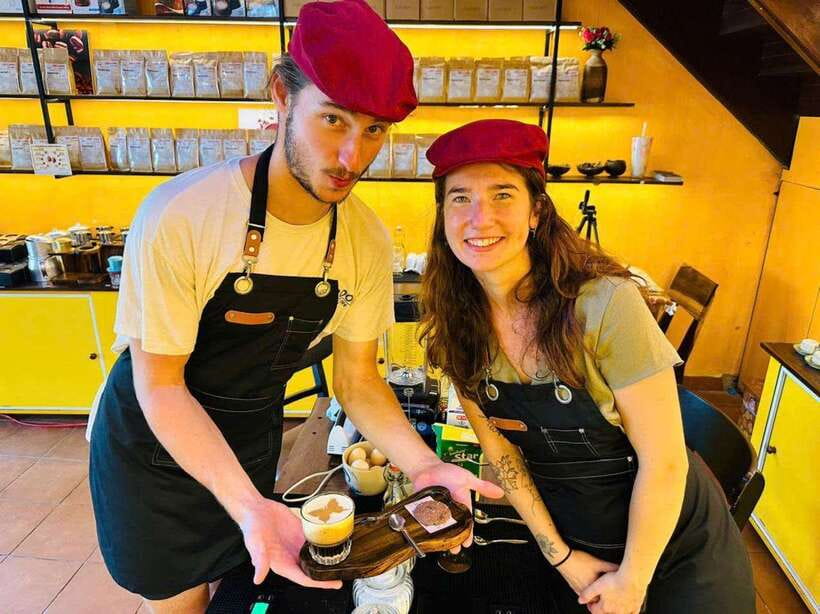
I would recommend it to first-time visitors who want a simple introduction to Vietnamese coffee without committing to a long food tour. It is also a good match for coffee drinkers who like learning by doing.
Couples can use the menu to try all four styles between them. Families can choose sweeter options such as coconut or egg coffee, with the adults helping children through the preparation. The class also suits solo visitors, especially if you enjoy asking questions in a small group.
This may not be the right choice if you need a completely quiet or private setting. Trí Long Coffee is also a working café and shop, so the room can have music, other customers, and waiting groups. If you want a slow, highly technical coffee course, the one-hour format may feel too short.
Should you book it?
Book this workshop if you want two coffees, practical instruction, and a useful introduction to Vietnamese coffee culture in a compact format. The best reason to go is not simply that you get to drink egg, coconut, salt, or phin coffee. It is that you learn enough to make the drinks again after leaving Hội An.
Choose your drinks before you arrive, arrive early, and expect a friendly café setting rather than a private cooking studio. For $16, the combination of two handmade drinks, an English-speaking barista, local coffee context, and recipes you can repeat at home makes this a strong one-hour activity.
FAQ
Where does the Vietnamese coffee workshop take place?
The workshop takes place at Trí Long Coffee, 88 Phan Châu Trinh Street in central Hội An.
How long does the activity last?
The stated duration is one hour, but you should allow 60 to 75 minutes. Some sessions may take around 90 minutes.
Which coffees can I make?
You can choose two drinks from four options: traditional phin coffee, egg coffee, coconut coffee, and salt coffee.
Do I need previous coffee-making experience?
No. The workshop is designed for beginners, and the barista explains each step while you prepare the drinks.
Is the workshop conducted in English?
Yes. The listed tour language is English, with a live English-speaking guide or barista instructor.
What is included in the price?
The price includes the instructor, the coffee-making workshop, all required tools and ingredients, and two coffees that you make yourself.
Is transportation from my hotel included?
No. Hotel pickup and transportation are not included. You travel to the meeting point at Trí Long Coffee yourself.
What should I bring?
Bring comfortable shoes, a hat, a camera, sunscreen, and water. Smoking is not allowed during the activity.
Can I cancel the booking?
Yes. You can cancel up to 24 hours before the activity for a full refund. A reserve-now, pay-later option is also available.
More Workshops in Hoi An
- Hoi An: Vietnamese Foldable Lantern Making Class
★ 4.9 · 3,742 reviews - Cooking Class Hoi An:Local Market, Basket Boat, Fishing & Cooking
★ 5.0 · 3,660 reviews - Hoi An Cooking Class(Market,BasketBoat Crabfishing&Cooking Class)
★ 5.0 · 3,386 reviews - From Hoi An: Market Tour, Basket Boat Ride and Cooking Class
★ 4.8 · 2,208 reviews
Recently reviewed around Hoi An
- Romantic Sunset Dinner Cruise in Hoi An★ 4.7 · 108 reviews
- Thanh Ha Village: Pottery Workshop with Locals★ 4.4 · 223 reviews
- Snorkeling Cham Island: Snorkeling Tour by Speed Boat★ 3.6 · 26 reviews
- Hoi An: Rural Cycling Tour to Village with Basket Boat Ride★ 5.0 · 174 reviews
- Private Car Hoi An to Hue Via Hai Van Pass, Lagoon & More★ 5.0 · 22 reviews
- From Hoi An: Day Tour of My Son Temples and Marble Mountain★ 4.8 · 44 reviews
- Market Tour – Cooking Class – Coconut Boat Riding★ 4.4 · 43 reviews
- From Hoi An: Marble Mountains and My Son Sanctuary Day Trip★ 4.7 · 209 reviews
Coffee Experiences, compared.

Vietnamese Coffee Culture and Coffee Making Class
Read our review →
Hanoi Coffee Experience: 6 Brews, 9 Recipes & 3 Liquor Tastings
Read our review →
Hanoi Coffee Workshop: Taste Salt, Coconut and Egg Coffee
Read our review →
Salt Coffee Workshop Awake Your Senses With 6 Brews
Read our review →
Early Morning My Son Sanctuary Trip w. Champa Food & Coffee
Read our review →
Da Nang Cooking Class with Coffee Tasting and Market Visit
Read our review →Browse the lists this tour appears in