
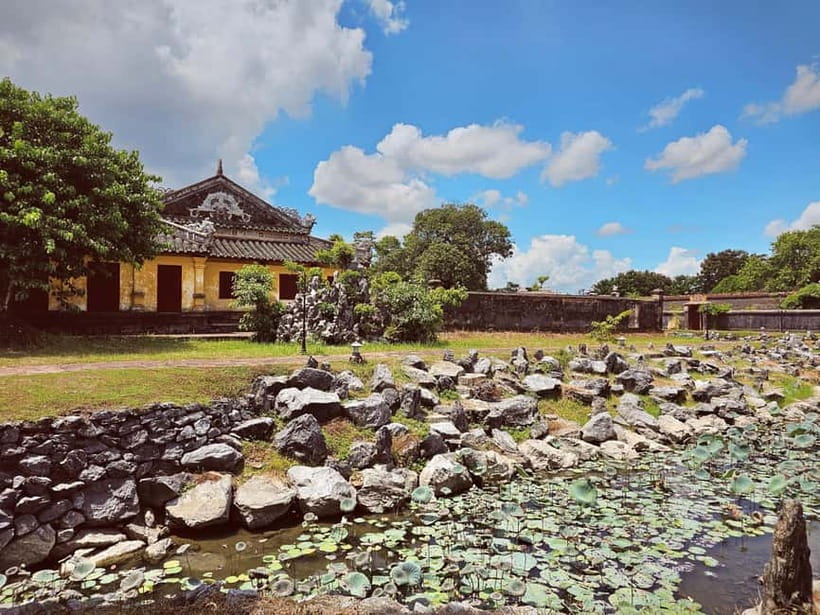
Reviewed · IMPERIAL CITY TOURS
Hue Imperial city walking tour and optional royal tombs
Hue’s Imperial City is more than a collection of handsome gates and half-restored halls. It is a lesson in how the Nguyen emperors used architecture, feng shui, weather, and ceremony to run Vietnam from 1802 to 1945. A historian guide helps turn scattered ruins into a royal stage with rivalries, rituals, and engineering problems.
I like the small-group format and the guide’s focus on ideas rather than dates alone. Matthew, Dang, and Tom are praised for clear explanations, while Tom can guide in French. The main drawback is simple: the 200,000 VND entrance ticket is extra, and summer heat can make a two-and-a-half-hour walk tiring.
In This Review
- Key points at a glance
- Why the Imperial City makes a good guided walk
- Meeting the guide by the Nine Holy Cannons
- Starting at Ngo Mon Gate and the Nguyen capital
- Hien Lam Cac Pavilion and The Mieu Temple
- The Queen Mother’s Residence and palace life
- The Purple Forbidden City and Kien Trung Palace
- Architecture shaped by wind, rain, and floods
- The Nguyen Dynasty’s rise and fall
- Optional royal tombs after the citadel
- Is $26 good value for Hue?
- Heat, timing, and what to bring
- Who should book this Hue walk?
- FAQ
- Where does the Hue Imperial City walking tour start?
- Where does the tour end?
- How long is the walking tour?
- What language is the tour offered in?
- Is the Imperial City entrance ticket included?
- Does the tour include royal tombs?
- Can I see the Changing Guard Ceremony?
- What should I bring in summer?
- Can I cancel or pay later?
Key points at a glance
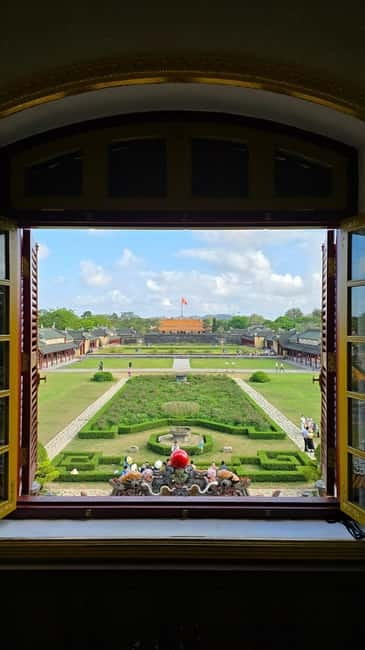
- Imperial City and Forbidden City: See the main royal compound, including Hien Lam Cac Pavilion, The Mieu Temple, the Queen Mother’s Residence, Kien Trung Palace, and the Royal Garden.
- A history-led walk: Learn why Hue became the Nguyen capital, how the court was organized, and what brought the dynasty down.
- Architecture with a purpose: The tour links palace design to feng shui, wind, rain, floods, and the practical demands of court life.
- Small-group attention: The format gives you a better chance to ask questions and shape the discussion around your interests.
- Morning timing: Book the morning option to watch the Changing Guard Ceremony at 8 am in front of Ngo Mon Gate.
- Optional royal tombs: Add more Hue sights if you want to continue beyond the Imperial City, but check the exact option and price before booking.
Why the Imperial City makes a good guided walk
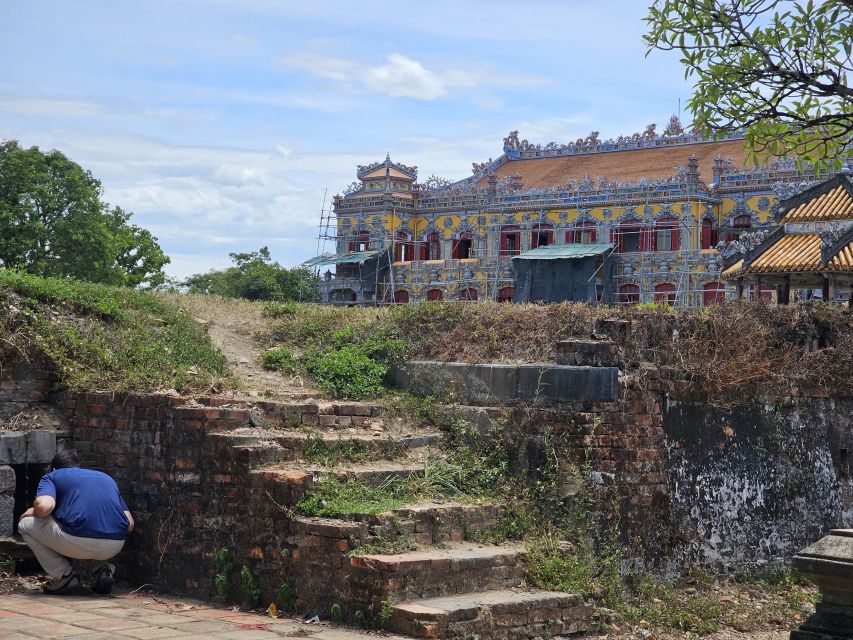
The Imperial City can look straightforward at first: a gate, a formal courtyard, a temple, and a succession of weathered buildings. The meaning is less obvious. This was the political and ceremonial heart of the Nguyen Dynasty, and its layout was designed to control movement, status, and access.
That is where a guide earns the fee. Instead of simply pointing out a roof or wall, your guide can explain why Hue was selected as the capital and how the royal compound reflected imperial power. You learn to read the site as a working court, not just an old monument.
The 2.5-hour length is well judged for the main compound. It gives you time to walk between important buildings without turning the visit into an exhausting full-day lecture. You should still expect a fair amount of standing and walking, especially in hot weather.
The tour is offered in English. Guides named in the feedback include Matthew, Dang, and Tom. Matthew is especially suited to you if you want a detailed discussion of Vietnamese history, palace politics, and the way royal buildings handled wind and floodwater. Tom has guided in French, which may be useful if you prefer that language. The guide assigned to you can vary, so treat those names as examples rather than a guarantee.
More City Tours in Hue
- Hue Customizable Tour with Imperial Citadel & Forbidden City
★ 4.9 · 937 reviews - Hue :Exploring Royal City with Multi Options and Dragon Boat
★ 5.0 · 675 reviews - Hue City Tour Full Day – Group Tour
★ 4.7 · 518 reviews
Meeting the guide by the Nine Holy Cannons
The meeting point is specific, and you should take it seriously. Your guide waits at the four-cannon side of the Nine Holy Cannons. The opposite side has five cannons, so do not simply walk to the first cannon display you see and wait there.
The guide sends a WhatsApp message before the meeting. That small check-in is useful in a large historic complex, particularly if you are arriving after a taxi ride or navigating Hue for the first time. Keep your phone charged and make sure your booking contact details are correct.
The walk ends back at the meeting point. That makes the outing easier to pair with another Hue activity, though you should leave yourself enough time afterward if you plan to eat, shop, or continue to the riverfront.
The entrance fee is not included. Budget 200,000 VND per person for admission, in addition to the $26 guiding fee. The price can vary according to the option you select, particularly if you add royal tomb visits, so read the final booking choice carefully.
Starting at Ngo Mon Gate and the Nguyen capital
A strong beginning matters here. Ngo Mon Gate is one of the clearest symbols of the Imperial City, and the morning option adds the Changing Guard Ceremony at 8 am in front of it.
The tour uses the gate as a way into the larger story. Why did the Nguyen rulers choose Hue as their capital from 1802 to 1945? How did the location, climate, and principles of feng shui affect the plan? These questions give you a useful frame before you begin looking at individual halls.
I like this approach because it keeps the tour from becoming a string of names. You are not only told what a building is called. You learn why the court placed important spaces where it did and how the emperor’s world was separated from the public world outside.
If you want the Changing Guard Ceremony, choose the morning tour and arrive ready for the 8 am start. The provided details do not state how long the ceremony lasts, so do not assume it will replace the full walking tour or shorten the scheduled 2.5 hours.
Hien Lam Cac Pavilion and The Mieu Temple
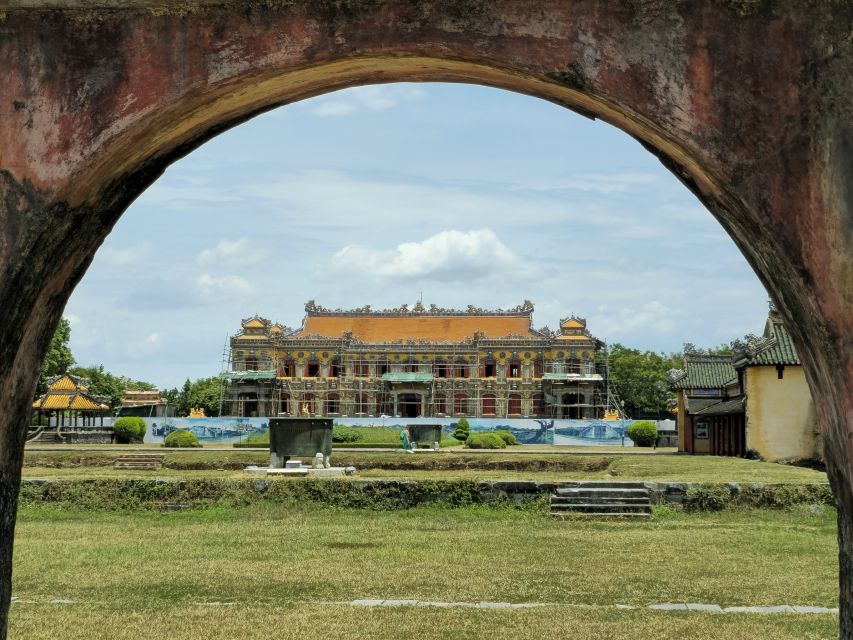
Hien Lam Cac Pavilion is one of the named stops inside the Imperial City. Its importance becomes clearer when you understand that the Nguyen court used buildings, courtyards, and ceremonial routes to honor the dynasty and reinforce its authority.
The Mieu Temple adds another layer. A temple inside the imperial compound was not a random place of worship. It connected royal rule with family lineage and court ritual. Your guide can help you follow that connection and explain how the Nguyen Dynasty presented its own past.
This is one reason I prefer taking the walk with a historian rather than touring alone. You can see the structures without help, but the political and religious meaning is much harder to catch from a quick glance.
The site has suffered damage and restoration over time, so some areas may feel less complete than the grand name Imperial City suggests. That is worth knowing before you go. The reward is not a perfectly preserved palace complex. It is the chance to see surviving structures, restored buildings, open courtyards, and traces of a former court while hearing how the compound once functioned.
More Walking Tours in Hue
- Hue Imperial Ancient City Walking Tour
★ 4.8 · 308 reviews - Eat like a local with a local – Walking Tour
★ 4.9 · 57 reviews - Hue Imperial City and Forbidden City Walking Private Tour
★ 4.9 · 42 reviews - Hue: Imperial City Walk, Motorbike Tour & Private Car Options
★ 5.0 · 732 reviews
The Queen Mother’s Residence and palace life
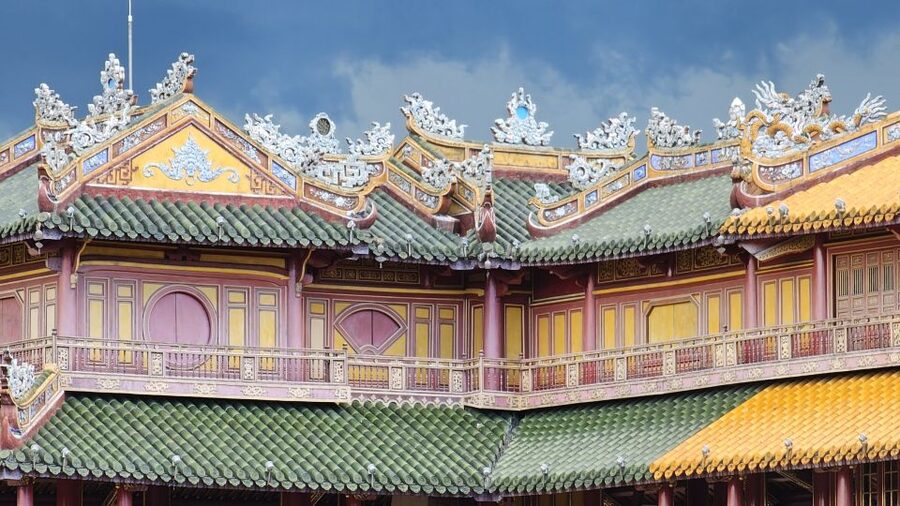
The Queen Mother’s Residence shifts attention away from the emperor alone. Royal compounds were filled with family roles, hierarchy, ceremony, and private spaces, each with rules about who could enter and when.
A guide can make this part personal and human. The history of Hue is not only about government decisions and military events. It also includes palace relationships, family expectations, and intrigues inside a carefully controlled household.
The tone of the tour can adapt to your interests. Matthew was praised for giving detailed accounts of palace intrigue and for answering questions in a way that helped connect the buildings to the people who used them. If you enjoy social history more than architectural labels, say so early in the walk.
The Queen Mother’s Residence is also a reminder that the Imperial City was a complete court environment. You are moving through a network of royal, religious, residential, and ceremonial spaces, not a single palace building.
The Purple Forbidden City and Kien Trung Palace
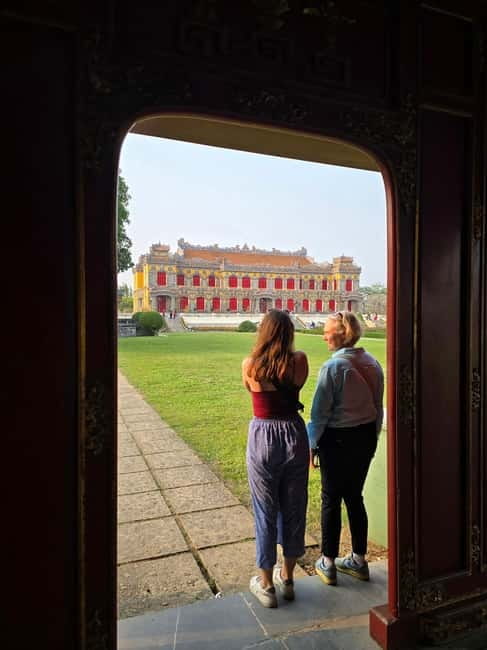
The Purple Forbidden City was the most restricted part of the royal compound, reserved for the emperor, his family, and selected court personnel. Reaching this area helps you understand the strict layers of access built into the Nguyen capital.
Kien Trung Palace is included among the sights. Its presence also points to the complicated condition of Hue’s monuments. You may see a mix of restored work, damaged structures, and open spaces where the old court buildings no longer survive in their original form.
That mix can be disappointing if you expect every palace to be intact. It can also make the visit more honest. A good guide gives you a picture of what the buildings were meant to do, what happened to the dynasty, and how the site changed over time.
The tour also visits the Royal Garden. Gardens inside an imperial setting were not simply decorative. They offered controlled spaces for leisure and display, and their arrangement formed part of the court’s larger design. Ask your guide how the garden fits into the surrounding palace plan. The answer should help you see the Imperial City as a place where beauty and authority worked together.
Architecture shaped by wind, rain, and floods
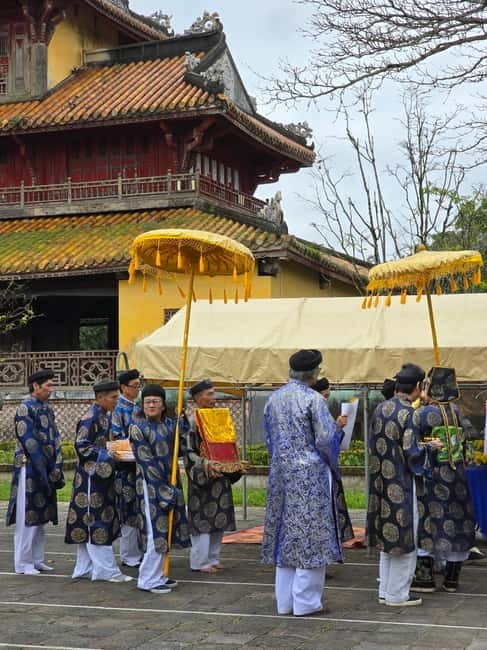
One of the most useful themes in this experience is the practical side of Nguyen architecture. The walk looks at more than carved decoration and rooflines. It asks how royal builders dealt with Hue’s weather, wind currents, and floodwater.
That subject gives the tour a welcome change of pace. Palace architecture can seem distant when it is explained only through dynasties and dates. It becomes easier to grasp when you consider the physical problems builders had to solve.
The Imperial City needed ceremony, protection, drainage, shade, and controlled movement. Its buildings had to work in a hot, wet environment while also expressing the emperor’s rank. Your guide may point out how construction choices related to feng shui and local weather conditions.
You should not expect a technical engineering tour with diagrams or measurements. The value is in seeing the buildings as deliberate responses to place. One guide was praised for explaining ingenious ways the palace complex managed floodwaters and wind currents, so this is a good subject to ask about if it interests you.
The Nguyen Dynasty’s rise and fall
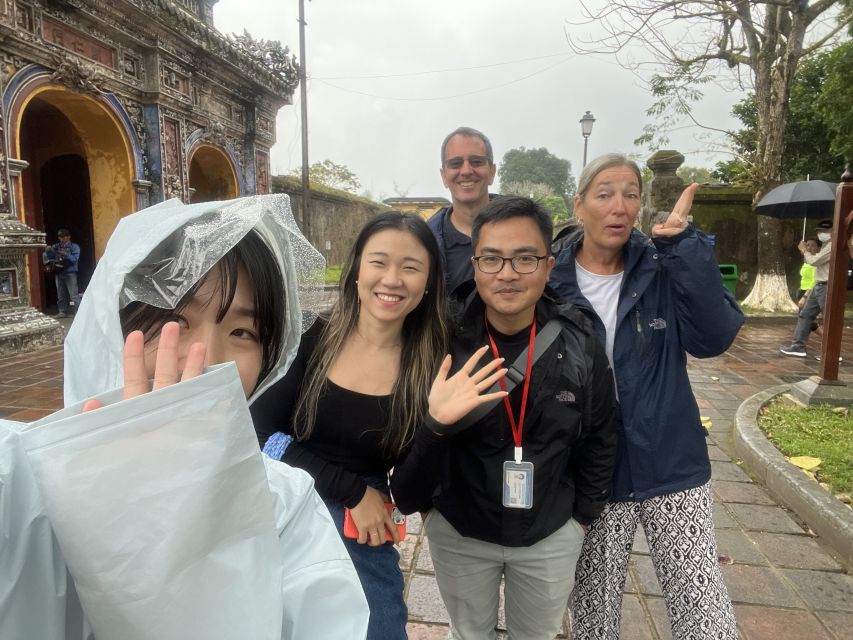
The walk explains why the Nguyen Dynasty became the ruling dynasty of Vietnam and why it eventually fell. That broad story gives shape to everything you see inside the walls.
The dynasty ruled from 1802 to 1945. You will hear about the capital’s role, the royal court, and the pressures that weakened the dynasty. The supplied information does not list every political event covered, so expect a guided overview rather than a full university course in Vietnamese history.
The best version of this tour connects the dynasty’s decline to the physical site. A palace is not only a building. It is a statement of power, and when the political system fails, the meaning of those courtyards changes.
This is also where a small group helps. You can ask why the court made certain choices, how the dynasty dealt with outside pressure, or what happened to the royal buildings after the end of imperial rule. Guides such as Matthew and Dang have been praised for detailed explanations of the Nguyen rulers, temples, palaces, and citadel.
Optional royal tombs after the citadel
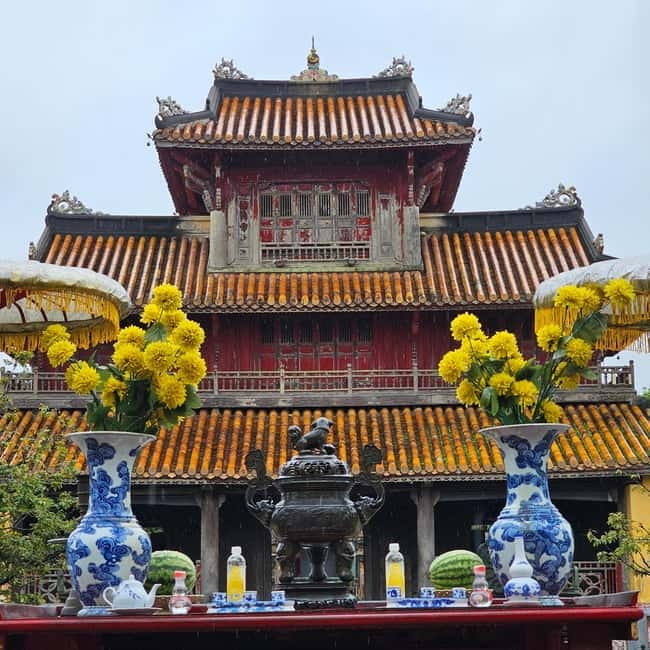
The main experience is the Imperial City walk, but you can choose an option that adds royal tombs. This is a useful extension if you want to understand how Nguyen rulers presented themselves beyond the capital’s walls.
The tombs are not described in enough detail here to promise particular names, buildings, transport arrangements, or a set route. Check the option carefully before paying, especially because the price varies by choice.
A visit to the tombs can complement the citadel well. Inside the Imperial City, you see the court at work. At a royal tomb, you would see how an emperor’s memory and final resting place were shaped. The two experiences answer different questions, so adding the tombs makes sense if imperial architecture is your main reason for visiting Hue.
A separate guided outing has also included two royal tombs and Dong Ba Market. That is not part of the basic 2.5-hour walk unless specifically selected, so do not assume the market or tombs are included in the standard booking.
Is $26 good value for Hue?
At $26 per person, the experience offers fair value if you care about context and conversation. The price covers the guiding fee, while the 200,000 VND entrance ticket is extra. You are paying for a focused 2.5-hour explanation of one of Hue’s most important sites, not for transport, admission, or a full-day sightseeing package.
The value rises if you ask questions and want more than a photo stop. A guide can save you from missing the meaning of Hien Lam Cac, The Mieu, the Queen Mother’s Residence, the Purple Forbidden City, Kien Trung Palace, and the Royal Garden.
It is less compelling if you prefer to move quickly and read signs on your own. The Imperial City is large enough that you can spend time there without a guide, but the court structure, architectural logic, and dynasty story are much easier to follow with help.
The small-group format is another point in its favor. It is more personal than a large group, and guides can respond to your interests. Ask at the start for more palace politics, architecture, ceremonies, or the dynasty’s decline, depending on what you want.
Heat, timing, and what to bring
Hue can be hot and humid from May through August. Bring more water than you think you need, and choose the morning tour if you want cooler conditions and the 8 am Changing Guard Ceremony.
The 2.5-hour duration means you should wear comfortable walking shoes and plan for time outdoors. The supplied information does not specify shade, seating, or restroom stops, so do not count on frequent breaks.
The meeting point and return point are the same, which keeps the plan simple. A WhatsApp message before the tour adds a useful safety check, but you still need to arrive at the correct four-cannon side of the Nine Holy Cannons.
Cancellation is flexible up to 24 hours before the experience for a full refund, and you can reserve now and pay later. That helps if your Hue schedule is still changing.
Who should book this Hue walk?
Book it if you want the Imperial City explained by someone who can connect architecture, royal ritual, political history, and practical building design. It suits first-time visitors to Hue, history-minded couples, and anyone who likes to ask questions rather than rush from one landmark to the next.
It is also a good choice if you want a small group and an English-speaking guide. French speakers should check the guide assignment, since Tom has guided in French, but the listed language for the experience is English.
You may want to skip it if you only have time for a quick independent visit, dislike walking in heat, or want entrance fees and transport bundled into one price. In that case, the extra ticket and optional add-ons may make the final cost less straightforward.
For most people, I would choose the morning start, bring water, and pay for the guide rather than treating the Imperial City as a backdrop for photos. The palace walls tell part of the story. The explanations about dynasty, design, water, wind, and court life are what make the visit worth your time.
FAQ
Where does the Hue Imperial City walking tour start?
The guide waits at the four-cannon side of the Nine Holy Cannons. The opposite side has five cannons, so make sure you use the correct side.
Where does the tour end?
The activity ends back at the meeting point by the Nine Holy Cannons.
How long is the walking tour?
The Imperial City walking tour lasts 2.5 hours.
What language is the tour offered in?
The listed tour language is English. Tom has also guided in French, so check the guide details if French is important to you.
Is the Imperial City entrance ticket included?
No. The entrance fee is 200,000 VND per person and must be paid separately.
Does the tour include royal tombs?
Royal tombs are available through optional tour choices. The basic experience focuses on the Imperial City and Forbidden City, so check the selected option carefully.
Can I see the Changing Guard Ceremony?
Yes, if you book the morning tour. The ceremony takes place at 8 am in front of Ngo Mon Gate.
What should I bring in summer?
Hue is often hot and humid from May through August. Bring extra water for the walk.
Can I cancel or pay later?
You can reserve and pay later, and cancellation up to 24 hours in advance qualifies for a full refund.
More Walking Tours in Hue Vietnam
- Private Street Food Evening Walking Tour in Ho Chi Minh City
★ 5.0 · 3,175 reviews - [HOT] Hanoi Old Quarter Walking Street Food – Small Group Tour
★ 5.0 · 2,163 reviews - Super Niche Walking Street Food Tour in Ho Chi Minh City
★ 5.0 · 1,636 reviews - Private Walking Tour of Hanoi City
★ 5.0 · 1,251 reviews
Recently reviewed around Hue Vietnam
- Phong Nha National Park: Paradise Cave Half-Day Tour★ 5.0 · 23 reviews
- Official Hue: Dragon Boat, Imperial Citadel, & Market tour★ 4.7 · 32 reviews
- Hue to Hoi An/Da Nang: Private Scenic Motorbike Tour★ 4.9 · 63 reviews
- Hue: Royal Tombs Private Tour with 3 Best Tombs & Pagoda★ 4.9 · 213 reviews
- Hue: Private Transfer to/from Hoi An via Sightseeing Stops★ 4.9 · 111 reviews
- Hue Royal Tombs Tour: Visit Best Pagodas & Mausoleums★ 4.9 · 19 reviews
- Hue Private Tour with Local Guide – Customize Your Itinerary★ 4.8 · 28 reviews
- Hue : Private Day Trip to DMZ : Vinh Moc tunnel & Khe Sanh★ 5.0 · 26 reviews
Imperial City Tours, compared.
Hue Customizable Tour with Imperial Citadel & Forbidden City
Read our review →
Imperial City, Hue: Day Tour from Hoi An and Da Nang
Read our review →
Da Nang/Hoi An: Hue Imperial City via Hai Van Pass & Lunch
Read our review →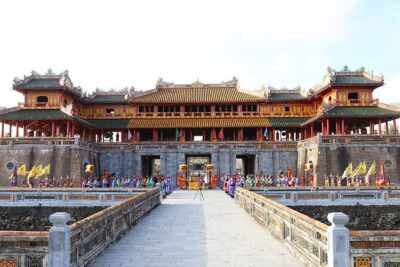
Imperial City Walk, Motorbike Tour & Private Car Options
Read our review →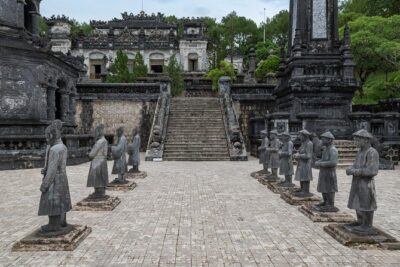
Hue City and The Citadel via Hai Van Pass Daily Small Group Tour
Read our review →
Hue Citadel tour by authentic Train via Hai Van Pass from Da Nang
Read our review →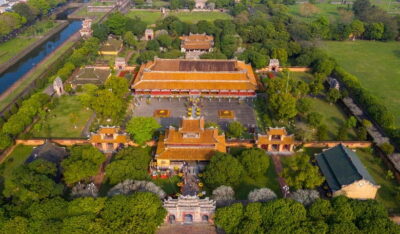
From Da Nang/Hoian/Hue: Hue Imperial City Full-Day Tour
Read our review →
Hue Imperial City Walking Tour: Citadel & Forbidden City
Read our review →Browse the lists this tour appears in