
Reviewed · HUE TOURS
Guided Private Tour – Explore Hue’s Royal Tombs & Thien Mu
Hue’s royal tombs are not just burial sites. They are grand personal statements, built by Nguyen emperors to express their beliefs, tastes, and ideas about power. This private tour links Minh Mang, Khai Dinh, and Tu Duc with the graceful seven-story Thien Mu Pagoda, giving you the clearest single-day look at Hue’s imperial past.
I like the privacy of having your own car and guide, and I like that all entrance fees are handled for you. Guides Hoa and Nhu have been praised for clear English, patience, and strong knowledge of the buildings. The main consideration is lunch: it is not included, and the day may feel full if you want long, unhurried visits at every site.
In This Review
- Key points at a glance
- Why these tombs explain Hue better than a city walk
- Minh Mang Tomb: order, water, and Confucian ideals
- Khai Dinh Tomb: a bold change in architectural taste
- Tu Duc Tomb: an emperor’s retreat before his death
- Thien Mu Pagoda beside the Perfume River
- What the private car changes
- The guide is the main reason to book privately
- Is $68 a fair price?
- Who will get the most from this tour?
- Practical tips for a smoother day
- Should you book this Hue tombs tour?
- FAQ
- Where does the tour take place?
- Is hotel pickup included?
- What kind of transport is provided?
- Is the tour private?
- Is an English-speaking guide included?
- Are entrance fees included?
- Is lunch included?
- What should I wear?
- Is the tour suitable for everyone?
- Can I cancel the booking?
Key points at a glance
- Three very different royal tombs: Compare Minh Mang’s formal Confucian design, Khai Dinh’s dramatic Eastern-Western blend, and Tu Duc’s quiet retreat.
- A private English-speaking guide: Hoa and Nhu are named guides associated with especially strong explanations and attentive service.
- Private air-conditioned transport: Hotel pickup and drop-off from Hue city center make the route easier in Vietnam’s heat.
- Thien Mu Pagoda by the Perfume River: Finish at Hue’s oldest and most revered religious monument.
- Tickets and water included: Entrance fees and one bottle of water per person are covered.
- Flexible lunch stop: Food costs extra, but you can ask the guide to stop when you are hungry.
Why these tombs explain Hue better than a city walk
Hue was the capital of the Nguyen Dynasty, and its rulers did not treat their tombs as plain memorials. Each complex was planned around buildings, gardens, ponds, hills, gates, and ceremonial spaces. The result is a set of places that feel part palace, part park, and part monument.
That variety is the reason I find this route worthwhile. Minh Mang is measured and formal. Khai Dinh is ornate and unusual. Tu Duc is calm and personal. You are not seeing the same site three times with different names.
A guide adds real value here because many details are easy to miss. The position of a gate, the shape of a pavilion, the use of water, and the choice of symbols all relate to the emperor’s character or beliefs. You can walk through the grounds alone, but you may only see old buildings. With Hoa or Nhu explaining the setting, the sites become easier to read.
The private format also gives you room to ask questions. One person who took the tour alone described having Hoa as a personal guide, with time for questions and photographs. That does not guarantee you will receive the same guide, but it shows the sort of attention a private booking can allow.
More Hue Vietnam trips worth a second look
- Hue: Private Car to Hoi An via Fabulous Stops
★ 5.0 · 371 reviews - Hue: Royal Tombs & Pagoda Private Tour By Dragon Boat & Car
★ 4.9 · 257 reviews - Hue: Royal Tombs Private Tour with 3 Best Tombs & Pagoda
★ 4.9 · 213 reviews
Minh Mang Tomb: order, water, and Confucian ideals
The first major stop is Minh Mang Tomb, often regarded as one of the finest examples of Nguyen Dynasty architecture and artistry. Its setting is peaceful, with carefully arranged gardens and a strong sense of balance.
Minh Mang’s complex reflects his Confucian outlook. That matters because the site is not simply decorative. Its arrangement expresses order, authority, and a close relationship with nature. Your guide can help you understand how the buildings and open spaces work together instead of leaving you to guess at their meaning.
This is a good opening stop because it sets a standard for the rest of the tour. Look for the contrast between formal structures and planted spaces. The beauty comes from the way the complex is arranged as a whole, not from one single building.
You should wear comfortable clothes here. The visit involves moving through an old monument site, and the grounds are more enjoyable when you are not worrying about stiff clothing or uncomfortable shoes. A long-sleeved shirt is also recommended for the day.
Minh Mang is likely to appeal most if you prefer calm, balanced architecture to heavy decoration. It may feel less immediately dramatic than Khai Dinh, but its design is easier to appreciate once you understand the emperor’s ideals.
Khai Dinh Tomb: a bold change in architectural taste

Khai Dinh Tomb looks and feels different. Set among the Chau Mountains, with pine forests, cassava fields, and sugar cane farms around it, the site reflects a period when Vietnam was moving through major cultural changes.
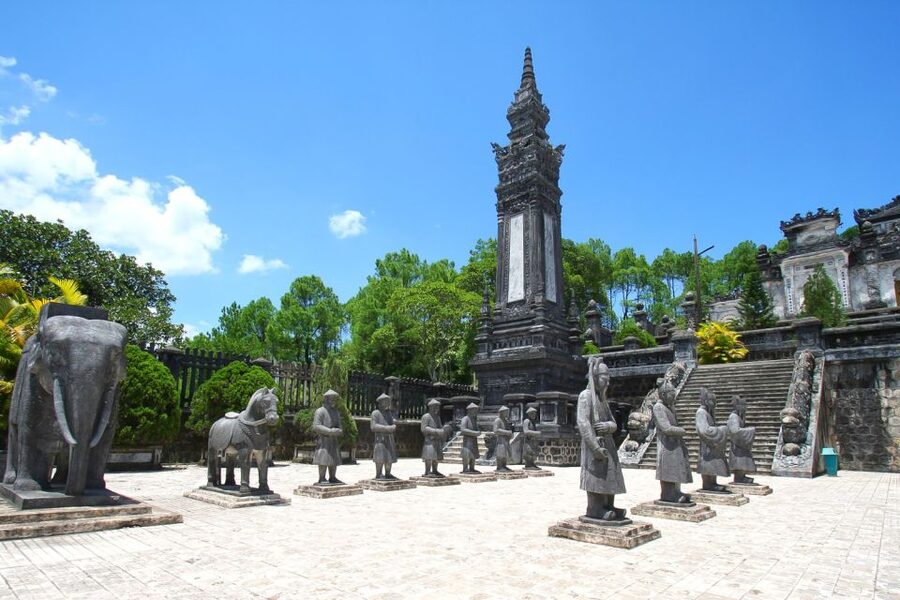
Construction took eleven years and finished in 1931. The tomb combines Eastern and Western design, making it one of the most visually distinctive stops on the route. You may see traditional Vietnamese ideas alongside details shaped by European influence. That mixture is the point. Khai Dinh’s tomb records a changing era through stone, decoration, and structure.
This is the stop where your guide’s explanations can be especially useful. Without context, the mix of styles may seem simply unusual. With an explanation of the period, you can see the tomb as a record of Vietnam’s early 20th-century transition.
Khai Dinh is also a strong choice for photographs. The setting among the mountains and rural fields gives the visit a different feel from the more formal grounds of Minh Mang. At the same time, the site may be less restful than Tu Duc because its visual style is more intense and heavily worked.
If you want a quiet walk through gardens, Khai Dinh may not be your favorite tomb. If you enjoy unusual buildings and clear contrasts between architectural traditions, it could be the highlight of the day.
Tu Duc Tomb: an emperor’s retreat before his death
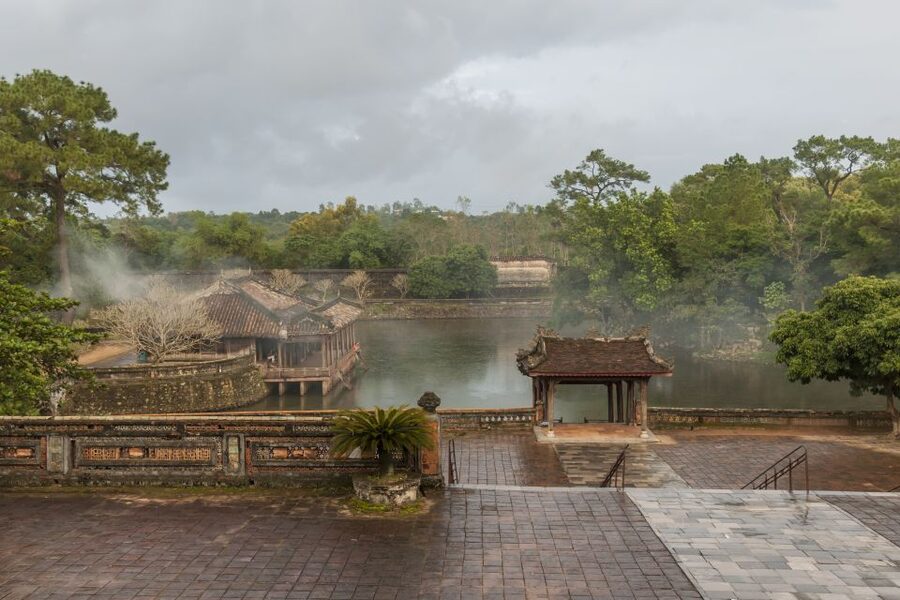
Tu Duc Tomb is about 7 kilometers from Hue, in an area of rolling hills and pine trees. Its ponds, shaded paths, and poetic pavilions give it the mood of a private retreat rather than a formal final resting place.
That impression is not accidental. Emperor Tu Duc used the site as a retreat during his lifetime. He commissioned the tomb 16 years before his death and wrote his own epitaph. Those details make the complex feel unusually personal. You are seeing not only a burial site but also a place shaped around the emperor’s life and reflection.
The grounds include lotus ponds, trees, and pavilions. Take your time here if the schedule allows. Tu Duc is the kind of place that rewards slowing down, looking across the water, and noticing how the buildings relate to the surrounding hills.
One person who took the tour especially liked the tomb with the summer palace, a likely reference to the relaxed character of Tu Duc’s complex. That is a useful clue if you are deciding which stop may suit you. Minh Mang is about order, Khai Dinh is about display and change, and Tu Duc offers the most peaceful sense of lived space.
The main drawback is that the three tombs can begin to blur together if you rush. Ask your guide to point out the main difference between each emperor’s site. That simple question will help you remember the visits as three separate experiences.
A different kind of day out, same stretch of Vietnam:
- Hue Customizable Tour with Imperial Citadel & Forbidden City
★ 4.9 · 937 reviews - Hue :Exploring Royal City with Multi Options and Dragon Boat
★ 5.0 · 675 reviews - Hue City Tour Full Day – Group Tour
★ 4.7 · 518 reviews - From Hue: DMZ Tour with Vinh Moc Tunnels and Khe Sanh Base
★ 4.9 · 503 reviews
Thien Mu Pagoda beside the Perfume River
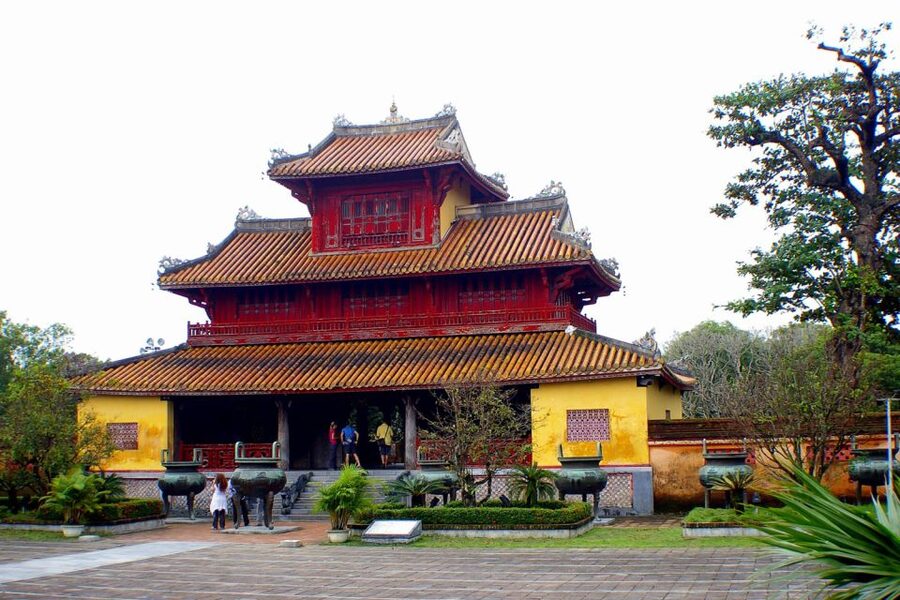
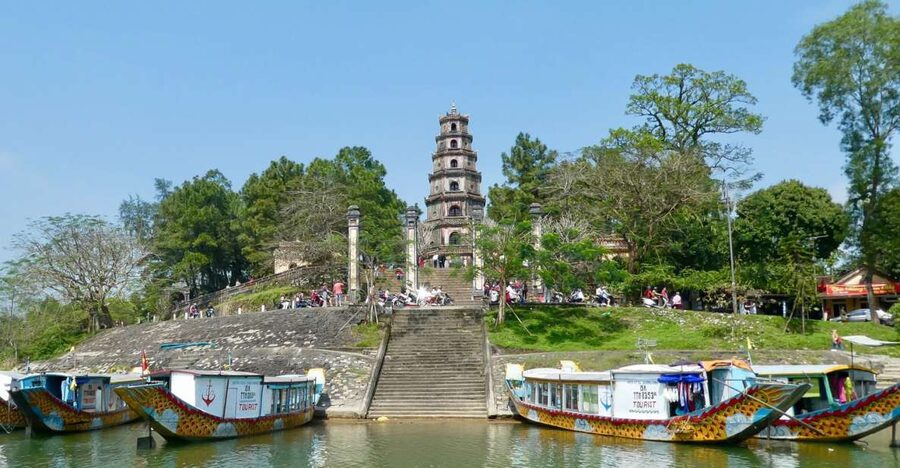
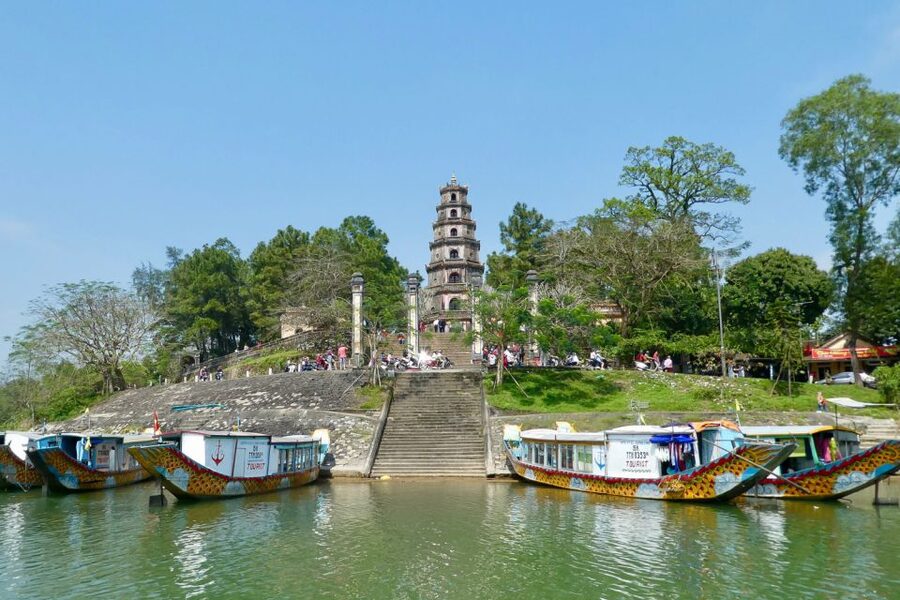
The final stop is Thien Mu Pagoda, Hue’s oldest and most revered religious monument. Its seven-story tower is one of the city’s best-known sights, and the pagoda’s position near the Perfume River gives the stop a welcome change of pace after the tombs.
The pagoda was built in the 17th century and is tied to a local legend. A prophetic woman was said to have foretold the construction of a sacred site here, giving the pagoda its spiritual importance and name.
This stop is not simply an extra monument added to fill out the route. It helps place the royal tombs within the wider religious life of Hue. The tombs show how emperors presented themselves. Thien Mu offers a different kind of importance, rooted in belief, worship, and local tradition.
Take a moment to look toward the Perfume River. One of the highlights of this tour is seeing how water connects different parts of Hue. The river adds an open, quiet view after the enclosed courtyards and gardens of the tombs.
Because the pagoda is a religious site, dress respectfully. Short skirts are not allowed, and a long-sleeved shirt is recommended. Comfortable clothing will also make the full day easier.
What the private car changes
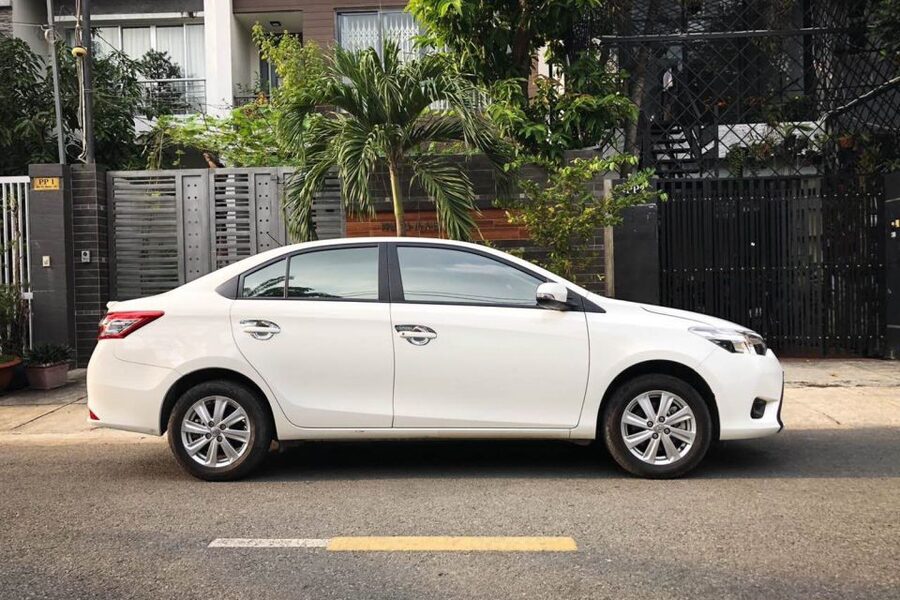
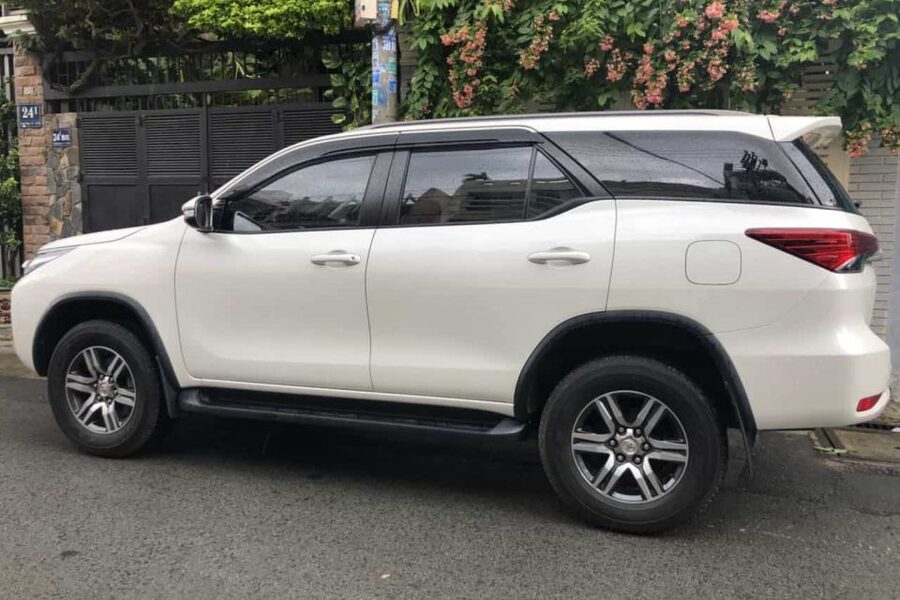
Your transport is a private air-conditioned car with a driver. Pickup and drop-off are included from hotels in Hue city center, so you do not need to arrange separate transport between the sites.
That matters in Central Vietnam, where a day of outdoor sightseeing can be tiring. The car gives you a cool place to rest between monuments, and the private setup avoids waiting for a larger group. It also gives you a direct way to ask for a lunch stop when you are ready.
The exact tour duration is not provided, so you should not assume every stop will receive the same amount of time. If photography matters to you, say so early. One reason Hoa received such high praise was his patience while a visitor took many photos. A private guide is most useful when you explain what you want from the day.
The driver is part of the experience too. Feedback about the driver included friendly conversation and an amusing ability to discuss soccer in another country. That kind of local contact can make the road time feel less like dead time.
The guide is the main reason to book privately
The monuments are worth seeing on their own, but the guide is what can turn the route into a connected story. The strongest comments about Hoa focused on his English, historical explanations, patience, and willingness to answer questions. Nhu was also praised for enthusiasm and for explaining both the country’s past and the buildings themselves.
You should still remember that guide assignments can vary. The tour is in English, and named guides are not guaranteed for every booking. Even so, the repeated emphasis on clear explanations and personal attention is a good sign for anyone who wants more than a quick drive between ticket gates.
A useful question to ask is why each emperor chose that particular style and setting. Ask how the architecture reflects Confucian ideas, why Khai Dinh looks different from the older tombs, and why Tu Duc used the complex as a retreat. These questions fit the route and invite the guide to explain the details that make each site distinct.
The tour can also include a small local addition if you arrange it with the guide. One private visit included a stop at an incense market, where the visitor made incense. This is not listed as a guaranteed part of the route, so treat it as a possible extra rather than a promise. If that kind of hands-on local stop interests you, ask before the day begins.
Is $68 a fair price?
At $68 per person, this is not the cheapest way to see Hue’s tombs. The price includes a private air-conditioned car, driver, English-speaking guide, hotel pickup and drop-off from Hue city center, all entrance fees, and one bottle of water.
That bundle makes the price easier to defend, especially if you are sharing the tour with another person or a small private party. You are paying for transport, guiding, and convenience in one booking, rather than piecing together separate rides and tickets.
The value is strongest if you care about context. If you only want to photograph the gates and move on, a cheaper transport option may be enough. If you want to understand the symbols, compare the emperors, ask questions, and avoid handling tickets yourself, the private format earns its keep.
Lunch is the main extra cost. It is not included, but you can ask the guide to stop wherever you are hungry. Bring your own spending money for food and other personal expenses.
Who will get the most from this tour?
I would recommend this experience to first-time visitors who want a clear introduction to Hue’s imperial sites. It also suits people who prefer a private car to arranging local transport on their own.
It is a strong match for you if:
- You want to compare three different royal tombs in one outing.
- You prefer explanations to simply walking through old buildings.
- You value hotel pickup and drop-off.
- You want flexibility for photographs and questions.
- You are comfortable wearing respectful clothing at a religious site.
It may be less suitable if you want a slow, highly specialized architectural study of one tomb. Visiting three tombs plus Thien Mu Pagoda creates a full sightseeing day, and the tour is designed for coverage as well as detail.
The experience is also not suitable for pregnant women or people over 70 years. Comfortable clothes are recommended, and short skirts are not allowed.
Practical tips for a smoother day
Wear light, comfortable clothes that also meet the dress requirement at Thien Mu Pagoda. A long-sleeved shirt is the safest choice, and it avoids a last-minute clothing problem.
Bring money for lunch, drinks, and personal purchases. The tour includes one bottle of water per person, but other drinks are not included.
Tell the guide if you want extra photo time, a lunch stop, or a possible incense-market visit. Private tours work best when you use the flexibility instead of silently following the standard route.
If you are sensitive to heat, use the car breaks well. Drink water between stops and avoid treating every monument as a race. Tu Duc in particular deserves a little breathing room because its ponds and pavilions are part of its appeal.
You can reserve now and pay later, which helps if your Hue plans are still shifting. Cancellation is allowed up to 24 hours in advance for a full refund.
Should you book this Hue tombs tour?
Book it if you want the main royal tombs explained in plain English, with private transport and the freedom to ask questions. The biggest strengths are the contrast between the three tombs, the easy car service, and guides such as Hoa and Nhu, who bring patience and personality to the history.
Skip it if you prefer to explore at your own pace, do not need a guide, or want lunch included in the price. For most first-time visitors to Hue, though, $68 is a reasonable trade for a well-organized day covering the city’s most important imperial and religious sights.
FAQ
Where does the tour take place?
The tour takes place in Hue, in Central Vietnam. It visits Minh Mang Tomb, Khai Dinh Tomb, Tu Duc Tomb, and Thien Mu Pagoda.
Is hotel pickup included?
Yes. Pickup and drop-off are included for accommodation in Hue city center.
What kind of transport is provided?
You travel by private air-conditioned car with a driver.
Is the tour private?
Yes. The experience is described as a private guided tour with a private car and guide.
Is an English-speaking guide included?
Yes. The tour includes a private guide, and English is the listed language.
Are entrance fees included?
Yes. All entrance fees are included in the price.
Is lunch included?
No. Lunch and other drinks are not included. You can ask the guide to stop for lunch when you are hungry.
What should I wear?
Wear comfortable clothes and bring a long-sleeved shirt. Short skirts are not allowed.
Is the tour suitable for everyone?
The tour is not suitable for pregnant women or people over 70 years.
Can I cancel the booking?
Yes. You can cancel up to 24 hours in advance for a full refund.
Recently reviewed around Hue Vietnam
- Phong Nha National Park: Paradise Cave Half-Day Tour★ 5.0 · 23 reviews
- Official Hue: Dragon Boat, Imperial Citadel, & Market tour★ 4.7 · 32 reviews
- Hue to Hoi An/Da Nang: Private Scenic Motorbike Tour★ 4.9 · 63 reviews
- Hue: Royal Tombs Private Tour with 3 Best Tombs & Pagoda★ 4.9 · 213 reviews
- Hue Royal Tombs Tour: Visit Best Pagodas & Mausoleums★ 4.9 · 19 reviews
- Hue: Private Transfer to/from Hoi An via Sightseeing Stops★ 4.9 · 111 reviews
- Hue Private Tour with Local Guide – Customize Your Itinerary★ 4.8 · 28 reviews
- Hue : Private Day Trip to DMZ : Vinh Moc tunnel & Khe Sanh★ 5.0 · 26 reviews
Hue Tours, compared.

Hue to Hoi An ( Hoi An to Hue) Top Gear with Lefamily Riders Tours ( 1 way)
Read our review →
Easy Rider private tour via Hai Van pass from Hue – Da Nang – Hoi An (1Way|Loop)
Read our review →
Hue Customizable Tour with Imperial Citadel & Forbidden City
Read our review →
Imperial City, Hue: Day Tour from Hoi An and Da Nang
Read our review →
Easy Rider From Hue Da Nang Hoi An Via Hai Van Pass With Mister T
Read our review →
Hue to Dn/Hoi An: Hai Van Pass, beaches & Mt Monkey or vice versa
Read our review →
Imperial City Walk, Motorbike Tour & Private Car Options
Read our review →
Exploring Royal City with Multi Options and Dragon Boat
Read our review →Browse the lists this tour appears in