
Reviewed · COOKING CLASSES
5 traditional dishes Da Nang cooking class with market trip
Da Nang’s food culture makes the most sense when you see the ingredients before they reach the plate. This four-hour class begins at Bắc Mỹ An Market, then brings you back to the kitchen to prepare five Central Vietnamese dishes, from spicy bún bò Huế to crisp bánh xèo and a sweet avocado dessert. It is a useful way to connect local shopping with local cooking.
I like the market visit because it gives you a close look at everyday produce and the stories behind each recipe. I also like the broad menu, which covers soup, pancakes, fresh rolls, salad, and dessert rather than repeating one cooking method. The main consideration is that the class can have up to 30 people, and at least one dish, especially the soup, may be prepared as a shared group recipe rather than entirely by you.
In This Review
- Key points at a glance
- Why this Da Nang cooking class works
- Meeting at 07 Nguyễn Bá Lân
- Shopping at Bắc Mỹ An Market
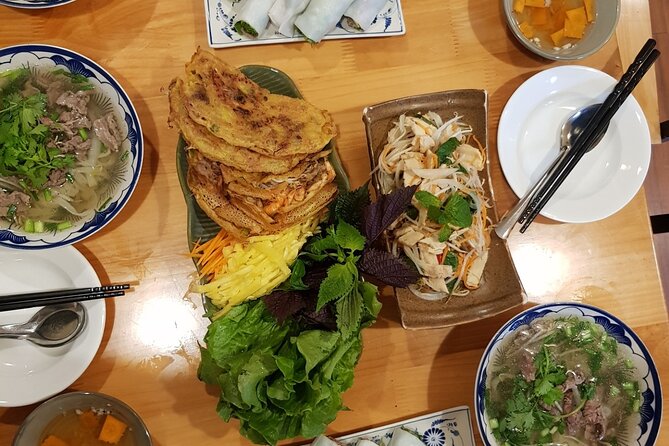
- Five dishes from soup to dessert
- Bún bò Huế
- Bánh xèo
- Tam hữu fresh roll
- Young jackfruit salad
- Da Nang avocado ice cream
- From cooking lesson to shared meal
- The instructors and teaching style
- What you take home
- Who should book this class
- Should you book the Da Nang cooking class?
- FAQ
- How long does the cooking class last?
- Where does the class begin?
- Where does the market visit take place?
- Where does the activity end?
- What dishes are included?
- Is food included?
- Do I receive anything to take home?
- How many people can join?
- Can I cancel for a refund?
Key points at a glance
- Five dishes in one class: Prepare bún bò Huế, bánh xèo, tam hữu fresh rolls, young jackfruit salad, and Da Nang avocado ice cream, with vegetarian versions available.
- A real market stop: Shop for ingredients at Bắc Mỹ An Market with an instructor before cooking begins.
- Friendly teaching style: Guides including Blue, Bora, and Chi are praised for clear explanations, patience, and working well with children.
- A full meal afterward: Eat the dishes you make, along with fruit, rice vodka, and coffee or tea.
- Useful take-home items: You receive a recipe book and a certificate at the end.
- Good value at $39: Four hours of food, instruction, market time, ingredients, kitchen use, and a meal make the price reasonable.
Why this Da Nang cooking class works
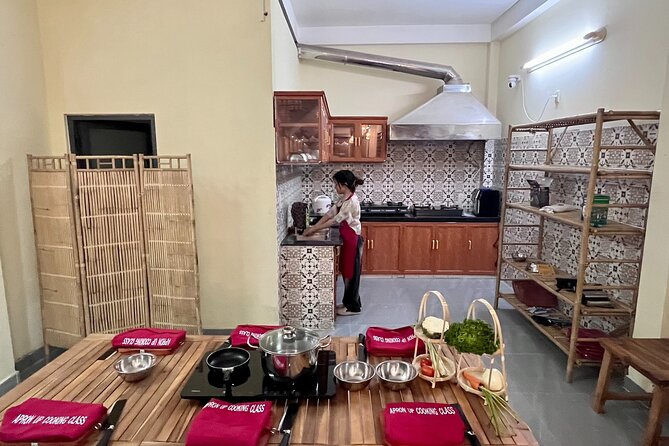
This is not just a recipe lesson held in a kitchen. The market visit gives the class its shape. You start by seeing the raw materials, learning how local products are selected, and buying what you need for the meal. Then you return to the cooking space and turn those ingredients into a five-dish spread.
I like that progression. It helps you understand that Vietnamese cooking is not only about following measurements. It is also about choosing herbs, vegetables, noodles, meat, and fruit at the right stage, then balancing salty, sour, sweet, spicy, fresh, and crisp elements.
The class focuses on Central Vietnam, so the menu has more character than a generic introduction to Vietnamese food. Bún bò Huế brings a noodle soup associated with Huế. Bánh xèo shows you how a thin, crisp savory pancake is made. Fresh rolls and young jackfruit salad add lighter textures, while avocado ice cream closes the meal on a sweet note.
At $39 per person, the class sits in a sensible middle range for a four-hour activity. You are paying for the market trip, ingredients, equipment, instruction, food, drinks, a recipe book, and a certificate. It also replaces a restaurant meal, though you should remember that the group size can reach 30 people.
More Cooking Classes in Da Nang
- 5 Dishes Cooking Class with Market Trip in Da Nang
★ 5.0 · 466 reviews - Da Nang Authentic Home Cooking Class
★ 5.0 · 354 reviews - Da Nang Cooking Class with Coffee Tasting and Market Visit
★ 5.0 · 310 reviews
Meeting at 07 Nguyễn Bá Lân
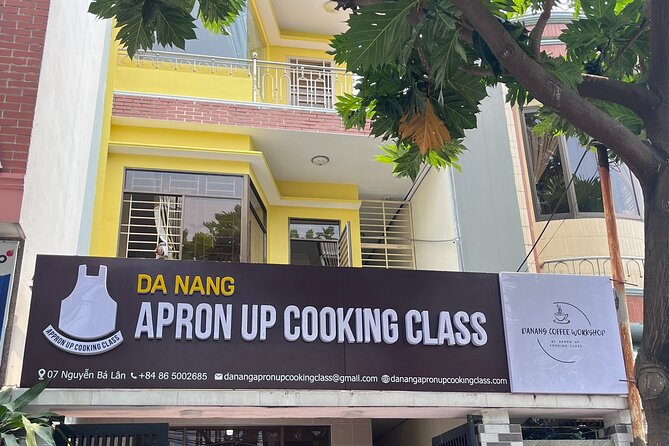
You meet 10 minutes before the start at 07 Nguyễn Bá Lân Street in Bắc Mỹ An, Ngũ Hành Sơn, Da Nang. The experience begins and ends at this same address, so you do not need to arrange a separate pickup or work out a different return point.
The meeting location is near public transportation. A mobile ticket is provided, and booking confirmation arrives at the time of booking. Since the class starts with a market visit, arriving on time matters. A late arrival could mean missing the introduction or part of the shopping trip.
The setting in Bắc Mỹ An is practical for this kind of class. You are close to a local market and the kitchen rather than spending part of the morning traveling across the city. That keeps the four-hour schedule focused on food.
Shopping at Bắc Mỹ An Market
The first stop is Chợ Bắc Mỹ An, also known as Bắc Mỹ An Market. This is where the ingredients become more than anonymous items on a shopping list.
You can expect to look at local produce and shop for the food needed for the recipes. The instructor explains the products and the connection between the ingredients and each dish. That context is valuable if you have eaten Vietnamese food in restaurants but have not seen how the basic components are chosen.
The market visit is also the most distinctly local part of the experience. You are not simply walking through a display made for visitors. You are learning how a nearby market supplies a cooking class and how familiar Central Vietnamese dishes begin with everyday ingredients.
Bring comfortable shoes and a willingness to walk through a food market. The schedule does not promise a long market tour, so think of this as a purposeful shopping stop rather than a separate sightseeing attraction. You will get the most from it by asking questions about items you recognize and items you do not.
It is also a useful moment to decide what you want to remember for your own cooking. If you like Vietnamese herbs, vegetables, or fruit, pay attention to the names and uses explained by the instructor. The recipe book later gives you a way to connect those market observations to the finished dishes.
Five dishes from soup to dessert
Back at the kitchen, the class turns toward the menu. The selection is broad, and that is one of its strongest points. You work across several styles of Vietnamese food instead of spending four hours on one recipe.
More Market Tours in Da Nang
- Guided Tour to Marble Mountains & Hoi An Walking Tour , Night Market, Boat Ride
★ 5.0 · 218 reviews - Hoi An Night Market with Hoi an walking Tour , Colourful Lanterns, Boat Ride
★ 5.0 · 142 reviews - DaNang Farm-to-Table Cooking Class with Market and Coffee Tasting
★ 5.0 · 131 reviews - Market Tour, Basket Boat Ride & Cooking Class by Hangcoconut
★ 4.8 · 95 reviews
Bún bò Huế
Bún bò Huế is the most substantial dish on the menu. This beef noodle soup is linked with Huế and gives you a chance to learn how a soup-based meal is assembled.
The soup is prepared as a group recipe, so you may not handle every part from beginning to end yourself. That arrangement makes sense for a dish that needs shared preparation, but it is worth knowing if you want every dish to be fully individual.
Still, the soup adds balance to the class. The meal would feel less complete without one hot, savory bowl alongside the lighter rolls and salad. If you enjoy Vietnamese noodle soups, this is likely to be one of the most useful recipes to take home.
Bánh xèo
Bánh xèo is the dish that brings technique and timing into the class. The goal is a thin, browned, crisp pancake rather than a soft batter cake.
You learn how to prepare the mixture and cook it so the edges brown properly. The pancake is then part of a hands-on meal, giving you a clear sense of how texture matters in Vietnamese food.
This is a good dish for families and first-time cooks because the result is easy to understand. You can see and taste the difference between a pancake that is crisp and one that has not cooked long enough. The class has received specific praise for helping children understand how to make a well-browned bánh xèo.
Tam hữu fresh roll
The tam hữu fresh roll provides a cooler, lighter counterpoint to the soup and pancake. It also shows how Vietnamese meals use fresh ingredients and wrapping techniques.
Fresh rolls can look simple, but rolling them neatly takes practice. One part of the preparation may feel less satisfying if you prefer strong flavors or firm, cooked fillings. Handle the rice paper gently and do not overfill it, since a roll that looks fine on the plate can fall apart when you pick it up.
This is one area where expectations matter. The class includes hands-on work, but not every dish is guaranteed to be equally successful on a first attempt. The instructor’s guidance helps, yet your result can still depend on how carefully you wrap and balance the filling.
Young jackfruit salad
The young jackfruit salad adds a local ingredient that you may not often prepare at home. It brings another texture and helps show how Vietnamese cooks make salads that are more substantial than a bowl of raw leaves.
This dish is useful for anyone who wants to expand beyond the most familiar Vietnamese restaurant choices. You get to see how a less obvious ingredient fits into a shared meal and how salad can work beside soup and fried food.
The menu is designed to be flexible. Dietary adjustments can be made, and vegetarians are offered a vegetarian version of the class menu. You should make your needs clear when booking so the kitchen has time to plan.
Da Nang avocado ice cream
The final dish is Da Nang avocado ice cream. It is an unusual and memorable way to finish a cooking class, especially after a menu that includes soup, pancakes, rolls, and salad.
The dessert also reflects the local love of fruit-based sweets and chilled treats. It gives the meal a softer, richer ending without sending you back to another familiar Western dessert.
If you are taking the vegetarian version, the menu can be adjusted. The supplied information confirms dietary flexibility, but it does not list every possible substitution, so ask in advance if you have a strict allergy or a particular ingredient you cannot eat.
From cooking lesson to shared meal
After the preparation, you eat the meal made during the class. Coffee or tea, fruit, and rice vodka are included, adding a relaxed finish while you talk with the instructor about local life.
I like this shared meal because it gives you time to judge the recipes as food, not just as cooking exercises. You can compare the crisp pancake with the fresh roll, see how the salad works beside the soup, and decide which dishes you would actually make at home.
The meal also makes the $39 price easier to assess. This is not a demonstration where you watch someone else cook and then leave hungry. Food is included, and the class ends with a full spread prepared during the session.
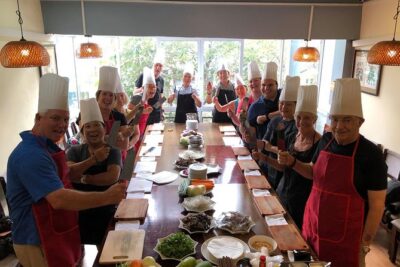
The format is social. The group can be as large as 30 people, though some sessions may be smaller. A small group of six has been particularly comfortable for personal attention, while a larger class may feel more crowded around the workstations.
That is the tradeoff. You gain the energy of cooking with other people, but you may not have complete control over every step. If your priority is private instruction or one cook per dish, ask about the group size before booking.
The instructors and teaching style
The instructors are a major part of the experience. Classes have been led by people including Blue, Bora, and Chi, with Blue described as warm and patient, Bora praised for guiding the market visit and recipes, and Chi noted for clear demonstrations.
You can expect step-by-step help rather than a silent kitchen setup. The teaching style suits beginners, and the class has worked well for families with children aged 10 and 13. Patient explanations matter here, since Vietnamese cooking can involve unfamiliar ingredients and techniques.
The language skills of the teaching team are also important for an activity built around food names, shopping, and cooking methods. You need to understand what goes into each dish and why it is prepared in a certain way. The available information describes the instructors as able to explain the recipes clearly and maintain a light, friendly mood.
Still, a large class changes the level of personal attention. You may need to wait for help at busy moments, especially during rolling, frying, or plating. If you want detailed correction on every technique, a smaller session would likely suit you better.
What you take home
The recipe book is the most practical souvenir. It lets you recreate the dishes after your trip instead of relying on memory from one busy cooking session.
A certificate is also included. It is a small extra, but children and first-time cooking students may enjoy having a formal reminder of the activity.
The real value, though, is learning how the dishes fit together. You leave with more than five isolated recipes. You have seen the ingredients at a market, handled them in the kitchen, and eaten the final meal as a group.
That makes the class useful for people who want to continue cooking Vietnamese food at home. It is also a good choice if you have been eating local dishes in Da Nang and want to understand them from the inside.
Who should book this class
I would recommend it to first-time visitors who want a food activity with cultural context, not just a meal. It also suits families, couples, solo visitors who like meeting people, and cooks at beginner or intermediate level.
You will get the most from it if you enjoy trying several dishes in one sitting and do not need a private kitchen. The market visit is a strong reason to choose this class over a lesson that begins and ends indoors.
Vegetarians should consider it because the menu can be adjusted. Anyone with allergies or strict dietary rules should contact the provider before the class, since the exact substitutions are not listed.
You may want to choose another format if your main goal is advanced technique, private coaching, or complete individual preparation. The group format means some work can be shared, and the class may feel crowded when attendance is high.
Cancellation is free up to 24 hours before the start time. Within 24 hours, the amount paid is not refunded, and changes are not accepted. The activity also requires a minimum number of participants, so a cancellation by the provider would result in another date or experience, or a full refund.
Should you book the Da Nang cooking class?
Book it if you want to connect a local market visit with a broad, hands-on meal. The five-dish menu, friendly instructors, included food, and recipe book give you solid value for $39.
I would be especially quick to choose it if you are visiting Da Nang with children or want an easy introduction to Central Vietnamese cooking. Go in knowing that the class may include a larger group and that some preparation, including the soup, can be shared.
For most visitors, that is a fair trade. You get local ingredients, useful recipes, a proper meal, and a better understanding of why Central Vietnamese food has such a wide range of textures and flavors.
FAQ
How long does the cooking class last?
The experience lasts approximately four hours.
Where does the class begin?
You meet at 07 Nguyễn Bá Lân, Bắc Mỹ An, Ngũ Hành Sơn, Da Nang 550000, Vietnam, 10 minutes before the start time.
Where does the market visit take place?
The market stop is at Chợ Bắc Mỹ An, also known as Bắc Mỹ An Market.
Where does the activity end?
The class ends back at the meeting point on Nguyễn Bá Lân Street.
What dishes are included?
The menu includes bún bò Huế, bánh xèo, tam hữu fresh rolls, young jackfruit salad, and Da Nang avocado ice cream. A vegetarian version is available.
Is food included?
Yes. The meal prepared during the class is included, along with fruit, rice vodka, and coffee or tea.
Do I receive anything to take home?
Yes. You receive a recipe book and a certificate at the end of the class.
How many people can join?
The activity can have a maximum of 30 participants.
Can I cancel for a refund?
You can cancel at least 24 hours before the start time for a full refund. Cancellations made less than 24 hours before the start time are not refunded.
More Workshops in Da Nang
- Hoi An: Lantern Making, Basket Boat, and Cooking Class
★ 4.9 · 233 reviews - RICE PAPER Noodle Making Experience & Hoi An Cooking Class Class
★ 5.0 · 164 reviews - Surf Lessons
★ 5.0 · 42 reviews - Basket Boat Tour from Da Nang/HoiAn by Lunch & Cafe Class Private
★ 5.0 · 36 reviews
More Shopping Tours in Da Nang
- Marble Mountain – Hoi An Colour Lanterns & Night Market from DN
★ 5.0 · 67 reviews - Home Cooking Class: Market, Garden and cooking 4 dishes
★ 5.0 · 61 reviews - Cook 5 Dishes Authentic Vietnam Food and Market Adventure
★ 5.0 · 56 reviews - Da Nang By Night: Seafood dinner, night market and cruise trip
★ 5.0 · 38 reviews
Recently reviewed around Da Nang
- Private car from Danang to Hoi An★ 5.0 · 20 reviews
- Your Incredible Scooter Adventure On Hai Van Pass★ 5.0 · 67 reviews
- Private Customize car rental 4 hours – 8 hours- 12 hours Da Nang★ 5.0 · 22 reviews
- Surf Lessons★ 5.0 · 42 reviews
- Four-Hands Harmony (Perfect · Synchronized · Flow)★ 5.0 · 78 reviews
- Da Nang Street Food Private Tour With Local Students★ 5.0 · 24 reviews
- Dry Deep Bodywork (Dry | Thai–Shiatsu based)★ 5.0 · 45 reviews
- Sport Revival (Sports | Muscle Recovery)★ 5.0 · 46 reviews
Cooking Classes, compared.
Hanoi Cooking Class: Culture, Local Market & Meaning CSR Impact
Read our review →
5 Traditional Dishes Hanoi Cooking Class with Market Trip
Read our review →
Cooking Class Hoi An:Local Market, Basket Boat, Fishing & Cooking
Read our review →
Hoi An Cooking Class(Market,BasketBoat Crabfishing&Cooking Class)
Read our review →
Cai Be Mekong Delta Tour: Cooking Class, Cycling & Craft Villages
Read our review →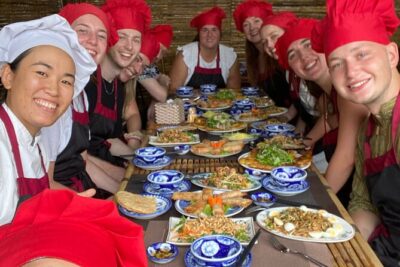
Hoi An Cooking Class(Local market,Basket Boat,Fishing & Cooking)
Read our review →
Vietnamese Food Cooking Class in Hanoi with Market Experience
Read our review →Browse the lists this tour appears in