
Reviewed · COOKING CLASSES
5 Dishes Cooking Class with Market Trip in Da Nang
The best part of this Da Nang cooking class happens before the stove is turned on. You visit Chợ Bắc Mỹ An, a local market, learn what the ingredients are, and then use them to prepare five Vietnamese dishes. That gives the food a useful setting instead of treating recipes as isolated kitchen exercises.
I like the market visit and the broad menu. You get a look at fresh produce before cooking, then make a full meal that includes a savory pancake, soup, rolls, salad, and dessert. I also like that instructors such as Jenny and Chef Bora explain each step and answer questions. The main caution is that the experience can vary by class: one booking involved a one-hour wait and an instructor whose English was harder to follow.
In This Review
- At a glance
- Why the market stop matters
- Five dishes, five different lessons
- Bánh xèo
- Bún bò Huế
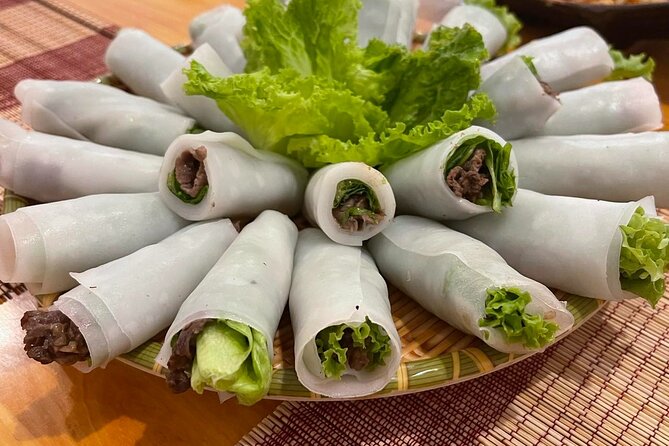
- Hội An fresh rolls
- Young jackfruit salad
- Avocado ice cream
- A class built around eating together
- Teaching style and communication
- Four hours in Da Nang: what the schedule means
- Is $39 a fair price?
- Dietary needs and special requests
- Who will enjoy this class most?
- Booking and cancellation basics
- Should you book the Da Nang cooking class?
- FAQ
- How long does the cooking class last?
- Where does the class begin?
- Which market does the class visit?
- Which dishes will I cook?
- Does the class include a meal?
- Can vegetarian, vegan, or allergy requirements be accommodated?
- What is included after the cooking session?
At a glance
- Shop first at Chợ Bắc Mỹ An: Learn about local ingredients before using them in the kitchen.
- Cook five different dishes: The menu covers bánh xèo, bún bò Huế, Hội An fresh rolls, young jackfruit salad, and avocado ice cream.
- Work with instructors including Jenny and Chef Bora: Clear teaching and careful explanations are central to the experience.
- Eat what you prepare: The class ends with a shared meal and homemade rice vodka.
- Take home practical extras: You receive a cookbook and certificate.
- Plan around a four-hour block: The class begins and ends at 07 Nguyễn Bá Lân in Bắc Mỹ An.
Why the market stop matters
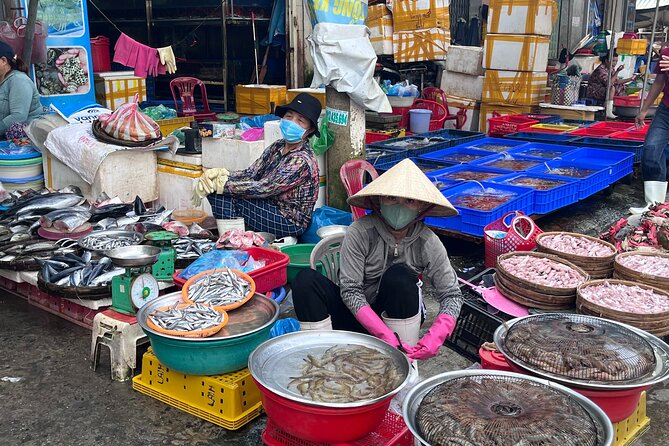
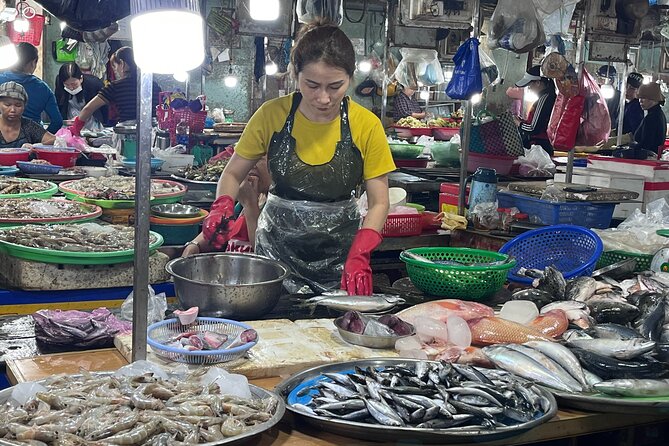
The class begins at 07 Nguyễn Bá Lân, in the Bắc Mỹ An area of Ngũ Hành Sơn. You should arrive 15 minutes before the scheduled start. From there, the group visits nearby Chợ Bắc Mỹ An to shop and learn about local ingredients.
This is more than a quick grocery stop. The market helps you understand the raw materials behind Vietnamese cooking, including the kinds of produce and herbs used in the dishes later in the class. The instructor can also explain possible replacements, which is useful if you want to recreate the recipes at home.
For me, this is one of the strongest reasons to choose the class. A recipe can tell you to use an herb, vegetable, or seasoning, but a market visit shows you what that ingredient looks like before it is chopped and mixed. It also gives you a better sense of how Vietnamese cooking depends on fresh food and simple preparation.
The market portion is also the least predictable part of the experience. Its quality depends on timing, the pace of the group, and how clearly your instructor communicates. One class did not include the market visit because of a delay from an earlier session. That appears to be an exception rather than the plan, but you should keep it in mind if the market is your main reason for booking.
More Cooking Classes in Da Nang
- Da Nang Authentic Home Cooking Class
★ 5.0 · 354 reviews - 5 traditional dishes Da Nang cooking class with market trip
★ 5.0 · 331 reviews - Da Nang Cooking Class with Coffee Tasting and Market Visit
★ 5.0 · 310 reviews
Five dishes, five different lessons
The menu is well chosen for a short class because it moves across several parts of Vietnamese cooking rather than repeating one technique. You will not spend four hours making five versions of the same dish.
Bánh xèo
Bánh xèo is the hands-on centerpiece for many people. This Vietnamese savory pancake gives you a chance to work with batter and learn how a crisp exterior is made. It also shows how Vietnamese food can combine a cooked shell with fresh ingredients and dipping flavors.
Because the dish is prepared from basic components, the instructor can focus on technique and timing. Pay attention to how much batter is used, how it is spread, and how the pancake is handled once cooked. Those small details are often more useful at home than a long ingredient list.
Bún bò Huế
Bún bò Huế brings a different style to the table. It is a noodle soup associated with Huế, so its inclusion gives the menu some regional range beyond Da Nang and Hội An.
This dish is helpful for anyone trying to understand how Vietnamese meals balance broth, noodles, herbs, and seasoning. It also breaks up the class with a preparation that feels different from the pancake and rolls. If you are especially interested in soup, ask questions as the instructor explains the ingredients and possible substitutions.
More Market Tours in Da Nang
- Guided Tour to Marble Mountains & Hoi An Walking Tour , Night Market, Boat Ride
★ 5.0 · 218 reviews - Hoi An Night Market with Hoi an walking Tour , Colourful Lanterns, Boat Ride
★ 5.0 · 142 reviews - DaNang Farm-to-Table Cooking Class with Market and Coffee Tasting
★ 5.0 · 131 reviews - Market Tour, Basket Boat Ride & Cooking Class by Hangcoconut
★ 4.8 · 95 reviews
Hội An fresh rolls
The fresh rolls are a good lesson in assembly and balance. They are lighter than the pancake and require you to combine several ingredients without overwhelming the wrapper.
This is also a practical dish to learn because you can adjust the filling at home. The market trip makes that lesson more useful, since you will have already seen some of the fresh ingredients in their original form. Ask the instructor about keeping the rolls neat and choosing replacements if a particular ingredient is unavailable where you live.
Young jackfruit salad
Young jackfruit salad adds a less familiar ingredient to the meal. If you have only encountered jackfruit as a ripe, sweet fruit, this dish shows another use for it.
The salad gives the class a chance to discuss texture and seasoning rather than only cooking time. It also broadens your understanding of Vietnamese home-style food, where vegetables, fruit, herbs, and savory flavors can share the same plate. The market portion is especially valuable here because it can help you recognize the ingredient and understand what you might use instead.
Avocado ice cream
Avocado ice cream finishes the menu with a cool, sweet course. It is an unusual ending for a cooking class and a welcome change after the savory dishes.
This dessert also makes the menu feel complete. You learn not only how to prepare famous dishes, but how avocado can be used in a Vietnamese-style sweet preparation. If you enjoy food classes that include dessert rather than stopping after the main course, this is a nice touch.
A class built around eating together
After the cooking work, you sit down for the meal you have prepared. That shared meal is important. It gives you time to compare the finished dishes, ask final questions, and see how the separate recipes work together.
The class also includes homemade rice vodka. This is a small cultural detail, but it helps the meal feel tied to local food customs rather than being only a technical lesson. You should treat it as an optional part of the experience if you do not drink alcohol. The available information does not specify alternatives, so mention any needs when booking.
One useful feature is the cookbook. You are not left with only a memory of the meal. The recipes give you something to refer to when you return home, and the market discussion helps you think about ingredient substitutions in a practical way.
You also receive a certificate. It is not the main reason to book, but it is a pleasant keepsake, especially if you are taking the class as a couple, family, or small group.
Teaching style and communication
The instructor has a large effect on the class. Jenny is specifically praised for careful explanations and for making the cooking process fun and easy to follow. Chef Bora is also named as an instructor who explains the work clearly and keeps the class engaging.
That matters because five dishes in about four hours can feel rushed if instructions are vague. A good teacher needs to show techniques, explain ingredients, keep the group moving, and leave room for questions. The strongest accounts of this class point to exactly those qualities.
Still, communication may not be identical every time. One booking involved an instructor who did not speak English as comfortably as expected. Communication was still possible, but the experience required more patience. If detailed food instruction is important to you, add your language needs or questions to the special request when booking.
The maximum group size is 30 people. That is large enough to create energy and conversation, but it may feel less personal than a small kitchen class. If you prefer constant one-to-one attention, ask about the class size for your date. The published limit is a ceiling, not a promise that every session will fill.
Four hours in Da Nang: what the schedule means
The total duration is approximately four hours. That includes the meeting, market visit, cooking, and meal, so you should avoid scheduling another fixed activity immediately afterward.
The timing is worth considering because the class is not simply a demonstration followed by lunch. You are moving from the market to the kitchen and then through five preparations. The pace should be active, especially when several dishes require different methods.
A previous class ran late because the earlier session was delayed by about an hour. That is the clearest practical warning attached to the experience. Leave some space in your Da Nang plans after the class, particularly if you have a transfer, reservation, or tour later in the day.
The meeting point is easy to identify by its address at 07 Nguyễn Bá Lân. The activity ends back there, so you do not need to arrange a separate return transfer. The location is near public transportation, which helps if you are not staying within walking distance.
Is $39 a fair price?
At $39 per person, the value comes from the package rather than from the food alone. You are paying for about four hours of instruction, a market visit, five dishes, the meal, rice vodka, a cookbook, and a certificate.
If you simply want a cheap lunch, this is not the most direct option. You will spend much of the time learning and preparing the food. If you want to understand what you are eating in Da Nang and gain recipes you can use later, the price is easier to justify.
The five-dish menu is a particular strength. Bánh xèo, bún bò Huế, fresh rolls, jackfruit salad, and avocado ice cream cover enough ground to make the class feel substantial. You get a mix of famous regional food, fresh preparations, and a less expected dessert.
The value also depends on whether the market visit happens as planned and how smoothly the class runs. A delayed start or weaker communication can reduce what you get for your time. The strong overall rating and full recommendation rate suggest that most sessions deliver a satisfying experience, but the occasional scheduling issue is worth allowing for.
Dietary needs and special requests
Vegetarian, vegan, and allergy accommodations are available if you mention them in the special request when booking. This is important because the menu includes several dishes with ingredients that may need to be changed.
Do not wait until the class begins to explain a serious allergy. Add the information in advance so the provider can plan possible replacements. The market visit is also useful here because the instructor can discuss ingredient alternatives directly.
The available details do not list exact replacement dishes, so you should not assume every menu item will remain unchanged. Instead, ask for confirmation if you need strict dietary control.
Who will enjoy this class most?
I would recommend this experience to first-time visitors who want an introduction to Vietnamese food without spending a full day on a food tour. The market visit gives you local context, while the kitchen offers a clear activity and a proper meal.
It also suits curious home cooks. The cookbook, ingredient advice, and five different recipes give you more to take away than a single tasting session. You can ask about replacements and use what you learn after returning home.
Families and mixed-interest groups may also find it works well. One person can focus on the food, another on the market, and everyone can share the meal afterward. The certificate adds a light souvenir element for children or casual cooks.
I would be more cautious if you need a quiet, highly private class or a tightly controlled schedule. A group of up to 30 can feel busy, and the earlier delay shows that timing is not guaranteed to the minute. People with limited English should also include a language request before booking.
Booking and cancellation basics
Confirmation is provided when you book. You can cancel for a full refund up to 24 hours before the start time, based on local time. Cancellations or changes made less than 24 hours before the start are not refunded or accepted.
The experience requires a minimum number of participants. If that minimum is not reached and the class is canceled, you will be offered another date or experience, or a full refund.
Because the class begins and ends at the same meeting point, planning is simple. Arrive 15 minutes early at 07 Nguyễn Bá Lân, and keep the rest of your day flexible enough to absorb a possible delay.
Should you book the Da Nang cooking class?
Book it if you want more than a list of dishes. The combination of Chợ Bắc Mỹ An, five recipes, a shared meal, and a cookbook gives you a useful introduction to Da Nang food culture for $39.
I especially like the market-to-kitchen format. You see ingredients before cooking them, then learn how they fit into dishes with different textures and regional connections. Jenny and Chef Bora are strong names to look for, based on the teaching details available.
Skip it if your schedule is rigid, you dislike group activities, or you need guaranteed one-to-one instruction in English. For everyone else, this is a well-priced choice with plenty to do, as long as you allow extra time and state dietary or language needs when booking.
FAQ
How long does the cooking class last?
The activity lasts approximately four hours, including the market visit, cooking, and shared meal.
Where does the class begin?
Meet 15 minutes before the start time at 07 Nguyễn Bá Lân, Bắc Mỹ An, Ngũ Hành Sơn, Da Nang 550000, Vietnam.
Which market does the class visit?
The market stop is Chợ Bắc Mỹ An, located near the meeting point.
Which dishes will I cook?
You will prepare bánh xèo, bún bò Huế, Hội An fresh rolls, young jackfruit salad, and avocado ice cream.
Does the class include a meal?
Yes. You eat the dishes you prepare together, with some homemade rice vodka included.
Can vegetarian, vegan, or allergy requirements be accommodated?
Yes. Mention vegetarian, vegan, or allergy needs in the special request when booking so the class can plan possible replacements.
What is included after the cooking session?
You receive a cookbook and a certificate, and the activity ends back at the original meeting point.
More Workshops in Da Nang
- Hoi An: Lantern Making, Basket Boat, and Cooking Class
★ 4.9 · 233 reviews - RICE PAPER Noodle Making Experience & Hoi An Cooking Class Class
★ 5.0 · 164 reviews - Surf Lessons
★ 5.0 · 42 reviews - Basket Boat Tour from Da Nang/HoiAn by Lunch & Cafe Class Private
★ 5.0 · 36 reviews
More Shopping Tours in Da Nang
- Marble Mountain – Hoi An Colour Lanterns & Night Market from DN
★ 5.0 · 67 reviews - Home Cooking Class: Market, Garden and cooking 4 dishes
★ 5.0 · 61 reviews - Cook 5 Dishes Authentic Vietnam Food and Market Adventure
★ 5.0 · 56 reviews - Da Nang By Night: Seafood dinner, night market and cruise trip
★ 5.0 · 38 reviews
Recently reviewed around Da Nang
- Private car from Danang to Hoi An★ 5.0 · 20 reviews
- Your Incredible Scooter Adventure On Hai Van Pass★ 5.0 · 67 reviews
- Private Customize car rental 4 hours – 8 hours- 12 hours Da Nang★ 5.0 · 22 reviews
- Surf Lessons★ 5.0 · 42 reviews
- Four-Hands Harmony (Perfect · Synchronized · Flow)★ 5.0 · 78 reviews
- Dry Deep Bodywork (Dry | Thai–Shiatsu based)★ 5.0 · 45 reviews
- Da Nang Street Food Private Tour With Local Students★ 5.0 · 24 reviews
- Sport Revival (Sports | Muscle Recovery)★ 5.0 · 46 reviews
Cooking Classes, compared.

Hanoi Cooking Class: Culture, Local Market & Meaning CSR Impact
Read our review →
5 Traditional Dishes Hanoi Cooking Class with Market Trip
Read our review →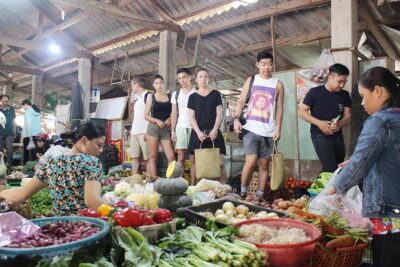
Cooking Class Hoi An:Local Market, Basket Boat, Fishing & Cooking
Read our review →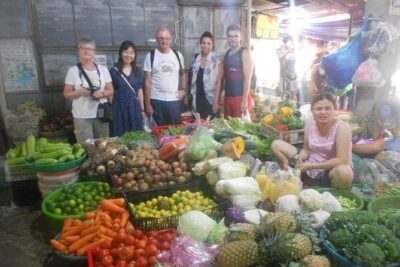
Hoi An Cooking Class(Market,BasketBoat Crabfishing&Cooking Class)
Read our review →
Cai Be Mekong Delta Tour: Cooking Class, Cycling & Craft Villages
Read our review →
Hoi An Cooking Class(Local market,Basket Boat,Fishing & Cooking)
Read our review →
Vietnamese Food Cooking Class in Hanoi with Market Experience
Read our review →Browse the lists this tour appears in