
Reviewed · PHOTOGRAPHY SESSIONS
Photo Tour to Capture The Vanishing Craft of Making Fish Traps
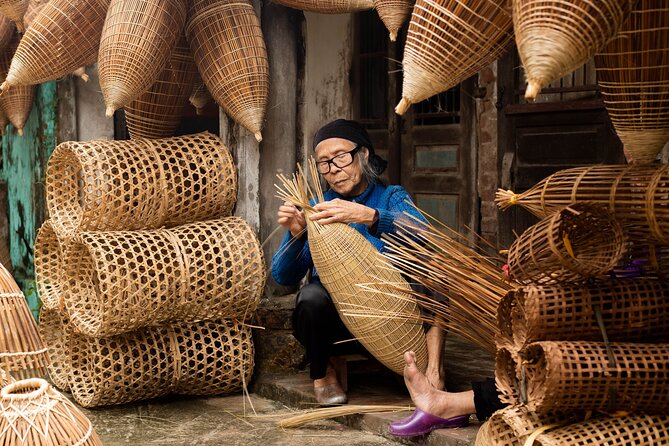
In rural Hung Yen, elderly artisans still weave bamboo fish traps by hand, using methods that are fast disappearing. Their hands, the pale bamboo, and the worn walls of an old house give you the kind of honest visual story that is hard to find in a city photo walk. I especially like the small group limit of four and the chance to photograph people at work rather than staged cultural displays.
I also like that your local photographer can help with portrait composition and lighting, not just point out the next stop. Guides connected with this experience include Son Trieu, James, and Mike, and their local relationships help create a more relaxed setting for photography.
The main consideration is time. The outing lasts about four and a half hours including travel, but only around two hours are listed at the Hung Yen stop. At $168 per person, it makes the most sense for photographers who place a high value on personal guidance and access to a fading craft.
In This Review
- Key points at a glance
- Why this fish-trap craft makes such a strong photo subject
- Leaving Hanoi for Hung Yen
- Two hours among the fish-trap makers
- How the guide changes the photography
- Is $168 a fair price?
- Who should book this experience?
- Practical ways to get better photographs
- A focused look at vanishing rural Vietnam
- Should you book the Hung Yen fish-trap photo tour?
- FAQ
- Where does the fish-trap photography tour take place?
- How long does the experience last?
- How much does the tour cost?
- How many people can join?
- Is pickup available from Hanoi?
- Who leads the photography instruction?
- What is included in the price?
- Are meals included?
- Can the tour be canceled for a refund?
Key points at a glance
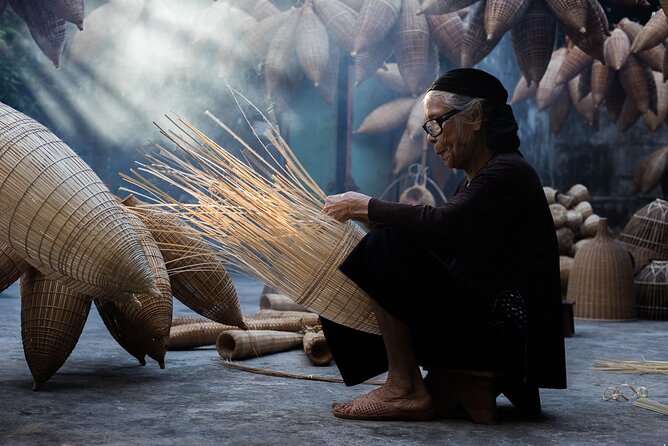
- Elderly artisans and handwoven bamboo traps: Photograph a traditional skill practiced by only a small number of older workers.
- Hung Yen countryside setting: Use an aged house and rural village surroundings as a natural backdrop for documentary-style images.
- Guidance from a local photographer: Son, James, or Mike may help with angles, portraits, composition, and light.
- Maximum of four participants: A small group gives you more room to work and ask for help.
- About 4 hours 30 minutes: Travel time is included, with roughly two hours spent at the craft location.
- Transport and water included: Pickup is offered, and the air-conditioned vehicle is useful in Hanoi’s heat.
Why this fish-trap craft makes such a strong photo subject
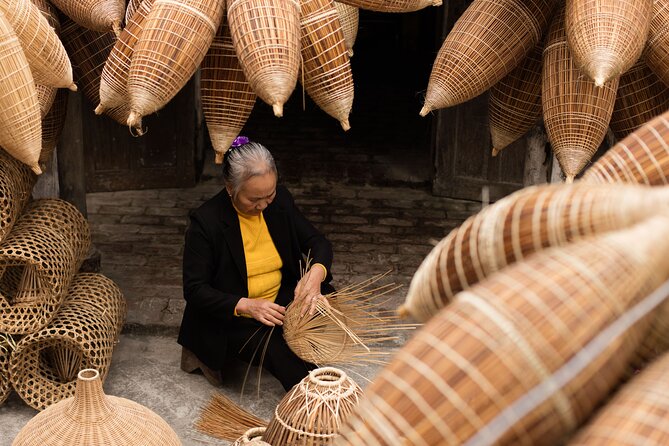
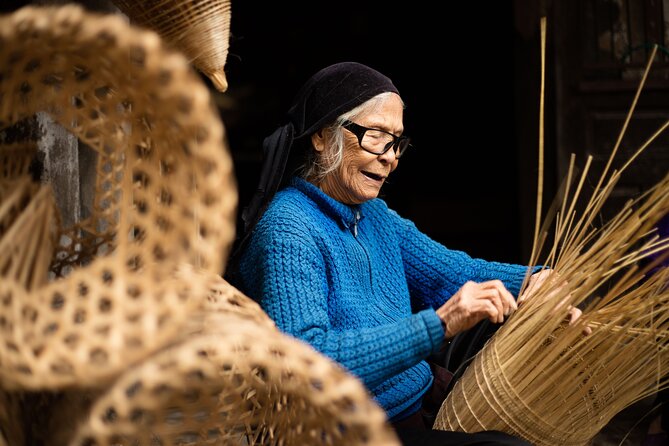
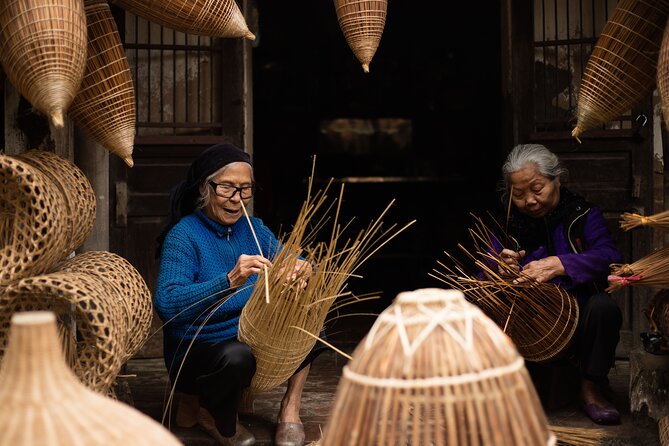
The appeal here is not simply a basket made from bamboo. It is the meeting of hands, material, place, and age. You watch a worker bend and weave natural materials into a useful object, while the old house behind them supplies texture and a sense of time.
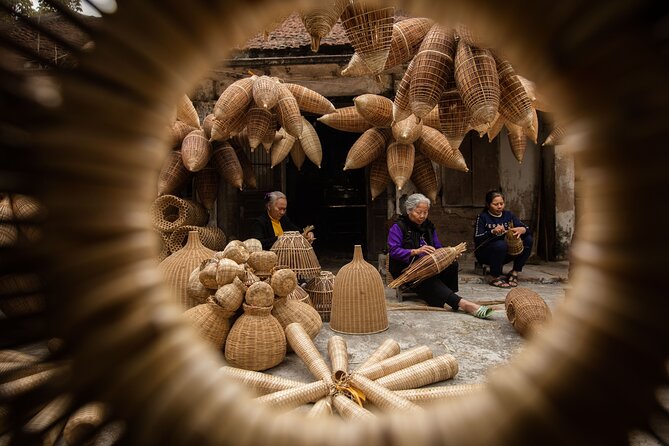
That gives you several kinds of photographs in one setting. Close-up frames can focus on fingers, bamboo strips, knots, and repeating patterns. Wider images can show the worker seated beside stacks of materials or working against the weathered walls. Environmental portraits can connect the person to the craft instead of reducing the scene to a decorative detail.
This kind of subject rewards patience. The work itself is repetitive, but that is good news for a photographer. You can try several points of view without constantly chasing a new event. Watch how the hands move. Notice where the light falls. Wait for a natural pause, a glance, or a change in posture.
You should also approach the people with care. The purpose is to document a living skill and support the older workers who still earn a living from it, not to treat them as scenery. Your guide can help with local contact and with the rhythm of photographing respectfully.
More Hanoi trips worth a second look
- Hanoi Private Photoshoot – Iconic Spots & Hidden Gems
★ 5.0 · 118 reviews - Hanoi Explorer Photo Tour
★ 5.0 · 40 reviews - Hanoi On the Tracks Photo Tour
★ 5.0 · 33 reviews
Leaving Hanoi for Hung Yen
Pickup is offered, and the tour uses an air-conditioned vehicle. That matters in northern Vietnam, where even a short road trip can feel tiring in warm weather. Bottled water is included, while meals are not, so eat before departure or plan around the half-day schedule.
The total duration is about four hours and thirty minutes, and travel time is part of that figure. This is not a full village day with long walks and several major stops. It is a focused photography outing built around one craft location.
The countryside setting is part of the experience. You are leaving Hanoi’s dense urban streets for Hung Yen, where the pace and visual details change. The tour description does not promise a fixed list of extra sights, so you should book it for the fish-trap workshop and the photographic access rather than expecting a broad sightseeing circuit.
An early pickup may be possible depending on the arrangements, but the supplied details do not state a standard departure time. Confirm the pickup plan when booking, especially if you want a particular quality of morning light.
Two hours among the fish-trap makers
The main stop lasts about two hours, with admission included. That is enough time to work carefully, but not so much that the session becomes unfocused.
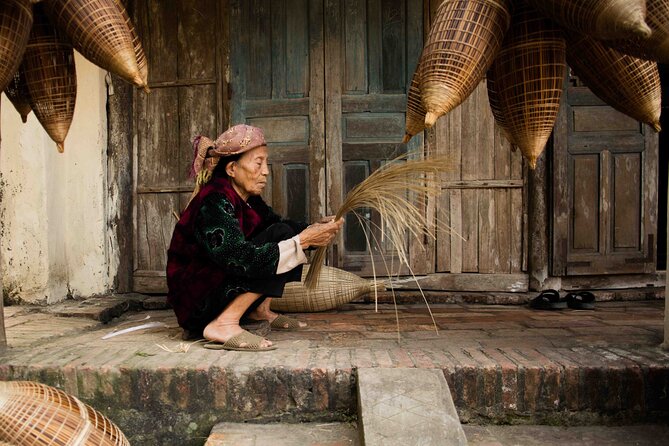
You can expect to see traditional traps made from bamboo and other natural materials. The craft depends on dexterity. A good image may show the full object, but the better story often sits in the process: a strip being tightened, a joint being formed, or a nearly finished trap leaning against the wall.
The old house is an important part of the setting. Its aged surfaces offer muted tones and rough textures that contrast with the orderly geometry of the bamboo. I would make time for both detail shots and wider frames. If you photograph only the finished traps, you miss the people and the place that give them meaning.
The setting may also suit black-and-white work. The information does not promise any particular lighting conditions, so do not assume a soft, dramatic morning scene. Still, weathered walls, hands, bamboo, and simple tools can work well in color or monochrome.
Your local photographer can help you look beyond the obvious frame. Guidance mentioned for this experience includes advice on different angles, portrait technique, composition, and lighting. That can be useful if you tend to photograph crafts from standing height. A lower viewpoint, a close crop, or a frame that includes the worker’s face may tell a much stronger story.
How the guide changes the photography
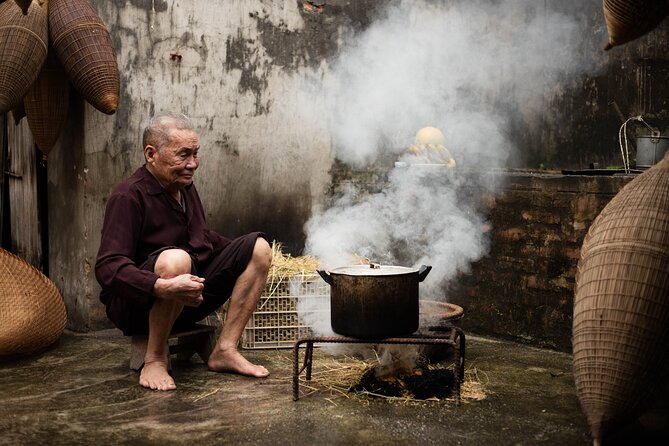
This is not just a driver-and-drop-off outing. The included local escorted photographer is one of the main reasons to consider the price.
Son Trieu is associated with cultural information and practical photographic suggestions. James has led visits that included fish-trap makers along with pottery and rice-paper workshops, while Mike is noted for portrait guidance and help with composition and light. The exact guide may vary, so ask who will lead your date.
The most useful benefit is local access. A photographer may know how to introduce you, where to stand, and when to wait. That reduces the awkwardness of pointing a long lens at someone you have just met. It also gives the workers more control over the encounter.
If you are already comfortable with exposure and framing, you may value the cultural connection more than basic instruction. If you are still building confidence, direct suggestions can help you come home with more than random snapshots. You can ask about environmental portraits, close details, and ways to use the old house without letting it overwhelm the subject.
The small group size matters here. With no more than four people, the guide has a better chance of giving individual help. You also have more room to move without a large cluster of cameras crowding the work area.
A different kind of day out, same stretch of Vietnam:
- Hanoi Jeep Tour: Food, Culture and Fun by Vietnam Army Jeep
★ 5.0 · 15,222 reviews - Full-Day Ninh Binh Highlights Tour from Hanoi
★ 5.0 · 7,761 reviews - Hanoi: Ha Long Bay Day Cruise – Swimming, Meal, Kayaking
★ 4.7 · 7,415 reviews - Hanoi: Water Puppet Show Tickets
★ 4.6 · 7,029 reviews
Is $168 a fair price?
At $168 per person, this is not a cheap half-day transfer to the countryside. Meals are excluded, and the main craft visit is about two hours. If you want the lowest-cost way to see rural Hung Yen, this is probably not the right product.
The value improves if you would otherwise need to arrange transport, find the workshop yourself, explain your purpose to the artisans, and work without photographic help. The price covers an air-conditioned vehicle, bottled water, taxes and fees, pickup availability, and a local escorted photographer. It also buys a highly focused subject that may be difficult to locate independently.
A maximum of four people gives the outing a private-style feel, though it is not advertised as a fully private tour. Group discounts are available, which may make the cost easier to justify for a family or small photography party.
For a serious photographer, the strongest value is access and direction. You are paying for a planned encounter with an endangered craft, not for a long checklist of attractions. For a casual sightseer who wants a general introduction to Vietnamese villages, the cost may feel high for the limited itinerary.
Who should book this experience?
I would recommend it most strongly to photographers interested in people, process, and cultural documentation. You do not need to be a professional, but you should want to spend time making deliberate images rather than rushing through a photo stop.
It also suits families or small groups who want a quieter outing. One family group found the guide helpful with cultural information and photographic ideas, and the four-person limit keeps the experience manageable.
This may not suit you if you dislike photographing people at work, prefer major monuments, or want a full-day tour with several unrelated activities. It is also less attractive if your main goal is to shop for finished crafts. The focus is on seeing and photographing the making process.
The experience is weather dependent. If poor weather forces cancellation, you can choose a different date or receive a full refund. That is useful protection for an outdoor and natural-light activity, but the strict standard cancellation policy means you cannot normally cancel or amend the booking for a refund.
Practical ways to get better photographs
Start by giving yourself time to watch. The first few minutes are useful for learning the rhythm of the work and deciding whether close details, portraits, or wider scenes best express the place.
Keep the craft central. A portrait beside a trap is stronger when the viewer can tell what the person is doing. Include bamboo strips, unfinished sections, tools, or the worker’s hands when possible.
Ask your guide about the best approach before you begin. The local photographer can help with angles and lighting, and that advice is particularly useful in a tight interior or beside the old house.
Use the small group wisely. Do not all crowd the same worker from the same direction. Spread out, take turns, and let each person have a clear line of sight. This protects the calm of the workshop and gives your images more variety.
Finally, bring enough battery and memory card capacity for details and repetitions. The tour includes a mobile ticket and bottled water, but the supplied information does not mention camera equipment, spare batteries, or specialty lenses. Pack what you normally need for a half-day photography session.
A focused look at vanishing rural Vietnam
The deeper appeal is the reminder that useful objects can carry a whole way of life. As younger people move toward office and factory work, fewer workers may continue this kind of manual production. Your photographs can preserve the look of the process, while your visit helps direct attention and income toward the people keeping it going.
That does not mean you should turn the scene into a sad story. The workers are not simply symbols of a disappearing past. They are skilled makers doing precise work. Photograph the concentration, speed, humor, and pride in the activity as well as the old walls and worn hands.
This balance is what makes the stop worthwhile. You get an authentic cultural subject, but you also have a chance to make thoughtful pictures that respect the people in them.
Should you book the Hung Yen fish-trap photo tour?
Book it if you want a small-group photography experience centered on a rare Vietnamese craft, and if personal help with portraits, composition, and lighting is worth paying for. The combination of local access, an old-house setting, and elderly artisans gives you a stronger subject than a standard sightseeing stop.
Think twice if you want a cheap outing, a long village tour, or included food. The schedule is short, travel is included in the four-and-a-half-hour duration, and the price reflects specialist guidance rather than a broad itinerary.
For photographers who want to record a disappearing skill with care, this is a focused and worthwhile choice. Ask which guide will lead your date, confirm pickup details, and plan to spend the full two hours observing before you start chasing the perfect frame.
FAQ
Where does the fish-trap photography tour take place?
The main stop is in Hung Yen, Vietnam, outside Hanoi. The visit focuses on a rural setting where elderly artisans make fish traps from bamboo and other natural materials.
How long does the experience last?
The total duration is approximately 4 hours and 30 minutes, including travel time. About two hours are allocated to the Hung Yen stop.
How much does the tour cost?
The listed price is $168 per person. Group discounts are available.
How many people can join?
The activity has a maximum of four travelers.
Is pickup available from Hanoi?
Pickup is offered. The supplied details do not specify a standard pickup time or every possible pickup location, so confirm those arrangements when booking.
Who leads the photography instruction?
A local escorted photographer leads the experience. Guides associated with the tour include Son Trieu, James, and Mike, though the specific guide may depend on the date.
What is included in the price?
The price includes an air-conditioned vehicle, all fees and taxes, bottled water, and a local escorted photographer.
Are meals included?
No. Meals are not included, and airport transfer is also excluded.
Can the tour be canceled for a refund?
The experience is normally non-refundable and cannot be changed. If poor weather causes the operator to cancel, you can receive a full refund or select another date. If the minimum number of participants is not met, you can choose a different date or experience, or receive a full refund.
Recently reviewed around Hanoi
- Female Riders Vespa Night Street Food + Train Street food 4 Hours★ 5.0 · 35 reviews
- Beautiful Female Riders Vespa Red River Countryside Tour 5 Hours★ 5.0 · 23 reviews
- Red River Delta Countryside+ Rural Villages, rice Paddies fields★ 5.0 · 134 reviews
- The insider’s Hanoi 4.5 hours All highlight Places & Train Street★ 5.0 · 41 reviews
- The insider’s Hanoi + Train Street 4,5 Hours Female Ao Dai Riders★ 5.0 · 53 reviews
- Street Foods Hanoi Kim Tours Vietnam★ 5.0 · 140 reviews
- Hanoi Jeep Tour – Ba Vi National Park Full Day Tour★ 5.0 · 21 reviews
- Ninh Binh Full Day Tour from Hanoi to Hoa Lu, Trang An & Mua Cave★ 5.0 · 31 reviews
Photography Sessions, compared.

Hanoi Private Photoshoot – Iconic Spots & Hidden Gems
Read our review →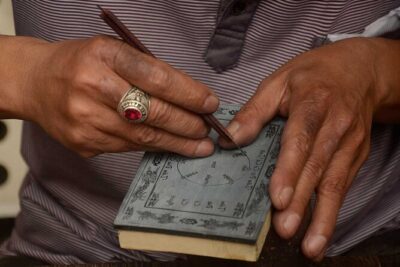
Hanoi Street Photography with a Pro – Phone & Camera
Read our review →
Browse the lists this tour appears in