
Reviewed · HOI AN TOURS
Hoi An: Teh Dar Vietnamese Bamboo Circus at Lune Center
Teh Dar turns a few bamboo poles, ropes, music, and human strength into a fast-moving portrait of Vietnamese Highland life. Inside Hoi An’s round bamboo theater, you’ll see acrobats climb, balance, leap, and form shifting shapes while live musicians drive the action.
I like the smart use of simple materials and the fact that the performers carry the show without spoken explanation. I also like the strict no-phone rule, which lets you watch without screens and flashes in your face. The main drawback is price: at $28 per person, it costs more than many Hoi An evening activities, and late arrivals may disrupt the opening moments.
In This Review
- Key points to know before you book
- What Teh Dar is really about
- Arriving at the bamboo dome
- Inside Hoi An Lune Center
- The opening scenes and the rhythm of the show
- Bamboo, ropes, and remarkable physical control
- A cultural show without a lecture
- Why the no-phone rule helps
- Is $28 good value?
- Who will enjoy this most
- Booking, age rules, and practical details
- Should you book Teh Dar?
- FAQ
- Where does the Teh Dar show take place?
- How long does the show last?
- What is included in the ticket?
- Is hotel transportation included?
- Is a guide included?
- How early should I arrive?
- Can children attend the show?
- Can I use my phone or take photos during the performance?
Key points to know before you book
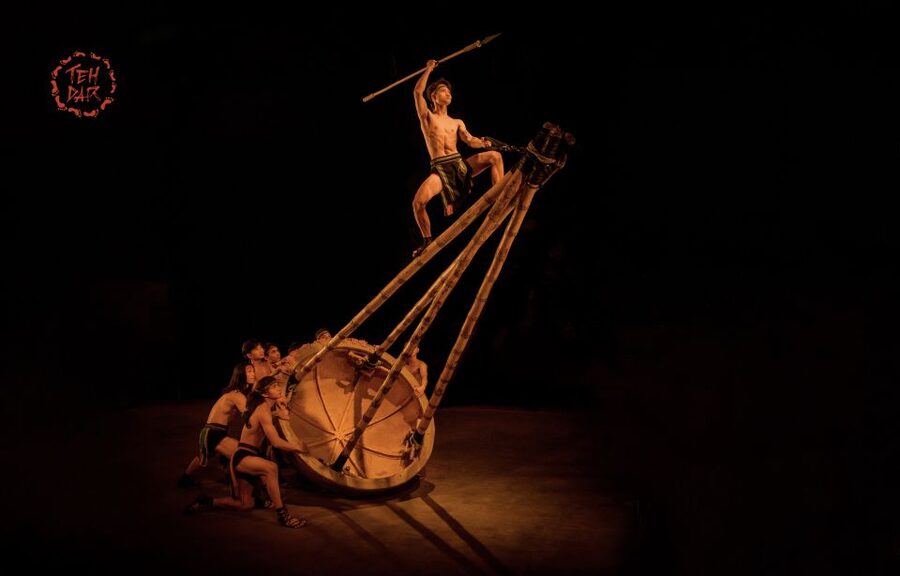
- Bamboo becomes the stage: Poles and ropes serve as props, platforms, and moving structures for demanding acrobatics.
- The Lune Center is part of the experience: The distinctive bamboo dome sits at 1A Nguyen Phuc Chu in Hoi An Ancient Town.
- Live music drives the show: Traditional instruments provide the rhythm rather than a recorded soundtrack.
- The hour moves quickly: Teh Dar is compact, energetic, and carefully paced rather than padded with long pauses.
- Middle seats may offer the best view: Several people who paid for pricier places felt the center sections gave a particularly good overall angle.
- Book children carefully: Ages 5 to 12 receive the child rate, but children under five cannot enter the auditorium.
What Teh Dar is really about
Teh Dar is not a standard circus act placed in a Vietnamese theater. It uses circus technique to tell stories connected with Vietnam’s Highland communities, their animals, courtship, work, strength, and relationship with the natural world.
The name Teh Dar refers to going in a circle in several Vietnamese ethnic languages. That idea shapes the performance. Scenes return to movement, rhythm, and repeated patterns, giving the show a sense of life turning through different stages.
You should not expect a narrated cultural lecture. There is no guide explaining each scene, and the performance relies on physical storytelling, sound, light, and visual symbols. If you know little about Vietnam’s Highland cultures, some images may remain open to interpretation. That is part of the appeal, but it also means you will get more from the show if you watch for mood and movement rather than trying to identify every plot detail.
The result is a performance that feels both traditional and modern. The materials are basic, but the timing is highly polished. The acrobatic work is not presented as a string of unrelated tricks. Performers use bamboo to create scenes, then reshape the stage in front of you.
Other Hoi An days travellers weigh against this one:
- Hoi An: Basket Boat Ride in the Coconut Forest
★ 4.9 · 4,956 reviews - Hoi An: Vietnamese Coffee Culture and Coffee Making Class
★ 4.9 · 4,006 reviews - Hoi An: Vietnamese Foldable Lantern Making Class
★ 4.9 · 3,742 reviews
Arriving at the bamboo dome
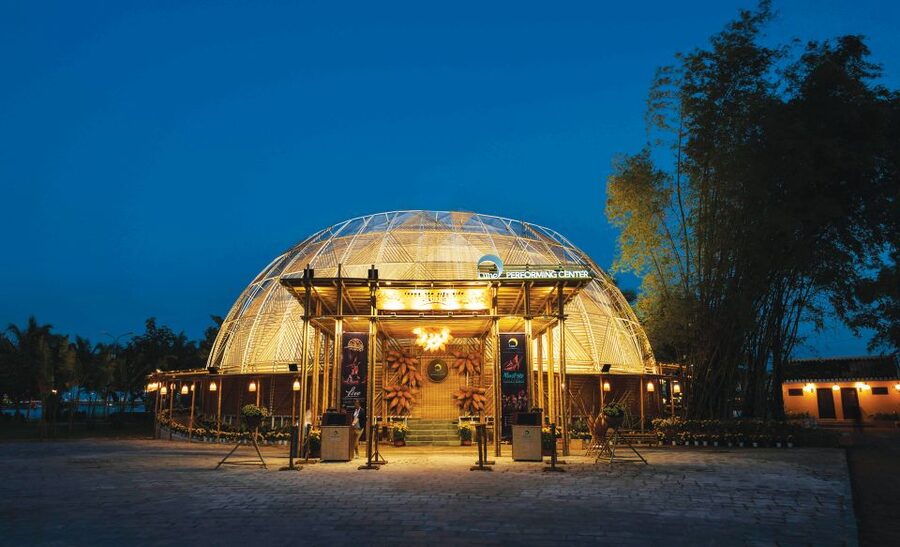
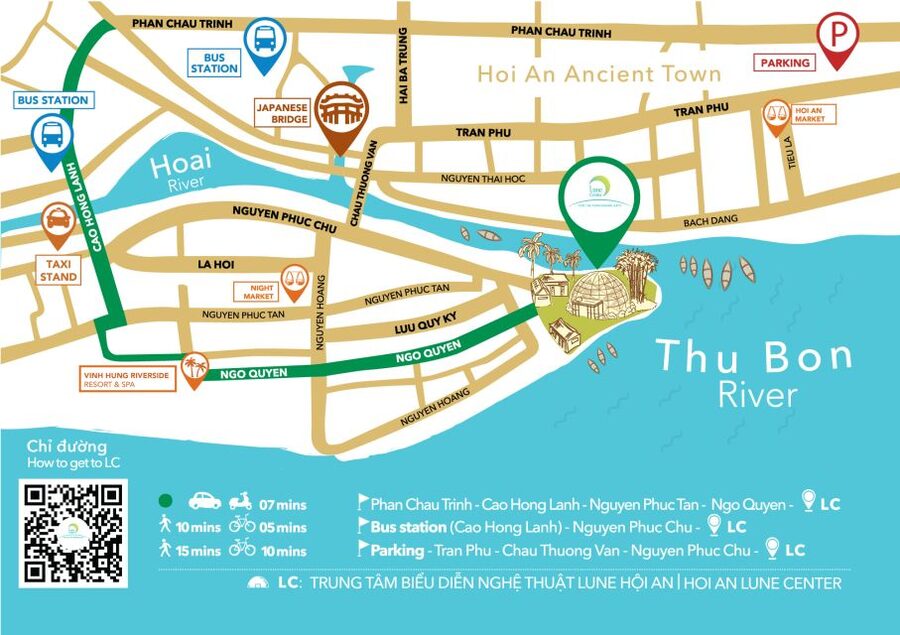
The Hoi An Lune Center is at 1A Nguyen Phuc Chu, Minh An Ward, in the Ancient Town area. Its bamboo dome gives the evening a clear sense of place before the performance even begins.
Plan to arrive up to 30 minutes before show time. This is not just a suggestion for anxious people who like to queue early. The extra time lets you find the theater, collect your ticket arrangements, and enjoy the complimentary local drink before you enter the auditorium.
You can expect hot or iced tea while waiting, according to the available seasonal service. Food and other drinks are not included, and you cannot take them into the auditorium. The waiting period is short, but the drink and the unusual building make the arrival feel more considered than simply filing into a modern hall.
The staff handles seating in an organized way, but your exact seat is assigned by the booking system on a first-come, first-served basis after the reservation succeeds. Your Theater Pass shows the seat number. I would check it before entering and avoid assuming that you can choose a different chair once inside.
If you want to sit together, book all tickets in the same order. Separate bookings may receive separate seat assignments, even if you make them close together.
Inside Hoi An Lune Center
The theater is intimate rather than huge. That matters because the show depends on seeing bodies, bamboo poles, and quick changes in formation. Even the least expensive seats are reported to provide a clear view, while front and center locations bring you closer to the performers’ strength and timing.
The most expensive front-row option is often called the Wow section, and another ticket category is referred to as Ahh. Names and prices can change by booking date, so use the available seating choices when you reserve. The practical point is simple: you do not necessarily need the top category to follow the action.
A center section may be the sensible choice if you want to see the whole stage. Front seats give you a more immediate view of the performers, but a little distance can help you understand large formations and the way the bamboo structures fit together.
The room’s design also supports the mood. The rounded bamboo architecture feels connected to the materials used on stage, so the theater does not seem like a neutral box around the production. You get a unified setting, from the dome outside to the poles and ropes inside.
The opening scenes and the rhythm of the show
Teh Dar begins with a strong physical presence. The live instruments are central, not decorative background music. Their energetic rhythms establish the pulse and keep the performance moving from one image to the next.
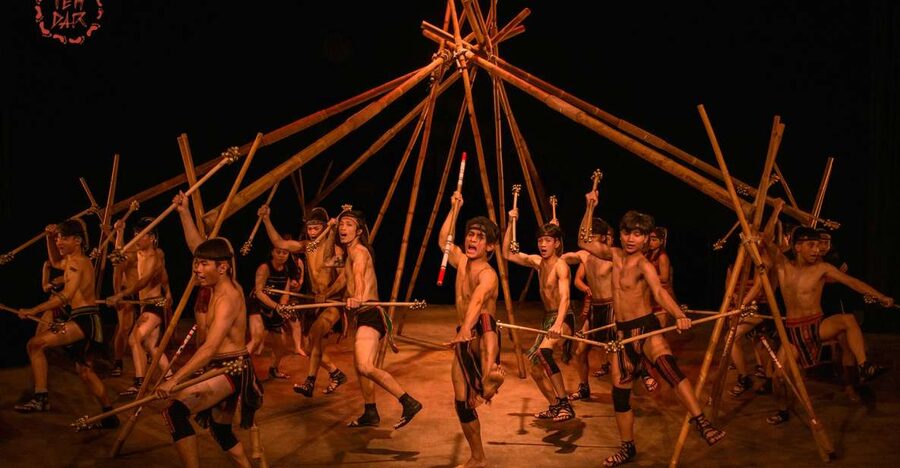
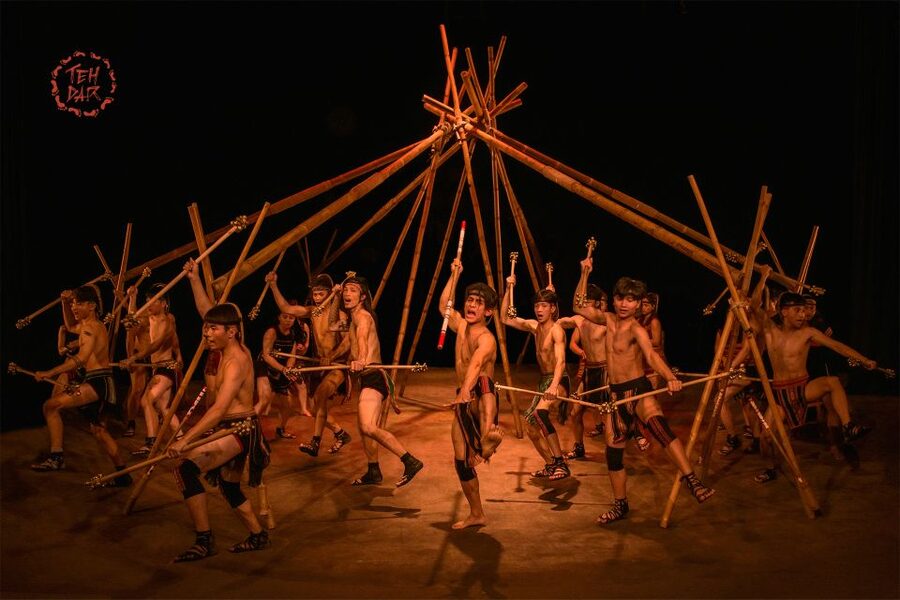
You will see performers working as individuals and as a group. Some moments highlight balance, agility, or strength. Others depend on exact coordination, with several people moving around bamboo at the same time. The best part of this format is that you can see how much trust and timing each scene requires.
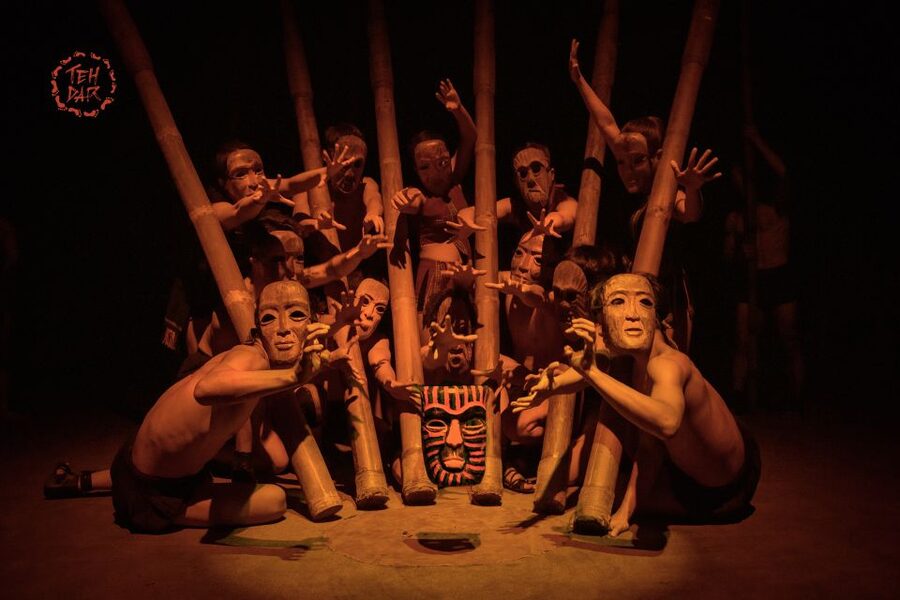
The show includes images of mountain conquerors, wild mating, and creatures from folk stories. Those subjects may sound abstract on paper, but the production expresses them through bodies, props, sound, and light rather than through long explanations.
Expect an athletic performance. The cast climbs, jumps, balances, supports one another, and handles heavy bamboo poles with control. The physical demands are obvious, especially when a scene continues at high speed and the performers maintain energy across the full hour.
There is also humor woven into the movement. It is not a comedy show, but lighter moments keep the production from becoming solemn. That balance helps the cultural material reach an audience that may not recognize every reference.
A different kind of day out, same stretch of Vietnam:
- Cooking Class Hoi An:Local Market, Basket Boat, Fishing & Cooking
★ 5.0 · 3,660 reviews - Hoi An Cooking Class(Market,BasketBoat Crabfishing&Cooking Class)
★ 5.0 · 3,386 reviews - Hoi An: My Son Sanctuary Early Morning w. Champa Food Brunch
★ 4.9 · 2,750 reviews - Hoi An/ Da Nang – Ba Na Hills – Golden Bridge Deluxe Small group
★ 5.0 · 2,613 reviews
Bamboo, ropes, and remarkable physical control
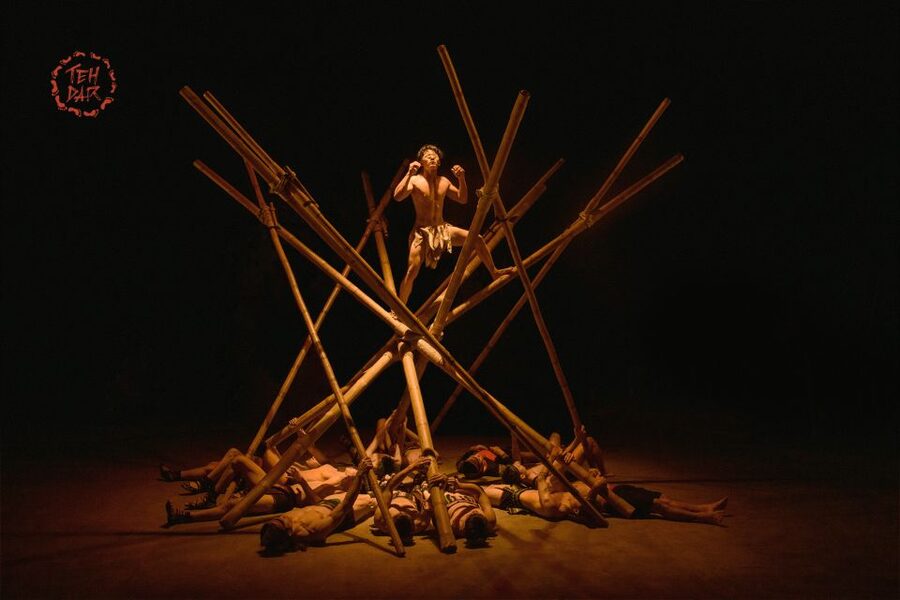
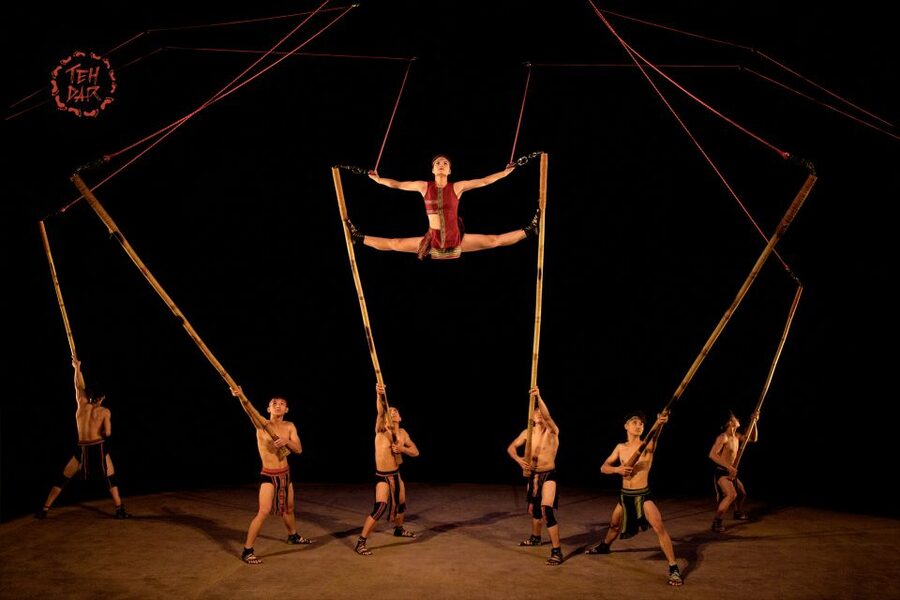
The most memorable feature is the way bamboo changes function. A pole can suggest a home, a tool, an animal, a boundary, or a piece of equipment for a dangerous stunt. Ropes and bamboo structures provide height and tension without covering the stage in elaborate machinery.
I find this kind of design more interesting than a show built around constant spectacle. You can see the physical problem in front of you, then watch the cast solve it with timing and teamwork.
The acrobatics are demanding without feeling like a disconnected competition. The performers do not simply complete a trick and wait for applause. They move directly into the next arrangement, allowing the story to continue through motion.
You may notice how often one person’s action depends on another person’s position. A pole must be held at the right height. A body must land in the right place. A group must move together while keeping the scene looking natural. That precision is one reason the hour feels full.
Some scenes may be intense for very young children. The official age rule excludes children under five because of the sound, lighting, and content. Children from five to twelve qualify for the child rate, but you know your child best. A child who enjoys music, movement, and circus skills may be captivated. A child sensitive to loud sound or dramatic lighting may find it less comfortable.
A cultural show without a lecture
Teh Dar’s cultural value comes from presentation rather than explanation. You are given images and rhythms connected with Vietnamese Highland life, but no guide pauses to spell out every symbol.
That approach has two advantages. First, the production stays quick and physical. Second, you are encouraged to respond to the atmosphere rather than wait for a translation of each scene.
The tradeoff is that some details may pass over your head. If you want a clearly narrated introduction to ethnic groups, village customs, or regional history, this is not that kind of event. If you want a polished performance that gives you a feeling for cultural themes through movement, Teh Dar fits much better.
I especially appreciate that the show does not depend on a foreign circus template alone. Its design uses local materials, music, and stories. The acrobatic language may be international, but the setting and subject matter point back to Vietnam.
The production also gives you a useful counterpoint to strolling through Hoi An’s Old Town. The Ancient Town is full of lanterns, shops, food, and restored buildings. Teh Dar offers a different way to encounter the country, through a controlled stage performance centered on Vietnamese artistic ideas.
Why the no-phone rule helps
Cameras, video recording, cellphones, food, and drinks are not allowed in the auditorium. You should treat this as a firm rule, not a casual request.
The policy can be inconvenient if you hoped to record the best bamboo stunt. Still, I think it improves the hour. Screens and flashes are especially distracting in a dark theater, and a phone held above someone’s head can spoil a carefully arranged scene.
Several people also appreciated that the restriction made the performance feel more focused. You watch the whole sequence instead of deciding which moment to film. At the end, you may be able to take a group photo with the artists, so the no-camera rule does not mean you leave without any keepsake.
Arrive on time. The theater may close its doors when the show starts, and late entry can be refused or handled in a way that disturbs people already watching. One reported complaint involved late arrivals entering during the first ten minutes with flashlights. You can avoid that problem by arriving early and settling in before the lights go down.
Is $28 good value?
At $28 per person, Teh Dar is not a bargain in the same way as a bowl of cao lau or an inexpensive boat ride. You are paying for a professional theater production, trained performers, live music, set design, venue staff, and a fixed one-hour performance.
For a short activity, the price deserves thought. You will not spend half a day at the theater, and there is no meal, transport, or guide included. If you judge value by time alone, it may seem expensive.
I would judge it by quality and difference. This is not something you can easily recreate by walking around the Ancient Town. The combination of bamboo architecture, athletic movement, live instruments, and cultural storytelling gives you a distinct evening activity.
The price also compares favorably with other polished stage productions, especially if you choose a middle seating category instead of the premium front row. Several people felt the less expensive seats were already good enough, and one person who purchased the most expensive option thought the middle price section might actually provide a better overall view.
Book the best seat you can afford if you care about proximity. Choose a center or mid-range section if you want a balanced view of the full stage. The small theater means you are unlikely to feel completely detached from the action.
Who will enjoy this most
You should consider Teh Dar if you like live performance, inventive staging, music, dance, or physical skill. It suits couples looking for an evening activity, families with children aged five and over, and anyone who wants a break from restaurants and shopping.
It is also a good fit if you have seen large international circus productions. You may recognize the precision and athletic demands, but the bamboo, instruments, and Vietnamese themes give the show its own character.
You may want to skip it if you dislike loud sound, strong lighting, acrobatics, or performances that tell stories without much spoken explanation. The show is energetic from start to finish, not a quiet cultural demonstration.
The one-hour length works well for most schedules. You can fit it into an evening around dinner or use it as a planned pause during your time in Hoi An. Since seats can fill, I would not wait until the last night if the performance is important to you.
Booking, age rules, and practical details
The experience lasts one hour, with starting times depending on availability. Admission includes the Teh Dar ticket and the seat category selected. It does not include hotel pickup, drop-off, food, drinks, or a guide.
You can cancel up to 24 hours in advance for a full refund. The reserve-now, pay-later option can help if your Hoi An schedule is still changing.
For children, the child rate applies from ages five through twelve. Children under five are not admitted because the auditorium’s lighting, sound, and content may not be suitable. Carry a copy of your child’s passport on your phone, since random age checks may take place.
Keep your Theater Pass available, respect the assigned seat number, and book everyone in one transaction if you want to sit together. These small steps matter more here than at a casual outdoor show because seating is system-assigned and entry is controlled.
Should you book Teh Dar?
I would book Teh Dar if you have one evening in Hoi An and want more than another meal or lantern-lit walk. The strongest reasons are the inventive bamboo work, the athletic cast, the live Highland-inspired music, and the compact running time.
I would choose a mid-range or central seat unless being close to the performers matters most to you. Arrive 30 minutes early, take the complimentary tea, put your phone away, and let the theater do its work.
At $28, it is a considered purchase, not an automatic budget activity. But if you value skilled live performance and want a cultural experience that does not feel like a museum visit, this is one of the better uses of an hour in Hoi An.
FAQ
Where does the Teh Dar show take place?
The show takes place at Hoi An Lune Center, 1A Nguyen Phuc Chu, Minh An Ward, Hoi An, Quang Nam, Vietnam.
How long does the show last?
Teh Dar lasts one hour.
What is included in the ticket?
Your ticket includes admission to the Teh Dar show and a seat according to the option selected.
Is hotel transportation included?
No. Hotel pickup and drop-off are not included.
Is a guide included?
No. This is a theater performance without a guide.
How early should I arrive?
You can arrive up to 30 minutes before show time. This gives you time to receive the complimentary local drink and prepare for entry.
Can children attend the show?
Children from five to twelve years old can attend at the child rate. Children under five are not allowed in the auditorium because of the sound, lighting, and content.
Can I use my phone or take photos during the performance?
No. Cameras, video recording, cellphones, food, and drinks are not allowed in the auditorium.
Recently reviewed around Hoi An
- Romantic Sunset Dinner Cruise in Hoi An★ 4.7 · 108 reviews
- Thanh Ha Village: Pottery Workshop with Locals★ 4.4 · 223 reviews
- Snorkeling Cham Island: Snorkeling Tour by Speed Boat★ 3.6 · 26 reviews
- Hoi An: Rural Cycling Tour to Village with Basket Boat Ride★ 5.0 · 174 reviews
- Private Car Hoi An to Hue Via Hai Van Pass, Lagoon & More★ 5.0 · 22 reviews
- From Hoi An: Day Tour of My Son Temples and Marble Mountain★ 4.8 · 44 reviews
- Market Tour – Cooking Class – Coconut Boat Riding★ 4.4 · 43 reviews
- From Hoi An: Marble Mountains and My Son Sanctuary Day Trip★ 4.7 · 209 reviews
Hoi An Tours, compared.

Vietnamese Coffee Culture and Coffee Making Class
Read our review →

Cooking Class Hoi An:Local Market, Basket Boat, Fishing & Cooking
Read our review →
Hoi An Cooking Class(Market,BasketBoat Crabfishing&Cooking Class)
Read our review →
My Son Sanctuary Early Morning w. Champa Food Brunch
Read our review →
Hoi An/ Da Nang – Ba Na Hills – Golden Bridge Deluxe Small group
Read our review →
Hoi An Full Lantern Making Class- A special Foldable lantern
Read our review →Browse the lists this tour appears in