
Reviewed · WORKSHOPS
Hoi An: Handmade Leather Crafts Workshop (Starter Course)
The best part of this Hoi An workshop is that you do not simply buy a leather souvenir. You make one yourself, choosing the color, style, and finishing details before learning to cut, punch, shape, and stitch the leather. It is a hands-on break from Hoi An’s tailor shops and market browsing.
I like the patient one-to-one guidance from Anton and his team, and I like that the finished item is useful rather than decorative clutter. You can make a wallet, coin purse, small case, or handbag, with materials and tools supplied. The main consideration is time: hand stitching takes patience, and some people may find the workshop more like an independent project with help nearby than a formal group class.
In This Review
- Key points to know before you book
- Making your own leather souvenir in Hoi An
- Picking a project and leather color
- Cutting leather with a pattern
- Punching holes, shaping, and attaching buttons
- Hand stitching takes patience
- What Anton adds to the experience
- Is this really a class?
- The value of a $36 handmade item
- Who will enjoy this workshop most?
- Planning the rest of your Hoi An day
- My call: book it if you want to make, not just buy
- FAQ
- Where does the leather workshop start and finish?
- How long does the activity last?
- What can I make during the starter course?
- Do I need previous leatherworking experience?
- Is instruction available in English?
- What is included in the price?
- Can I cancel the booking?
Key points to know before you book
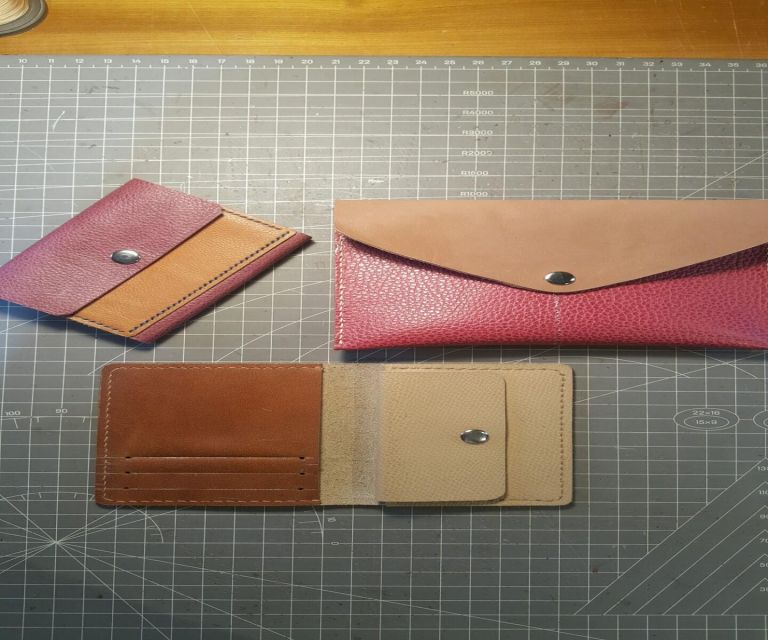
- Choose your own project: Make a coin purse, small case, handbag, or wallet, depending on the available options.
- Work with real tools: You will cut leather, punch holes with a hammer, shape the piece, attach buttons, and hand-stitch it.
- Anton leads the workshop: He is known for calm explanations, encouragement, and letting you do the work yourself.
- Small groups keep it personal: The group is limited to 10 people, with individual attention during the project.
- Budget two and a half to four hours: The work is beginner-friendly, but careful sewing can take longer than expected.
- You leave with a useful souvenir: Your finished piece is packed for you to take home or give as a gift.
Making your own leather souvenir in Hoi An
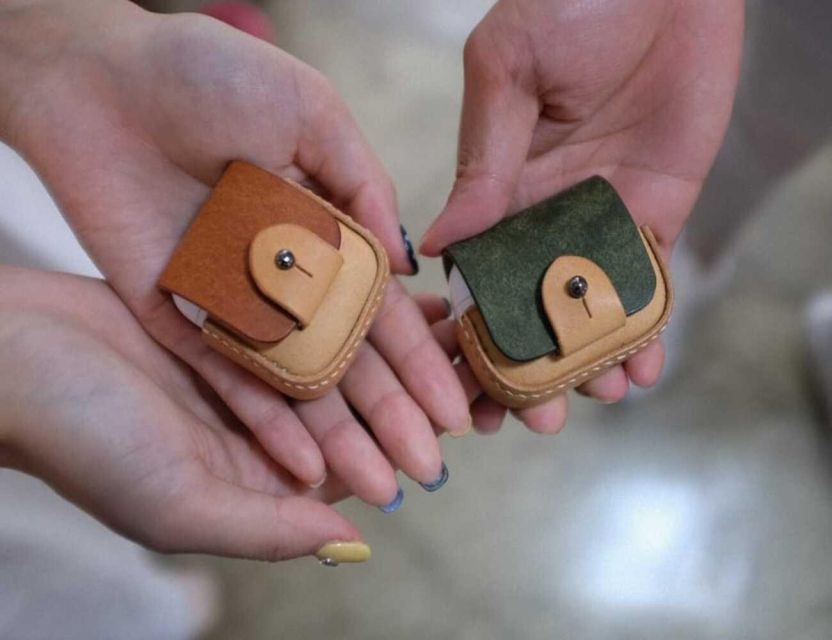
Hoi An is full of things to buy, from silk clothing to lanterns and leather goods. This workshop offers a different kind of keepsake. Instead of choosing a finished purse from a shelf, you build a small leather item with your own hands.
The starter course is designed for beginners. You do not need previous sewing or leatherworking experience. The instructor demonstrates each task, then you try it yourself. That order matters. You are not watching someone make the item for you. You are learning enough to understand how the piece comes together.
The experience takes place at 98 Hung Vuong Street, and it begins and ends at the same meeting point. Hotel pickup and drop-off are not included, so you will need to make your own way there. The location is in central Hoi An, making it practical to pair with time in town, but allow a little extra time to find the workshop if you are unfamiliar with the street.
More Hoi An trips worth a second look
- Hoi An: Vietnamese Coffee Culture and Coffee Making Class
★ 4.9 · 4,006 reviews - Hoi An: Vietnamese Foldable Lantern Making Class
★ 4.9 · 3,742 reviews - Cooking Class Hoi An:Local Market, Basket Boat, Fishing & Cooking
★ 5.0 · 3,660 reviews
Picking a project and leather color
Your first decision is what to make. The available choices include a coin purse, small case, small handbag, or wallet. Some options may suit a quick session better, while larger or more detailed pieces can use much of the four-hour period.
This choice gives the workshop a personal feel from the start. You can make a small wallet in your favorite colors, create a passport holder or wallet, or produce a purse for someone at home. The result is not identical for everyone because you control the color and some of the finishing choices.
The supplied material describes the patterns as suitable for different abilities, ages, and genders. That makes the starter course a sensible pick if one person in your group is crafty and another is not. You can still work on separate projects at your own pace.
I would decide on the type of item before getting too attached to one particular color combination. The exact selection available may depend on the workshop’s current stock. Since the activity is about making rather than simply selecting, part of the fun is working with what catches your eye on the day.
Cutting leather with a pattern
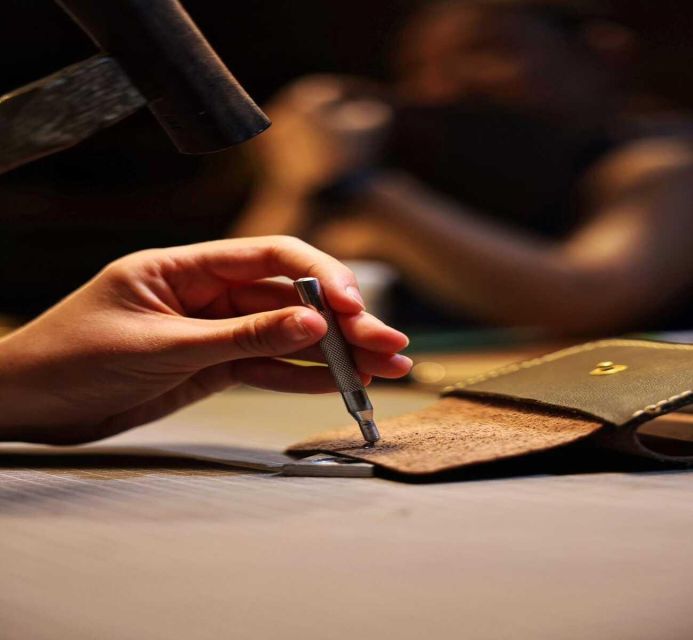
After choosing your project, you learn to work with a professional pattern. This is the stage where accuracy begins to matter. The leather must be cut along the pattern so the panels line up later.
The process is simple in concept, but it rewards a steady hand. Your instructor shows you how to position the pattern and cut the leather accurately. For a first-time maker, this is one of the useful lessons because it reveals how a clean finished item starts long before the stitching.
You should not rush this part. A small mistake in cutting can affect the shape of the finished piece, while careful work makes the later steps easier. The instructor provides individual attention throughout, so you can ask for help instead of guessing.
This is also where the workshop feels different from a quick craft demonstration. You are not only hearing about leather. You are handling it and making decisions that affect your finished souvenir.
Punching holes, shaping, and attaching buttons
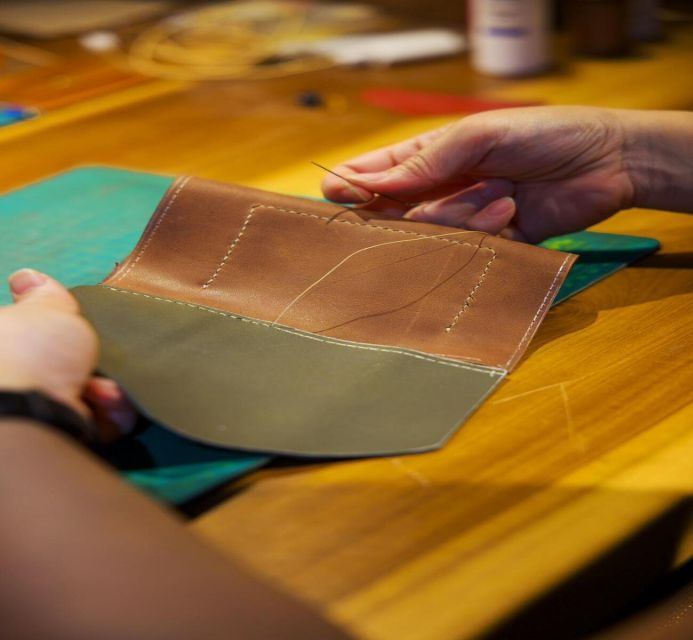
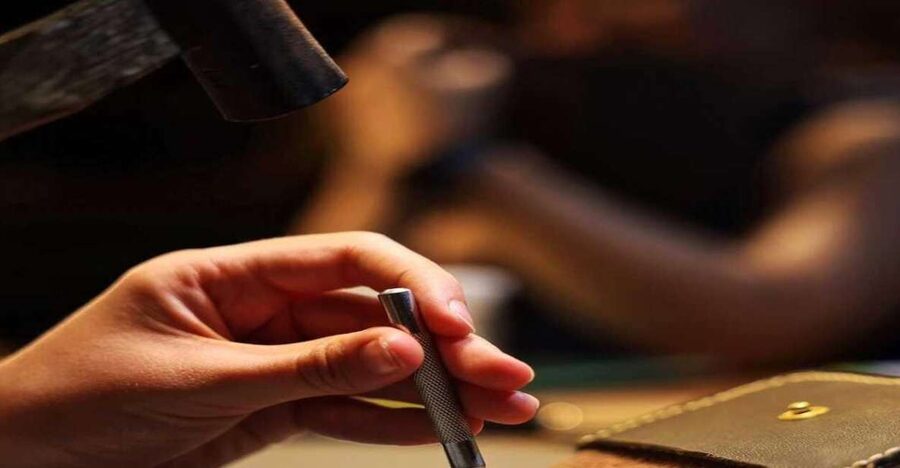
Once the leather is cut, you punch the holes needed for stitching. The hammering is one of the most enjoyable parts of the session, especially if you like practical work with clear results. You can see the pattern develop as each hole is made.
The instructor explains how to place and punch the holes, then gives you time to do it yourself. This balance is important. Anton is described as stepping in when needed without taking over the project, so you should expect encouragement rather than someone completing the difficult parts on your behalf.
You also learn to shape the leather and stitch buttons onto the item. These steps turn flat pieces into something with a purpose and structure. A coin purse, wallet, or small case begins to look like the object you chose at the start.
The workshop includes all tools and materials, so you do not need to bring a leatherworking kit. Vietnamese tea or one soft drink is included as well. Other food and drinks are extra.
A different kind of day out, same stretch of Vietnam:
- Hoi An: Basket Boat Ride in the Coconut Forest
★ 4.9 · 4,956 reviews - Hoi An Cooking Class(Market,BasketBoat Crabfishing&Cooking Class)
★ 5.0 · 3,386 reviews - Hoi An: My Son Sanctuary Early Morning w. Champa Food Brunch
★ 4.9 · 2,750 reviews - Hoi An/ Da Nang – Ba Na Hills – Golden Bridge Deluxe Small group
★ 5.0 · 2,613 reviews
Hand stitching takes patience
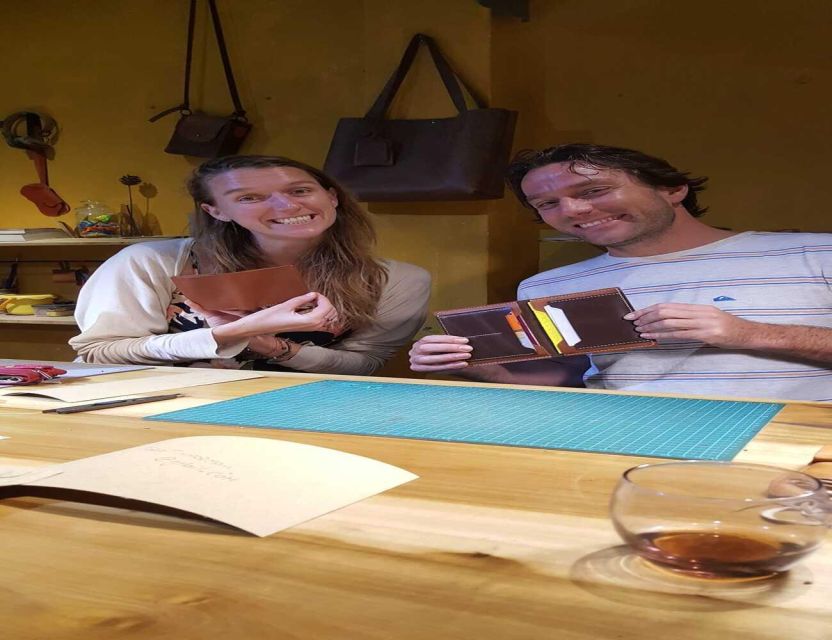
Hand stitching is the slowest part for many beginners. It is also the part that gives your souvenir its handmade character. You will learn how to thread and stitch the leather, following the punched holes and keeping the seams as even as you can.
If you are a careful sewer, expect to use plenty of the available time. One participant needed extra time because of a perfectionist approach and slow sewing, and the instructor was happy to help without rushing the process. That is useful to know when planning the rest of your day.
The course description refers to a two-hour or four-hour option, while the activity timing is listed as two and a half to four hours. Treat the shorter option as a guide rather than a promise that you will be finished quickly. Your project, pace, and group setup will affect the final timing.
I like that the workshop allows you to try each stage yourself. A craft activity loses much of its value if an instructor quietly fixes everything before you understand it. Here, the point is to leave with both an item and a new skill.
What Anton adds to the experience
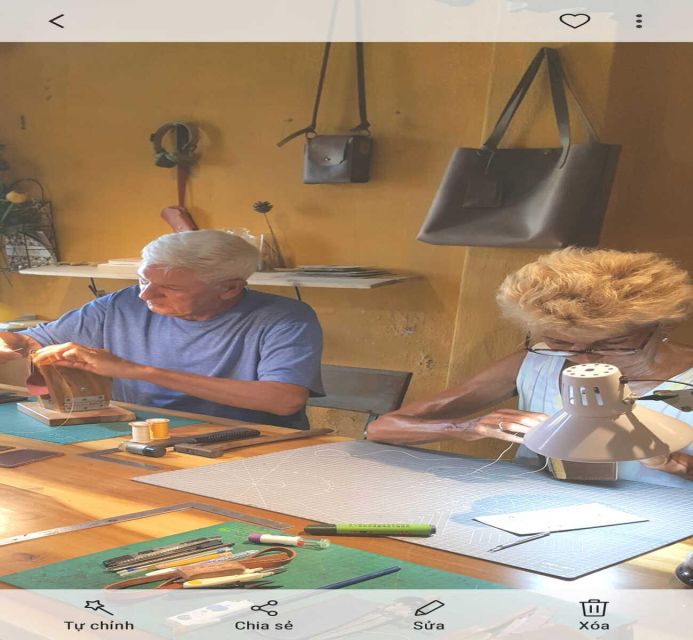
Anton is the instructor most closely associated with the workshop, and his teaching style is a major part of its appeal. He speaks English and is described as patient, kind, enthusiastic, and clear when explaining the process.
You should expect a relaxed atmosphere rather than a strict classroom. Some people have had one-to-one attention, while others worked in a small group. The maximum group size is 10, but the personal help during each project keeps the activity from feeling like a large demonstration.
Anton’s approach also suits people who want to remain in control of the finished piece. He explains the next step, watches your progress, and helps when needed. You still do the cutting, hammering, shaping, and sewing.
The workshop may be especially pleasant for couples, families, and friends who want to make items side by side. Families with children aged 9 and 13 have completed projects, but the activity is not suitable for children under 4. Younger children may also need close adult help with cutting and hammering, even though the starter designs are intended for beginners.
Is this really a class?
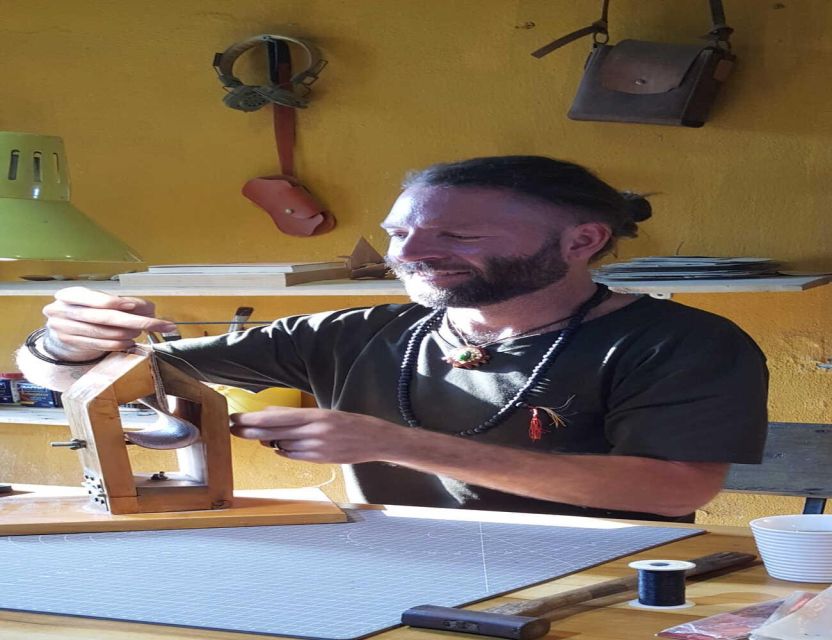
There is a small distinction worth making. This is presented as a workshop with professional instruction, but it may not feel like a formal lesson where everyone follows the same demonstration at exactly the same pace.
You choose an item and work through its stages with support. One person may be stitching while another is still punching holes. That arrangement is useful because you get help when your own project requires it, but it means the experience can feel partly like a guided solo activity.
For me, that is a strength if you want to concentrate on your own piece. It may be less suitable if you expect a lively, tightly structured group class with a shared presentation and lots of conversation.
The small-group limit helps. A group of 10 is still large enough for a social outing, while individual attention gives beginners a way to keep moving. A one-to-one session may be available depending on the booking, but you should check the current schedule rather than assume it.
The value of a $36 handmade item
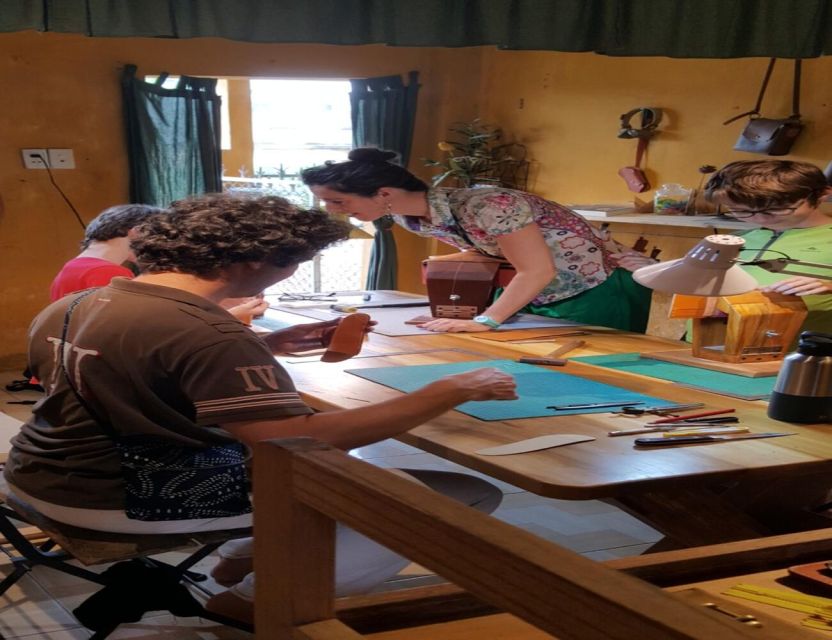
At $36 per person, this is not the cheapest souvenir activity in Hoi An. The price includes the leather, tools, instruction, Vietnamese tea or one soft drink, and the finished item you make.
The better comparison is not with a mass-produced wallet at a market. Compare it with the cost of a craft class, the time spent with an instructor, and the value of bringing home something that carries your own work. You are paying for materials and a practical activity, not only for an object.
The value improves if you want a useful gift. A small wallet, case, or coin purse takes up little luggage space and has a clear purpose. You can also make something in colors chosen for a partner, friend, or family member.
The value is less clear if you want a quick, polished souvenir with no effort. Your finished piece is handmade by you, so small variations are part of the result. The leather quality is described as good, but the final neatness will depend partly on your cutting and sewing.
Who will enjoy this workshop most?
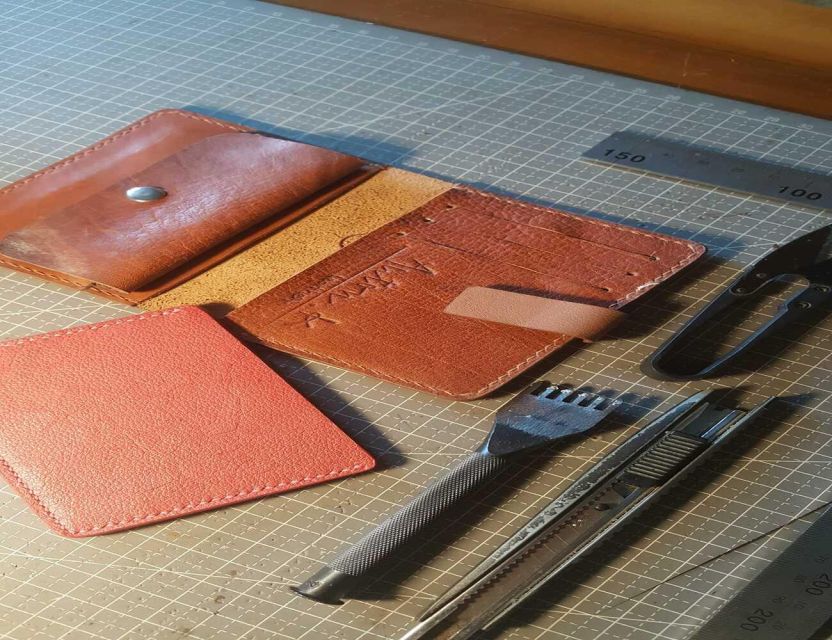
I would recommend this experience to you if you like making things, want a slower afternoon in Hoi An, or prefer souvenirs with a personal story. It also suits couples and families who want an activity they can share without needing specialist skills.
It is a good choice for:
- First-time leatherworkers
- Crafty people who enjoy learning by doing
- Couples making matching or complementary items
- Families with children old enough to follow tool instructions
- Anyone looking for a useful gift made by hand
- Visitors who want a break from shopping and sightseeing
You may want to skip it if you dislike careful handwork or have a very tight schedule. The workshop can take up to four hours, and sewing cannot be hurried without affecting the result.
You should also know that pets are not allowed. Hotel transfers are not included, and extra food or drinks are not part of the price.
Planning the rest of your Hoi An day
Because the activity starts and ends at 98 Hung Vuong Street, it is easy to build your plans around the workshop without arranging transport through the provider. Check the start times carefully when booking, since the available schedule can change.
A morning session leaves the rest of the day open. An afternoon session can give you a quiet, focused activity before dinner. Either way, avoid placing a fixed appointment immediately afterward if you are making a larger piece or want to work carefully.
The activity lasts between two and a half and four hours according to the booking information. The longer timing is not a problem, but it is worth treating the workshop as a main activity rather than a quick stop between other bookings.
Your finished souvenir is packed for you at the end. That is a small but useful touch, especially if you are continuing around town or carrying other purchases.
My call: book it if you want to make, not just buy
I would book this Hoi An leather workshop if you want a personal souvenir and can spare an unhurried afternoon. The instruction is in English, the group is limited to 10, and the process gives you a real introduction to cutting, punching, shaping, button attachment, and hand stitching.
The strongest reason to go is the balance between help and independence. Anton and the other instructors guide you, but you still make the important parts yourself. That makes the finished wallet, purse, case, or handbag feel like more than another purchase.
I would pass if you want a fast activity or dislike repetitive hand sewing. For everyone else, $36 is a fair price for the materials, instruction, drink, and a useful keepsake that carries your own fingerprints in its seams.
FAQ
Where does the leather workshop start and finish?
The workshop starts at 98 Hung Vuong Street in Hoi An and ends back at the same meeting point.
How long does the activity last?
The duration is listed as two and a half to four hours. Available start times and the exact session length should be checked when booking.
What can I make during the starter course?
You can choose from available options such as a coin purse, small case, small handbag, or wallet.
Do I need previous leatherworking experience?
No. The starter course is designed for beginners and teaches basic skills including cutting leather, punching holes, shaping, attaching buttons, and hand stitching.
Is instruction available in English?
Yes. The listed language is English.
What is included in the price?
The price includes materials and tools for the class, Vietnamese tea or one soft drink, and the leather item you make.
Can I cancel the booking?
You can cancel up to 24 hours in advance for a full refund. You can also reserve now and pay later, according to the booking terms.
Recently reviewed around Hoi An
- Thanh Ha Village: Pottery Workshop with Locals★ 4.4 · 223 reviews
- Romantic Sunset Dinner Cruise in Hoi An★ 4.7 · 108 reviews
- Snorkeling Cham Island: Snorkeling Tour by Speed Boat★ 3.6 · 26 reviews
- Hoi An: Rural Cycling Tour to Village with Basket Boat Ride★ 5.0 · 174 reviews
- Private Car Hoi An to Hue Via Hai Van Pass, Lagoon & More★ 5.0 · 22 reviews
- From Hoi An: Day Tour of My Son Temples and Marble Mountain★ 4.8 · 44 reviews
- Market Tour – Cooking Class – Coconut Boat Riding★ 4.4 · 43 reviews
- From Hoi An: Marble Mountains and My Son Sanctuary Day Trip★ 4.7 · 209 reviews
Workshops, compared.

Hanoi Cooking Class: Culture, Local Market & Meaning CSR Impact
Read our review →
5 Traditional Dishes Hanoi Cooking Class with Market Trip
Read our review →
Vietnamese Coffee Culture and Coffee Making Class
Read our review →

Cooking Class Hoi An:Local Market, Basket Boat, Fishing & Cooking
Read our review →
Hoi An Cooking Class(Market,BasketBoat Crabfishing&Cooking Class)
Read our review →
Hoi An Full Lantern Making Class- A special Foldable lantern
Read our review →
Cai Be Mekong Delta Tour: Cooking Class, Cycling & Craft Villages
Read our review →Browse the lists this tour appears in