Reviewed · HANOI TOURS
Vietnam War: Uncovering Hanoi’s Untold Stories
Hanoi’s war story is not confined to museums or grand monuments. This 2.5-hour walking tour takes you through working neighborhoods, a former black market, the Kham Thien B52 memorial, and the Hanoi Train Street community, connecting wartime events with ordinary city life.
I like the relaxed coffee conversation at the start, and I like the way the route reaches places most guidebooks skip. Guides including Dung, Kien, and Thomas bring personal and local perspective, while the small maximum of 10 people keeps the discussion manageable.
The main consideration is the subject itself. This is not a light sightseeing walk. You will hear about bombing, hardship, divided families, planned-economy shortages, and the effects of Agent Orange. The route also involves walking and a short taxi ride, so moderate fitness helps.
In This Review
- Key points to know before booking
- Why this Hanoi war tour feels different
- Starting with coffee at 24B Chua Vua
- Duong Tau and the life of a working neighborhood
- The Kham Thien B52 memorial
- Cho Gioi, Hanoi’s former black market
- Hanoi Train Street and the city that kept moving
- How the route handles difficult history
- What $37 buys you
- Who will get the most from this experience
- Practical details for a smoother outing
- Should you book Vietnam War: Uncovering Hanoi’s Untold Stories?
- FAQ
- How long does the experience last?
- Where does the tour start?
- Where does the tour end?
- What places are visited?
- Is transportation included?
- Is coffee or tea included?
- How large is the group?
- Is the tour suitable for people with limited fitness?
- Are service animals allowed?
- What is the cancellation policy?
- Does part of the profit support local causes?
Key points to know before booking
- A history conversation begins over coffee: You get context before heading into the neighborhoods.
- Kham Thien’s B52 memorial is a place for reflection: The stop focuses on civilian suffering and the cost of war.
- Cho Gioi shows survival after the war: The former black market opens a window onto life under the planned economy.
- Train Street adds present-day Hanoi: The community connects wartime history with a living neighborhood.
- The group is capped at 10 people: That suits anyone who wants to ask questions rather than follow a speech.
- 20 percent of profit supports two causes: Donations go to the Vietnam Association for Victims of Agent Orange/Dioxin and Blue Dragon’s Children Foundation.
Why this Hanoi war tour feels different
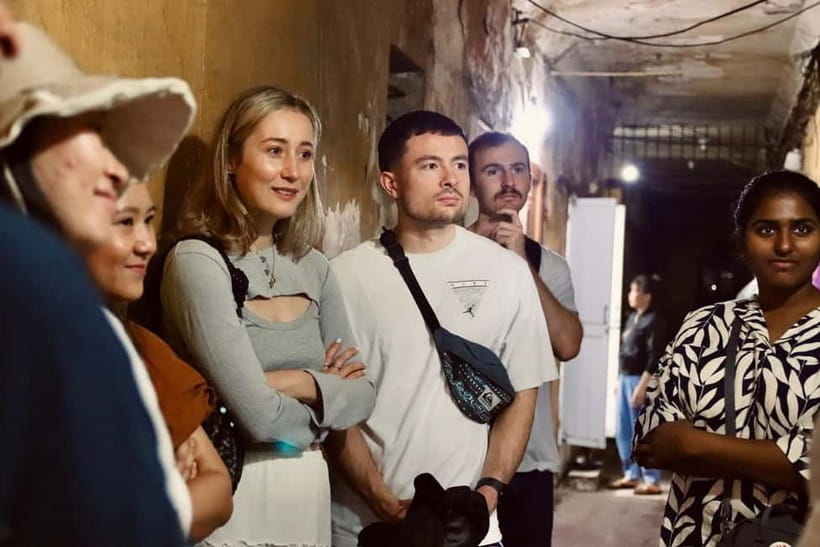
Many Hanoi history tours focus on official landmarks and familiar political milestones. This one shifts attention to the streets where people found ways to live through war, separation, shortages, and major political change.
The stated aim is to discuss Vietnam’s division between communist North and anti-communist South, the path toward reunification, and the wider Cold War setting. That makes the experience broader than a military tour. You are asked to think about how national events shaped homes, shops, neighborhoods, and family life.
The tone is intended to be a conversation rather than a lecture. That distinction matters. You can ask about details that interest you, and the guide can spend more time on local life, wartime memory, or the planned economy depending on the group.
Past guide names connected with this experience include Dung, Kien, and Thomas. Their styles may differ, but the strongest thread is clear: expect a local guide who is comfortable discussing both history and modern Hanoi. Kien is especially associated with giving a clear history overview before the walk, while Dung has been praised for connecting history with culture and traditions.
Other Hanoi days travellers weigh against this one:
- Hanoi Jeep Tour: Food, Culture and Fun by Vietnam Army Jeep
★ 5.0 · 15,222 reviews - Full-Day Ninh Binh Highlights Tour from Hanoi
★ 5.0 · 7,761 reviews - Hanoi: Ha Long Bay Day Cruise – Swimming, Meal, Kayaking
★ 4.7 · 7,415 reviews
Starting with coffee at 24B Chua Vua
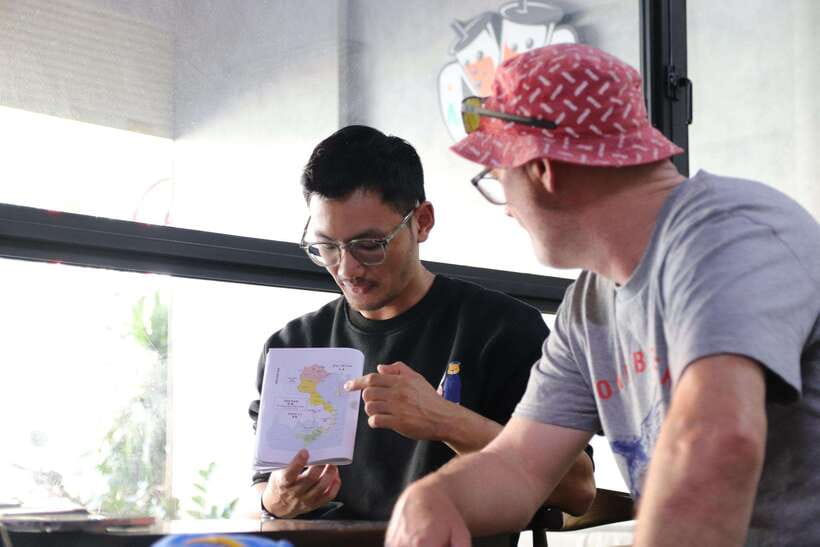
The experience begins at 24B P. Chua Vua, in the Phố Huế area of Hai Ba Trung District. Rather than sending you straight onto the pavement, the guide starts with a 30-minute sit-down discussion, with coffee or tea included.
I like this choice. Vietnam’s 20th-century story can become confusing quickly, especially when you are trying to keep track of North and South, communism and anti-communism, the Cold War, and reunification. A short briefing gives you a framework before the physical sites add detail.
This opening also sets the tone. You are not simply collecting photographs of memorials. You are preparing to discuss how political systems affected daily life, how local people adapted, and why some parts of Hanoi still carry wartime memories in quiet, ordinary ways.
The meeting point is not described as a major tourist landmark, so check the address carefully before setting out. Mobile ticket confirmation is provided at booking, and the tour is near public transportation. Service animals are allowed.
Duong Tau and the life of a working neighborhood
Duong Tau is described as a historic part of Hanoi where you hear stories from veterans and learn about local lives. The stop lasts about 30 minutes and includes admission.
The appeal here is the setting. A neighborhood gives you a different way to understand war than a display case does. Instead of seeing only dates, aircraft, or political speeches, you consider what happened to people who continued to work, shop, raise children, and maintain a community during unstable years.
The guide’s role is important at this stop. You are relying on explanation to connect the streets around you with memories of the conflict. The experience may be particularly useful if you want to understand Hanoi beyond its postcard center, since the focus is on an area far from the usual tourist path.
The stop is also described as a place to rest after the history discussion. That suggests a slower pace rather than a forced march from one point to the next. Still, you should wear comfortable shoes. The overall activity requires moderate physical fitness, and the tour is built around walking.
The Kham Thien B52 memorial
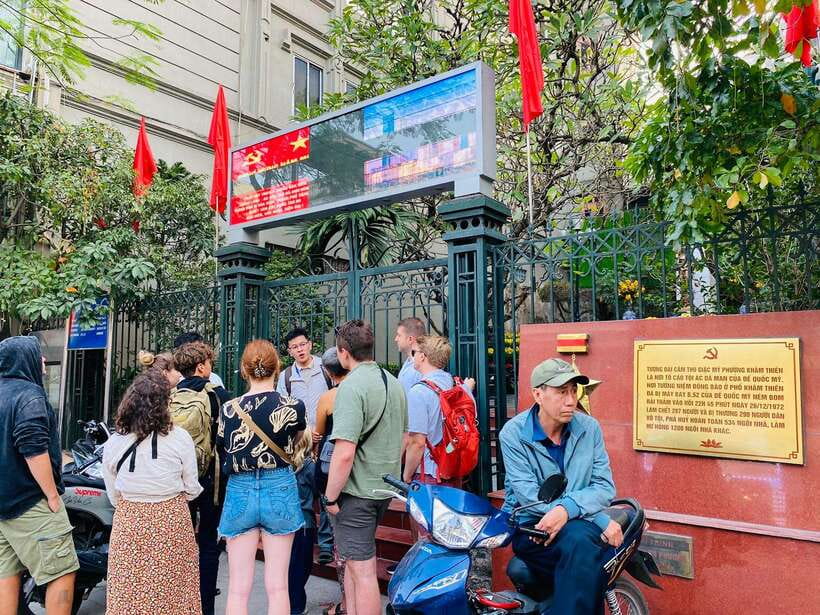
The Kham Thien B52 Memorial is one of the most serious stops. The visit lasts about 15 minutes, with no admission charge.
The memorial is presented as more than a marker of a wartime event. It is a place to consider the human cost of bombing and to ask what can be learned from the past. The short visit may feel concentrated rather than rushed, since the subject does not require a long list of attractions around it.
You will want to give this stop your full attention. It is not a photo opportunity to tick off and forget. The tour uses it to discuss civilian tragedy and the way wartime memory remains part of Hanoi’s modern identity.
Because the stop is brief, you may not receive every military detail you would find on a specialist battlefield tour. That is a fair trade for the wider focus here. The experience is about people, neighborhoods, and consequences as much as weapons or tactics.
The tour ends in the Kham Thien area, at Phố Khâm Thiên, and you can walk back toward Hanoi’s Old Quarter afterward. That makes the route practical if you want to continue sightseeing or return on foot.
A different kind of day out, same stretch of Vietnam:
- Hanoi: Water Puppet Show Tickets
★ 4.6 · 7,029 reviews - Hanoi Motorbike Tour: Food, Culture and Fun by Vintage Motorbike
★ 5.0 · 6,699 reviews - Hanoi: Guided Food Tour with Train Street Visit
★ 4.9 · 6,239 reviews - Hanoi Cooking Class: Culture, Local Market & Meaning CSR Impact
★ 5.0 · 5,147 reviews
Cho Gioi, Hanoi’s former black market
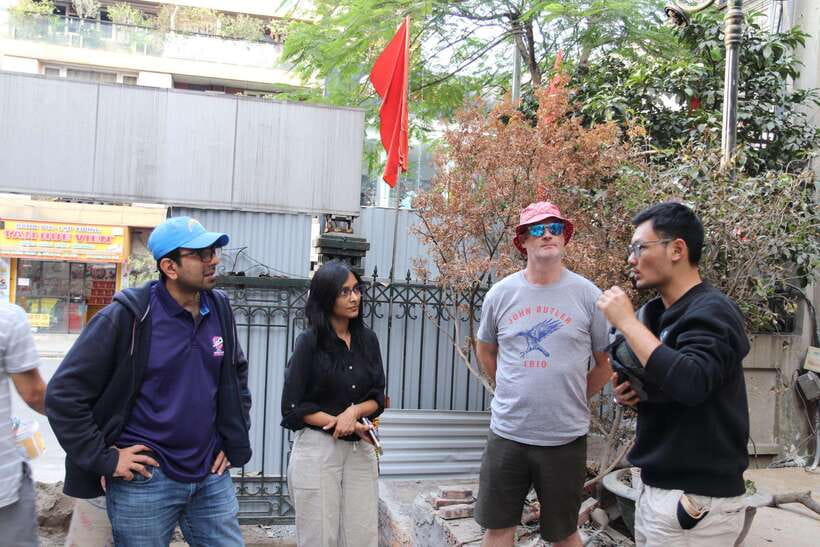
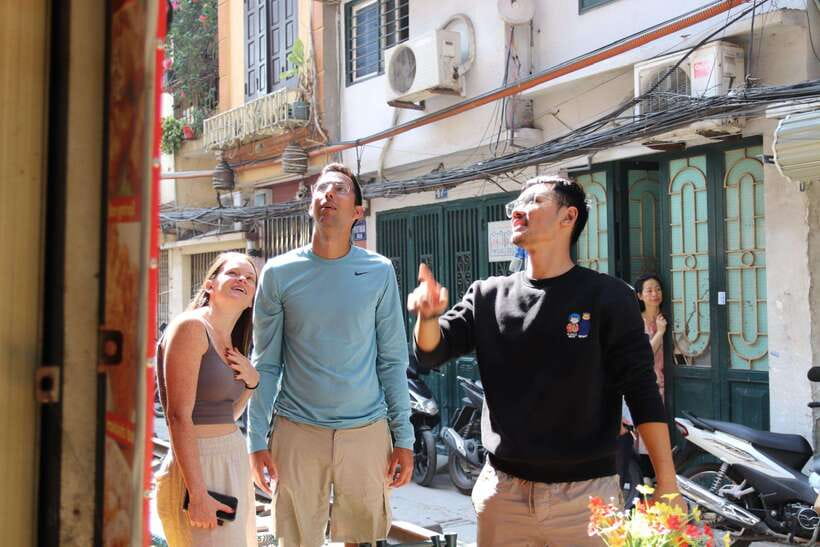
Cho Gioi is one of the most unusual parts of the route. The name refers to a historic black market, and the stop lasts about an hour.
Here the discussion turns to the aftermath of war and life under the planned economy. Shortages and restrictions encouraged local ingenuity, informal trade, and a secret economy. Cho Gioi becomes a way to see how people managed daily needs when official systems could not provide everything easily.
That subject gives the tour a useful social angle. You are not only learning what governments decided. You are hearing how ordinary people responded, adapted, traded, and survived. This is the kind of detail that helps explain how a major political system felt at street level.
The market is also a working urban area rather than a preserved historic site. You should expect a real neighborhood atmosphere, not a polished attraction built for sightseeing. That can be rewarding, but it also means the setting may feel less tidy or predictable than Hanoi’s central monuments.
An hour is a generous portion of the experience. It gives the guide time to explain the black market’s place in postwar life and answer questions. If you prefer fast sightseeing, this may seem long. If you want social history and local context, it is likely to be one of the strongest sections.
Hanoi Train Street and the city that kept moving
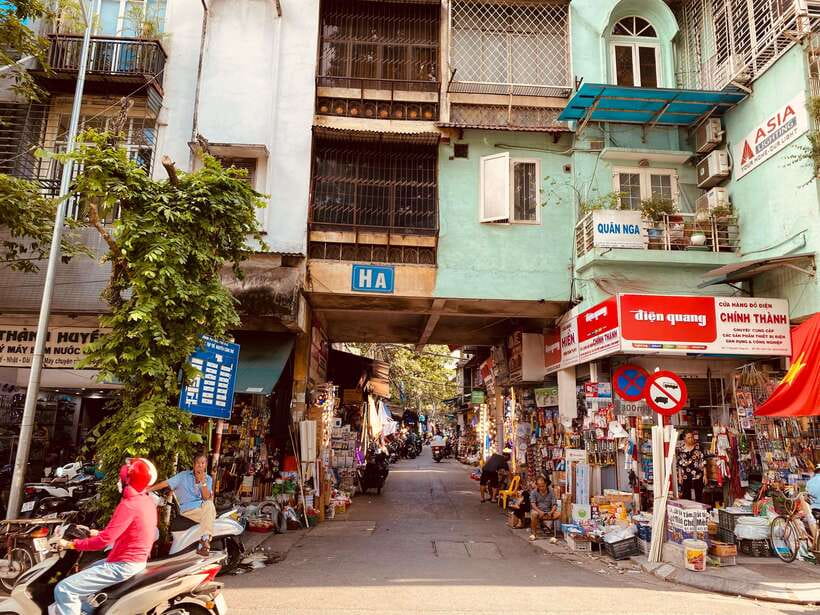
The Hanoi Train Street community adds a modern, living setting to the route. The experience description identifies it as one of the places visited, and the tour is designed to show areas away from the standard tourist view.
Train Street is useful here because it brings the story back to the present. You are not looking only at what happened decades ago. You are seeing a community shaped by Hanoi’s ongoing growth, changing neighborhoods, and the way residents share space with an unusual piece of urban infrastructure.
The guide helps connect this stop to the earlier discussion. Without that context, Train Street can become just a quick photograph. With the history conversation behind you, it can represent the persistence of everyday life in a city marked by political upheaval and war.
The exact sequence of the stops can vary with the route and timing. The experience includes a short taxi ride halfway through, and private transportation is included. The published end point is in Khâm Thiên, while the route description also includes Train Street, so confirm the day’s order with the guide if the final location matters to your plans.
How the route handles difficult history
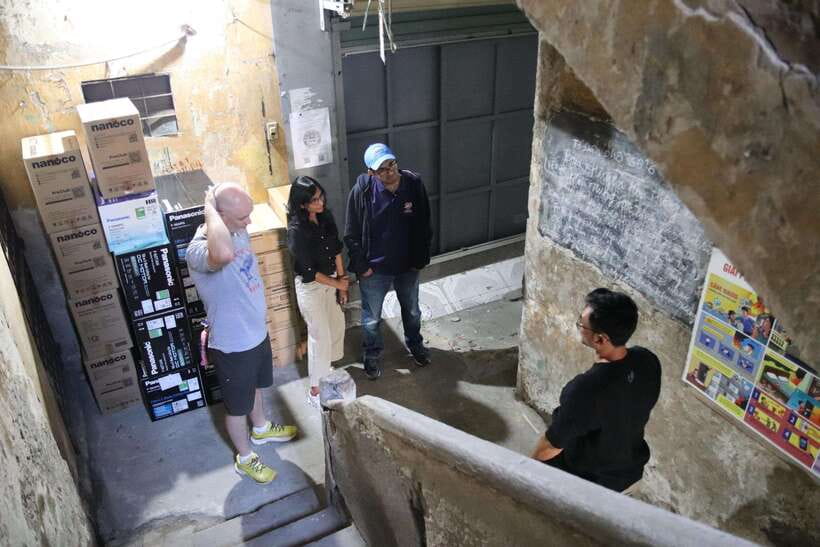
This tour covers topics that deserve care. It discusses both North and South Vietnam, the country’s division, reunification, the Cold War, planned-economy life, and the suffering caused by war and Agent Orange.
That breadth is one of its strengths. You are not given a single narrow story about victory, defeat, or military strategy. You are encouraged to look at how the conflict affected different sides and how unification changed the country.
The tone is described as relaxed and joyful, but that should not be mistaken for a cheerful war tour. The lighter approach helps discussion feel open, yet the memorial and human consequences remain serious. You should book this experience if you are willing to listen carefully and accept that the past may be presented through local memory rather than through a neutral, textbook-style timeline.
The guides are also part of the value. Kien is described as friendly and able to bring first-hand experience into the discussion. Dung is associated with stories about Vietnamese culture and traditions. Thomas is praised for explaining thousands of years of Vietnamese history in a short opening session and for guiding people into less familiar parts of Hanoi.
Guide assignment can change, so you should not book solely for one named person. Still, these examples show the kind of leadership the experience aims to provide: informed, personal, and willing to explain how history connects with current life.
What $37 buys you
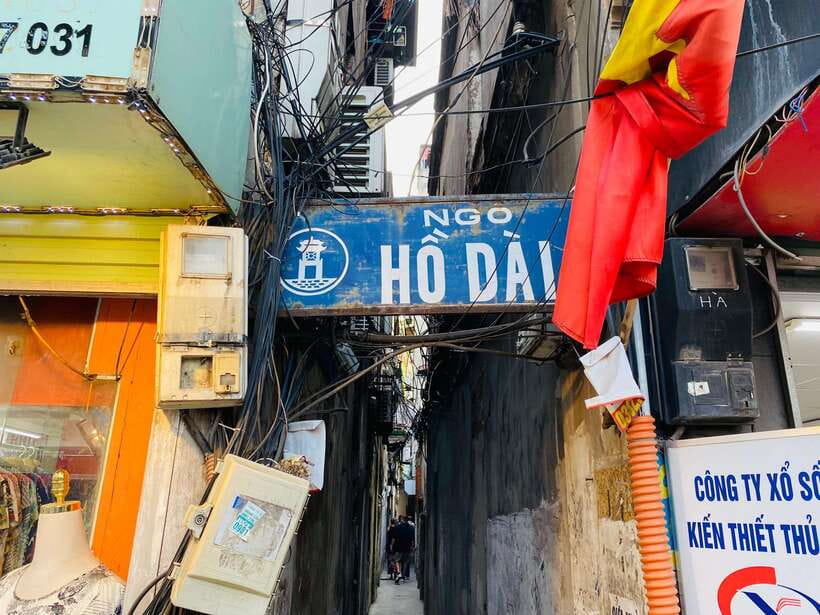
At $37 per person, this is not the cheapest way to walk around Hanoi. You are paying for a small-group format, a local guide, coffee or tea, and private transportation for the taxi portion.
The value depends on what you want from a city tour. If you only want famous sights and quick photographs, you can spend less by walking independently. But the key sites here are not as easy to interpret on your own. Cho Gioi, Duong Tau, and the Kham Thien memorial become meaningful through explanation, especially when the discussion moves from public history to private hardship and local survival.
A maximum of 10 people is another plus. It is small enough for questions and personal exchange, without requiring the cost of a fully private booking. The 2.5-hour length also fits neatly into a morning or afternoon.
The donation policy adds another practical point. Twenty percent of the profit goes to the Vietnam Association for Victims of Agent Orange/Dioxin and Blue Dragon’s Children Foundation. That does not replace careful scrutiny of any tour, but it gives part of your spending a stated social purpose.
Who will get the most from this experience
I would choose this tour if you have already seen Hanoi’s major sights and want a different side of the city. It is also a good early-trip choice if you want historical context before visiting other war-related sites.
It suits:
- History-minded visitors who want more than a basic timeline.
- Repeat visitors to Hanoi looking for neighborhoods beyond the Old Quarter.
- Families with older children and teenagers, since a family group with children aged 13 to 20 enjoyed the mix of history and local streets.
- People interested in daily life, especially the effects of the planned economy and postwar shortages.
- Small groups who like questions and discussion, rather than a fixed speech.
It may not suit you if you want a gentle sightseeing stroll with little discussion of suffering. It may also disappoint if you expect a large museum collection, battlefield remains, or a tour focused mainly on military hardware. The strongest material concerns people, memory, neighborhoods, and social change.
Practical details for a smoother outing
Allow about two and a half hours, and plan for walking plus a short taxi ride halfway through. Comfortable shoes and water are sensible, though coffee or tea is included at the opening conversation.
The group size is limited to 10 people. Confirmation arrives at booking, and the experience uses a mobile ticket. Public transportation is nearby, and service animals are allowed.
The start point is 24B P. Chua Vua, Phố Huế, Hai Bà Trưng, Hanoi. The listed end point is Phố Khâm Thiên, P. Khâm Thiên, Đống Đa, from where you can walk back to the Old Quarter.
Free cancellation is available if you cancel at least 24 hours before the start time. Cancellations or changes made inside that window are not accepted for a refund. The cut-off follows Hanoi local time, so check the clock carefully if you are changing plans.
Should you book Vietnam War: Uncovering Hanoi’s Untold Stories?
Book it if you want Hanoi explained through its neighborhoods rather than only its famous monuments. The coffee discussion, Cho Gioi market, Kham Thien memorial, and Train Street create a useful progression from national history to street-level survival and modern city life.
The best reason to go is the chance to ask questions and hear local interpretation in places you might otherwise pass without understanding. The main caution is the serious subject matter and the moderate walking requirement.
At $37, I see good value for anyone who wants a thoughtful small-group experience, especially on a second visit to Hanoi. If you prefer a short, light, attraction-packed tour, choose something else. If you want to understand how war and political change shaped the city people live in today, this is a strong choice.
FAQ
How long does the experience last?
The tour lasts approximately 2 hours and 30 minutes.
Where does the tour start?
It starts at 24B P. Chua Vua, Phố Huế, Hai Bà Trưng, Hanoi, Vietnam.
Where does the tour end?
The listed ending point is Phố Khâm Thiên, P. Khâm Thiên, Khâm Thiên, Đống Đa, Hanoi. You can walk back toward the Old Quarter from there.
What places are visited?
The route includes Duong Tau, the Kham Thien B52 Memorial, Cho Gioi historic black market, and the Hanoi Train Street community.
Is transportation included?
Yes. Private transportation is included, and the tour uses a short taxi ride halfway through the walk.
Is coffee or tea included?
Yes. Coffee and/or tea are included during the opening discussion.
How large is the group?
The experience has a maximum of 10 participants.
Is the tour suitable for people with limited fitness?
The stated requirement is a moderate level of physical fitness. The experience includes walking and a short taxi ride.
Are service animals allowed?
Yes. Service animals are allowed.
What is the cancellation policy?
You can cancel at least 24 hours before the local start time for a full refund. Cancellations or changes made less than 24 hours before the start time are not accepted for a refund.
Does part of the profit support local causes?
Yes. Twenty percent of the profit is donated to the Vietnam Association for Victims of Agent Orange/Dioxin and Blue Dragon’s Children Foundation.
Recently reviewed around Hanoi
- Female Riders Vespa Night Street Food + Train Street food 4 Hours★ 5.0 · 35 reviews
- Beautiful Female Riders Vespa Red River Countryside Tour 5 Hours★ 5.0 · 23 reviews
- Red River Delta Countryside+ Rural Villages, rice Paddies fields★ 5.0 · 134 reviews
- The insider’s Hanoi 4.5 hours All highlight Places & Train Street★ 5.0 · 41 reviews
- The insider’s Hanoi + Train Street 4,5 Hours Female Ao Dai Riders★ 5.0 · 53 reviews
- Street Foods Hanoi Kim Tours Vietnam★ 5.0 · 140 reviews
- Hanoi Jeep Tour – Ba Vi National Park Full Day Tour★ 5.0 · 21 reviews
- Ninh Binh Full Day Tour from Hanoi to Hoa Lu, Trang An & Mua Cave★ 5.0 · 31 reviews
Hanoi Tours, compared.
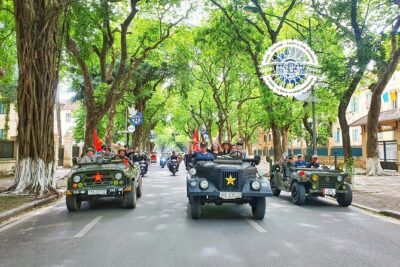
Hanoi Jeep Tour: Food, Culture and Fun by Vietnam Army Jeep
Read our review →
Full-Day Ninh Binh Highlights Tour from Hanoi
Read our review →
Ha Long Bay Day Cruise – Swimming, Meal, Kayaking
Read our review →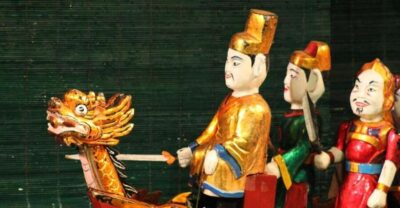
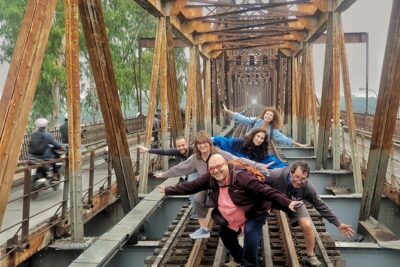
Hanoi Motorbike Tour: Food, Culture and Fun by Vintage Motorbike
Read our review →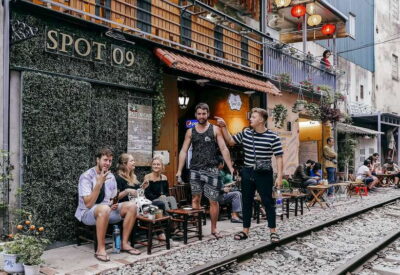

Hanoi Cooking Class: Culture, Local Market & Meaning CSR Impact
Read our review →