
Reviewed · WALKING TOURS
Hoi An Ancient Town – Walking Tour with Local Guide
Hoi An’s old town is easy to wander through, but its yellow walls and ornate doors do not explain themselves. This small-group walking tour gives you the town’s main sights in about two and a half hours, with local guides such as Trung, Duy, Tom, and Tin leading recent departures. You will see the key landmarks, step inside historic buildings, and finish with a local drink or sweet.
I like the maximum group size of 10, which makes it easier to hear the guide and ask questions. I also like the indoor stops and regular breaks, especially in Hoi An’s heat or during a sudden wet spell. The main consideration is the extra 120,000 VND cash entrance fee, and the walk may feel brisk if you want long, unhurried visits at every site.
In This Review
- Key points at a glance
- Why a guided walk helps in Hoi An
- Starting at 95 Phan Chu Trinh Street
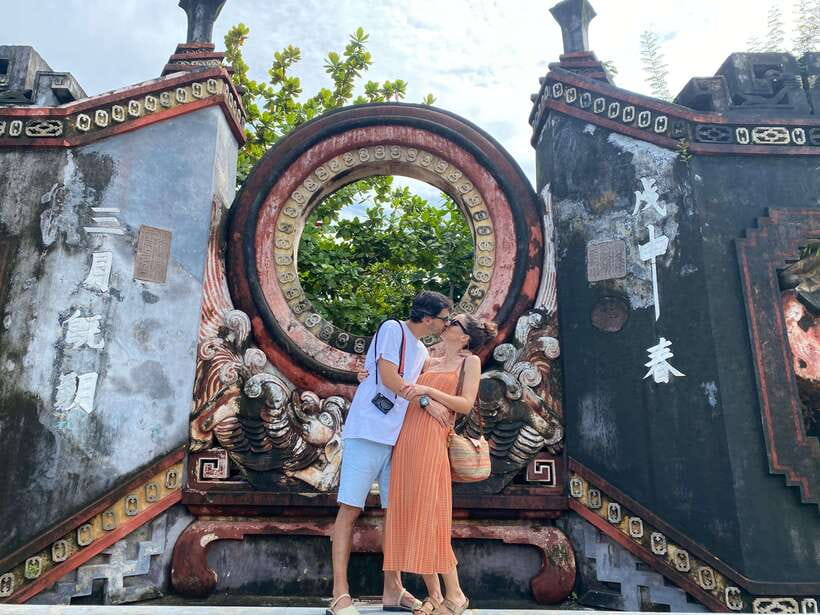
- Ba Mu Temple Gate and the first look at old Hoi An
- Assembly halls and the Chinese merchant communities
- The Japanese Covered Bridge and Kazik Park
- Tấn Kí Heritage House and Hoi An’s old interiors
- Traditional arts and the Museum of Folk Culture
- Hoi An Market and the end of the route
- What the $14 price really covers
- The group size, walking pace, and crowd factor
- Who should book this Hoi An walking tour
- Should you book it?
- FAQ
- Where does the Hoi An walking tour start?
- How long does the tour last?
- How much does the tour cost?
- Is the UNESCO heritage entrance ticket included?
- What language is the tour conducted in?
- How large is the group?
- What places are visited?
- Is food or a drink included?
- Are hotel pick-up and drop-off included?
- Can I bring a baby stroller?
Key points at a glance
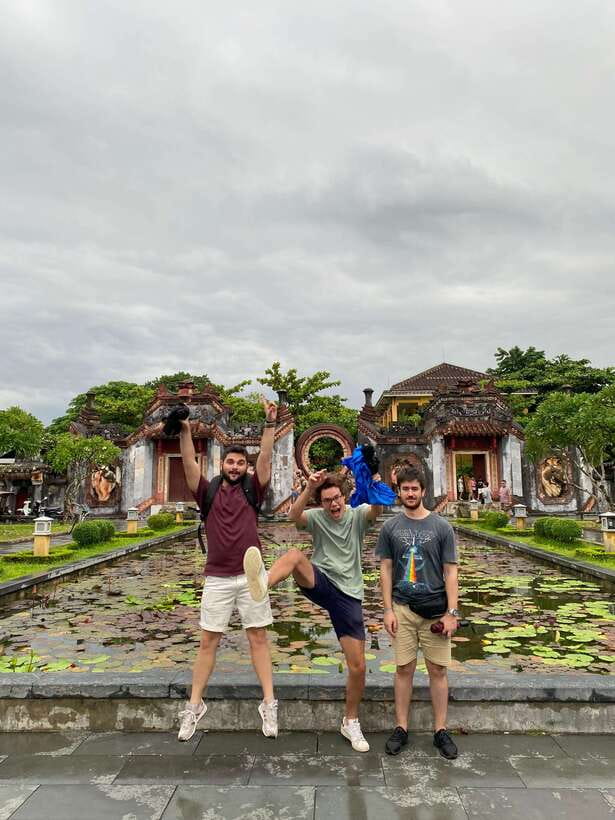
- A proper first look at Hoi An: The route covers temples, assembly halls, old houses, museums, a performance venue, the covered bridge, and the market.
- Small groups make a difference: With no more than 10 people, the guide can keep the group together and answer questions without shouting.
- Local advice you can use later: Expect suggestions for Vietnamese food, coffee shops, tailors, and other activities.
- A gentle route with indoor pauses: The tour mixes narrow lanes and outdoor sights with heritage buildings and museums.
- Tea or dessert is included: The final refreshment gives you a pleasant pause after walking.
- Bring cash for the old-town ticket: The 120,000 VND UNESCO heritage entrance fee is not included.
Why a guided walk helps in Hoi An

Hoi An is compact, but it is not simple. A narrow lane may lead to a family house, a temple, a small courtyard, or a building with several layers of Chinese, Japanese, Vietnamese, and European influence. On your own, you can admire the streets and still miss the reason the town looks the way it does.
A guide gives you a framework. Instead of seeing a collection of attractive shopfronts, you begin to understand Hoi An as a trading port shaped by different communities and generations. The tour also helps you separate the places worth entering from the streets that are best enjoyed at a slower pace later.
I especially like taking this tour near the start of a Hoi An stay. You get your bearings before returning to the old town for shopping, food, lantern-lit walks, or a performance. Several guides, including Trung and Duy, are praised for answering questions clearly and keeping the history light enough to follow without turning the walk into a lecture.
The English-language guiding is an important part of the value. The guide names vary by departure, and recent sessions have also been led by Tom, Tin, Trang, and Yui. You should not book around one particular name unless the operator confirms it, but the recurring strength is the guide’s local point of view, good English, humor, and willingness to suggest places beyond the official route.
More Walking Tours in Hoi An
- Evening Walking Food Tour, folk game and lantern boat
★ 5.0 · 665 reviews - Hoi An Ancient Town Walking Tour with a Local
★ 5.0 · 517 reviews - Hoi An Street Food Walking Tour with Tastings
★ 5.0 · 317 reviews
Starting at 95 Phan Chu Trinh Street
The meeting point is 95 Phan Chu Trinh Street, in front of a tailor shop at the corner of the intersection. This is a useful place to meet because it is outside the most crowded core of the old town, giving the group a little room to gather before the walk begins.
Arrive ready to walk rather than expecting a vehicle transfer. Pick-up and drop-off are not included. Wear comfortable clothes and sensible footwear, and carry water if you are sensitive to heat. The operator lists baby strollers as unsuitable, and the activity is not recommended for babies under one year old.
The published duration is 150 minutes. The old-town visit is also described as lasting three hours, so allow roughly two and a half to three hours in your day. The exact pace can change with crowds, weather, questions, and how long the group spends inside each heritage site.
Ba Mu Temple Gate and the first look at old Hoi An
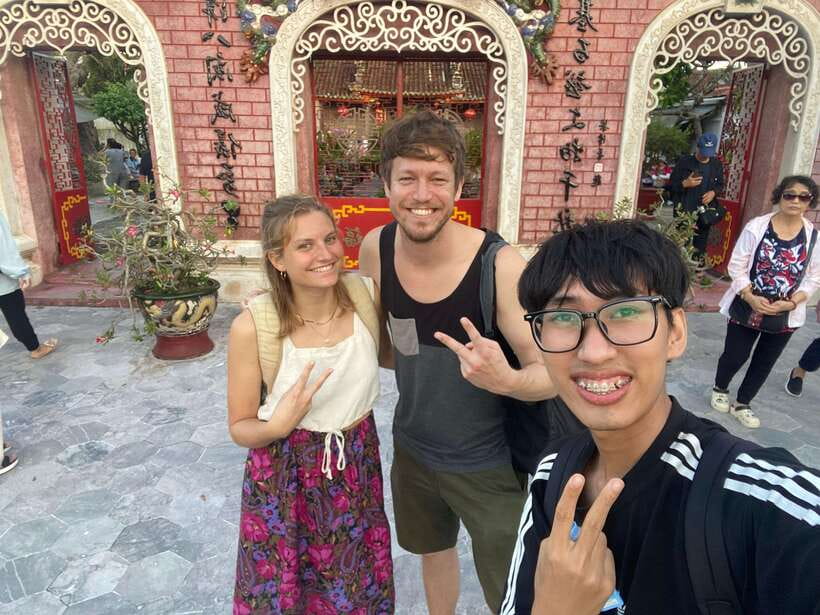
The Ba Mu Temple gate is an excellent opening sight. Its decorative facade provides one of the tour’s first strong photo stops, but the guide’s explanation gives it more meaning than a quick picture would.
This is the sort of place where a local guide is useful. You can learn how religious architecture fits into daily life in Hoi An and how old structures are presented and cared for today. The gate also sets the tone for the route: this is not only a walk through pretty streets, but a look at the beliefs and communities that shaped them.
The first stop is also a chance to settle into the group. The walk is generally described as easy and manageable, with time for photographs. If you prefer a slow photographic tour, tell the guide early. A group visit has to keep moving, even when one facade deserves another five minutes.
Assembly halls and the Chinese merchant communities
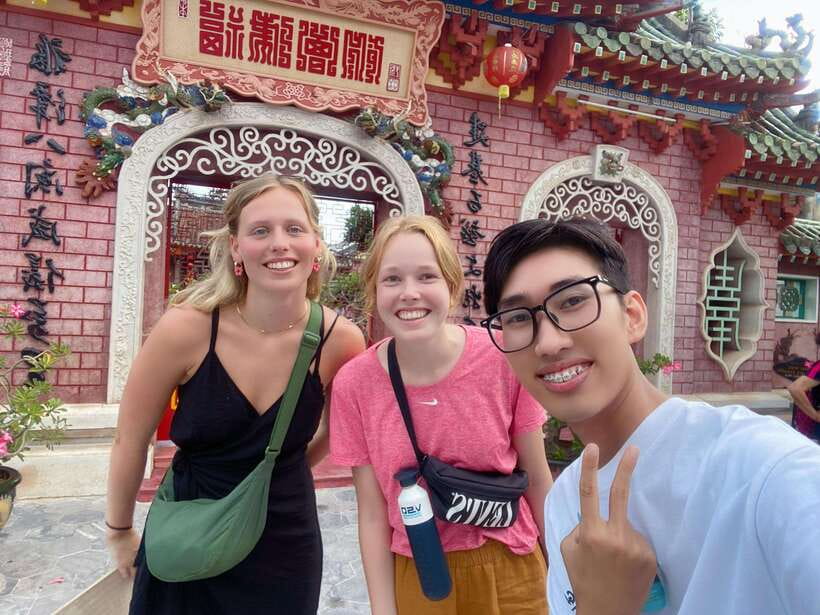
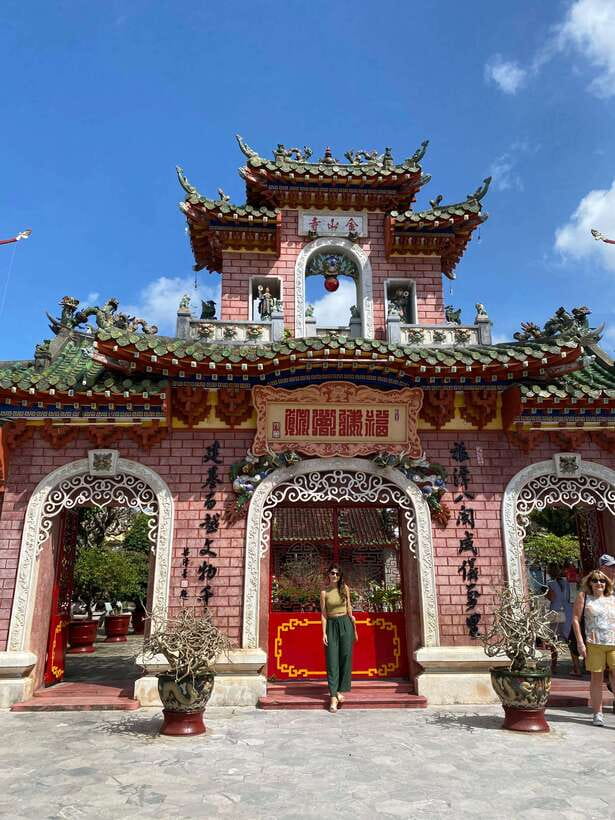
The Fujian or Cantonese Assembly Hall is one of the route’s major heritage stops. These halls are among Hoi An’s clearest reminders that the town was connected to overseas merchant communities, not isolated from the wider region.
Look closely at the entrance, decorative details, and layout as the guide explains them. The important point is not just how ornate the building is. It is how a community used such a place for worship, social ties, and mutual support.
The route may include one of these assembly halls depending on the day’s access and schedule. The supplied itinerary names the Fujian/Cantonese Assembly Hall in Hoi An, so you should expect an explanation of its cultural role rather than a quick pass-by.
This stop is especially valuable if you are interested in architecture but do not know what to look for. The guide can point out details that disappear into the overall decoration. It is also an indoor pause, a welcome feature in hot weather and useful during rain.
More Hoi An walks with a guide:
- Cham Island: Underwater Walking & Snorkeling Tour
★ 4.4 · 112 reviews - Hoi An Off the Map – Walking Tour in the Backstreets
★ 4.9 · 28 reviews - Hoi An: Half-Day Heritage Walking Tour
★ 4.6 · 19 reviews - Private Street Food Evening Walking Tour in Ho Chi Minh City
★ 5.0 · 3,175 reviews
The Japanese Covered Bridge and Kazik Park
The Japanese Covered Bridge is Hoi An’s best-known landmark, and the tour includes it for good reason. You will get the historical setting behind the bridge instead of treating it as only a famous photo backdrop.
Expect crowds around this stop. The bridge is one of the places where the guide’s group-management skills matter most. Guides have been praised for keeping everyone close in busy periods, including Tet, when the old town can be especially crowded. A smaller group is helpful here because it is easier to count heads and regroup.
Kazik Park adds a quieter note to the route. It provides space to discuss the town’s built environment and its changing public spaces. It is also a practical place to pause, listen, and take photographs without standing in the middle of a narrow lane.
One useful extra is photo help. Guides such as Trung have been praised for taking pictures at landmarks. This is not a dedicated photography tour, but you can reasonably ask for a group photo when the setting is right.
Tấn Kí Heritage House and Hoi An’s old interiors

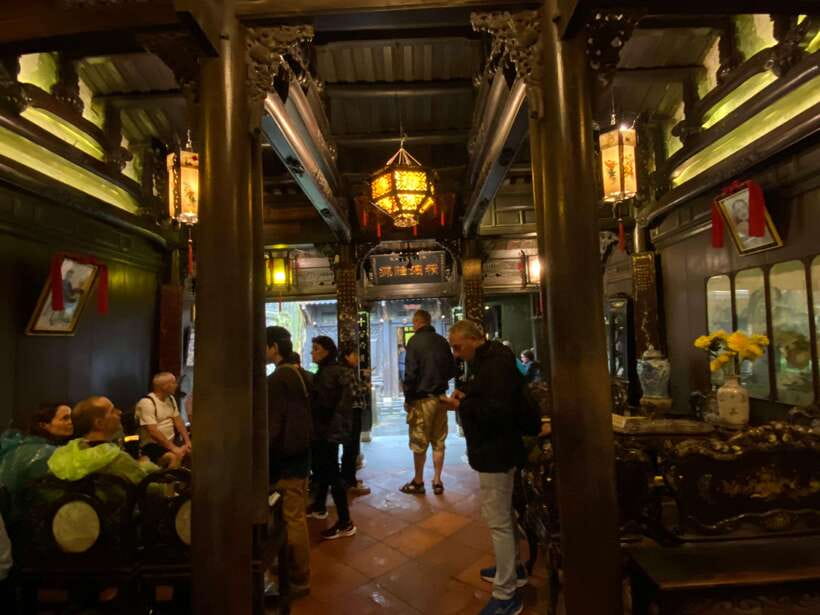
Tấn Kí Heritage House shows the town from the inside. The old streets are attractive, but the homes reveal how people actually lived, worked, stored goods, and adapted buildings to Hoi An’s climate and trading life.
The house is valuable because it connects architecture with family life. Pay attention to the narrow footprint, the woodwork, the courtyard spaces, and the way the building links street-facing business with private rooms. Your guide can help you understand why a house may look simple from the street while holding considerable detail inside.
This is one of the moments when the tour moves beyond surface sightseeing. You are not just checking off another old building. You are learning how a preserved home fits into the town’s wider story.
There is a trade-off. Heritage houses can feel busy, particularly when several groups arrive together. You may not have time to examine every object or corner. The benefit is that the visit is organized and interpreted, so you leave with a clearer idea of what you saw.
Traditional arts and the Museum of Folk Culture

The Hoi An Traditional Art Performance House adds a living cultural element to a route otherwise filled with buildings and streets. The itinerary includes a visit to the venue, though the exact performance detail is not specified, so do not book this as a full evening show.
The Museum of Folk Culture is another strong stop for understanding everyday life. Exhibits can make sense of customs, crafts, clothing, and local practices that you may notice elsewhere without understanding. The guide’s role is to connect the displays with the town outside.
One particularly practical tip comes from the tour’s timing. A visitor who attended a separate memory show afterward found that the walking tour made the performance easier to understand. That suggests the tour works well as cultural preparation, not just sightseeing.
These indoor stops also protect the walk from Hoi An’s weather. Recent departures have continued through wet conditions, with the guide adjusting the pace and route. Still, bring weather protection if rain is forecast. Indoor breaks help, but this remains a walking tour.
Hoi An Market and the end of the route
Hoi An Market brings you back into the town’s daily rhythm. It is a useful final stop because you can look at local ingredients, prepared food, and shopping options after spending time with the historic buildings.
The market can feel lively and crowded, so keep personal belongings secure and stay close to the group. The guide can help you understand what you are seeing and may point you toward local dishes worth trying later. Do not expect a full food tour or a meal to be included. The market is part of the orientation, not the main eating event.
The tour finishes with a traditional dessert or local tea. Many departures have ended with a drink from Mót, a popular Hoi An stop known for herbal refreshments. The exact offering may vary, but the idea is the same: sit or pause, cool down, and ask the guide your remaining questions.
This final break is more useful than it sounds. By this point, you have a list of places to eat, coffee shops to try, tailor shops to compare, and other Hoi An activities to consider. Several guides have also sent extra suggestions through WhatsApp after the tour, which can be handy if you have only a day or two in town.
What the $14 price really covers
At $14 per person, the tour is priced as an affordable introduction rather than a luxury private experience. You are paying for an English-speaking local guide, a small group, entry to the listed heritage stops, local lanes and photo spots, and a tea or dessert.
The 120,000 VND entrance fee is separate and must be paid in cash. This matters because the ticket adds a noticeable amount to the advertised price. Bring the exact or near-exact amount so you do not have to search for an ATM before the walk.
Even with that extra cost, the value is solid if you are new to Hoi An. Several individual heritage buildings would be difficult to interpret on your own, and a guide helps you cover a wide spread of sights in one outing. The recommendations for food, cafes, tailoring, and later activities add value if you plan to remain in town.
The tour is less compelling for someone who already knows Hoi An well or wants to spend ten minutes at every doorway. You may prefer a private guide if your interests are very specific, such as architecture, photography, food, or family history. For a first orientation, the small group keeps the cost down without turning the walk into a large crowd.
The group size, walking pace, and crowd factor
The group is limited to 10 participants. That is small enough for a conversational tour, although it is still a group walk with different interests and walking speeds.
The pace is generally easy. Guides have kept groups together through crowded streets and adjusted their choices during Tet and wet weather. You should still expect uneven pavements, narrow lanes, standing at sights, and regular outdoor walking.
The route benefits from indoor breaks, but Hoi An can be hot, humid, or rainy. Comfortable clothes are specifically recommended. There is no hotel transport, so plan your route to and from 95 Phan Chu Trinh Street yourself.
Crowds are the main variable. The Japanese Covered Bridge and market are popular, and major festivals can make the old town much harder to navigate. A guide cannot remove the crowds, but a local who knows the area can choose sensible stopping places and keep the group together.
Who should book this Hoi An walking tour
I would choose this for a first visit, especially if you have one full day or only a short stay in Hoi An. It gives you a useful map of the old town and helps you decide where to return for a longer look.
It also suits you if you want history explained in plain English, prefer a relaxed group, and like getting local suggestions for the rest of your stay. Families with older children may enjoy it, but babies under one year old are not considered suitable, and baby strollers are not allowed.
You may want a different experience if you dislike scheduled routes, need extensive wheelchair or stroller access, or want a food-focused tour. The supplied information does not describe wheelchair access, so ask the operator directly if mobility is a concern.
Free cancellation is available up to 24 hours before departure, and you can reserve now and pay later. That flexibility is useful when your Central Vietnam plans depend on weather or transport.
Should you book it?
Book this tour if you want a well-priced first introduction to Hoi An rather than a specialist outing. The route covers nearly all of the old town’s major heritage stops, the group stays small, and the local guide adds the context that signs and photo stops cannot provide.
I would schedule it early in your stay, carry 120,000 VND in cash for the entrance ticket, and leave room afterward for the guide’s restaurant and coffee suggestions. Skip it only if you already know the old town well or want complete control over the pace. For most first-time visitors, it is a practical way to get your bearings before exploring Hoi An on your own.
FAQ
Where does the Hoi An walking tour start?
It starts at 95 Phan Chu Trinh Street, in front of a tailor shop on the corner of the intersection.
How long does the tour last?
The stated duration is 150 minutes. The old-town visit is also described as lasting three hours, so allow about two and a half to three hours.
How much does the tour cost?
The listed price is $14 per person.
Is the UNESCO heritage entrance ticket included?
No. You must pay 120,000 VND per person separately, and the ticket must be paid in cash.
What language is the tour conducted in?
The tour is conducted in English by a live local English-speaking guide.
How large is the group?
The group is limited to a maximum of 10 participants.
What places are visited?
The route includes Ba Mu Temple gate, the Fujian or Cantonese Assembly Hall, the Japanese Covered Bridge, Kazik Park, Tấn Kí Heritage House, the Hoi An Traditional Art Performance House, the Museum of Folk Culture, and Hoi An Market.
Is food or a drink included?
A traditional dessert or local tea is included. Some departures have finished with a drink from Mót.
Are hotel pick-up and drop-off included?
No. You need to make your own way to and from the meeting point.
Can I bring a baby stroller?
No. Baby strollers are not allowed, and the activity is not suitable for babies under one year old.
Recently reviewed around Hoi An
- Romantic Sunset Dinner Cruise in Hoi An★ 4.7 · 108 reviews
- Thanh Ha Village: Pottery Workshop with Locals★ 4.4 · 223 reviews
- Snorkeling Cham Island: Snorkeling Tour by Speed Boat★ 3.6 · 26 reviews
- Hoi An: Rural Cycling Tour to Village with Basket Boat Ride★ 5.0 · 174 reviews
- Private Car Hoi An to Hue Via Hai Van Pass, Lagoon & More★ 5.0 · 22 reviews
- From Hoi An: Day Tour of My Son Temples and Marble Mountain★ 4.8 · 44 reviews
- Market Tour – Cooking Class – Coconut Boat Riding★ 4.4 · 43 reviews
- From Hoi An: Marble Mountains and My Son Sanctuary Day Trip★ 4.7 · 209 reviews
Walking Tours, compared.

Private Street Food Evening Walking Tour in Ho Chi Minh City
Read our review →![[HOT] Hanoi Old Quarter Walking Street Food – Small Group Tour](https://u.vietnamesetrips.com/wp-content/uploads/hot-hanoi-old-quarter-walking-street-food-small-group-tour-400x267.jpg)
[HOT] Hanoi Old Quarter Walking Street Food – Small Group Tour
Read our review →
Super Niche Walking Street Food Tour in Ho Chi Minh City
Read our review →
Private Hanoi Street Food Walking Tour With Real Foodie
Read our review →

Hanoi Walking Street Food Tour with Train-Street Visit
Read our review →Browse the lists this tour appears in