Reviewed · HANOI TOURS
Hanoi: Master the Art of 4-6 Signature Vietnameses Coffees
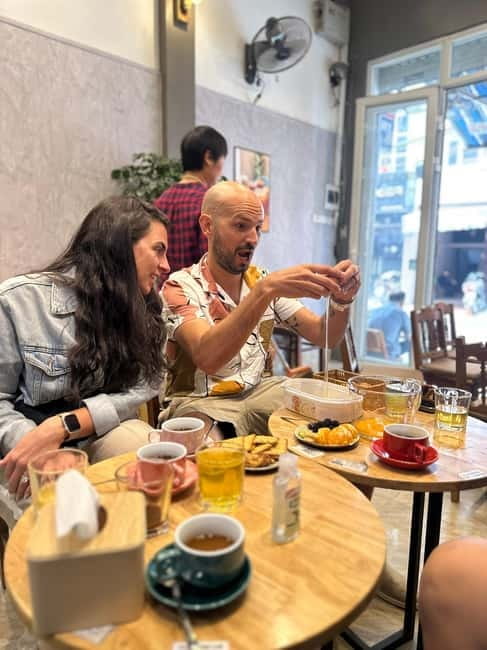
Vietnamese coffee is not just strong coffee poured over condensed milk. In this hands-on Hanoi workshop, you make up to six distinct drinks, including phin-brewed black and brown coffee, egg coffee, white or silver coffee, coconut coffee, and salted coffee. You grind, brew, whisk, taste, and change each cup to suit your own palate.
I like the small-group format, capped at 10, because guides such as Jade, Eddie, Daisy, and Tyler can answer questions without turning the class into a demonstration from across the room. I also like the practical recipes and home-friendly substitutes. The main caution is simple: you drink a lot of coffee in one to two hours, so a morning booking may suit you better than an evening one.
In This Review
- Key points to know before booking
- Entering a Hanoi home near the Old Quarter
- The first lesson: tasting Vietnamese coffee properly
- Using the phin filter for black and brown coffee
- Whisking egg coffee into a Hanoi classic
- White, coconut, and salted coffee
- The guides make the class work
- What the one to two hours really includes
- Why $22 can be good value
- Planning the class around your Hanoi days
- Who should book this coffee workshop?
- Final call: book it for the skills, not just the cups
- FAQ
- How many Vietnamese coffees will I make?
- How long does the coffee workshop last?
- Where does the activity meet?
- Is the class conducted in English?
- How large is the group?
- Are the coffee ingredients fresh?
- Do I receive the recipes?
- Is the activity wheelchair accessible?
- Can I cancel or pay later?
Key points to know before booking
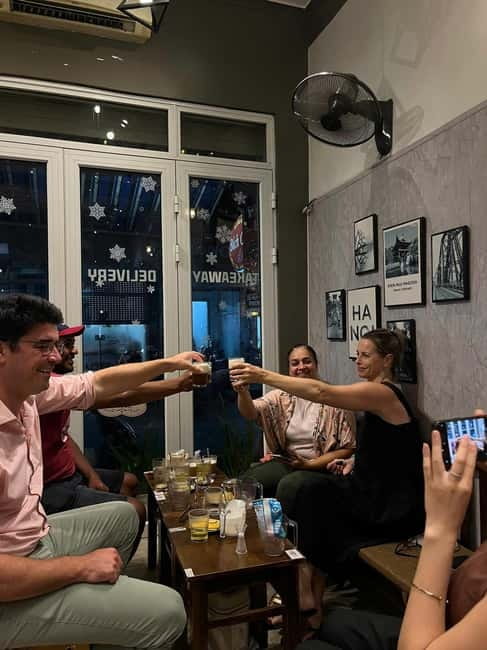
- Six coffee styles in one sitting: Compare black, brown, egg, white, coconut, and salted Vietnamese coffee.
- Hands-on from start to finish: You grind beans, use a phin filter, whisk egg foam, and adjust sweetness and strength.
- A real local setting: The workshop takes place in a lived-in home with ceramic tools, fresh ingredients, everyday sounds, and a pet-friendly garden space.
- Useful take-home skills: You receive full recipes and learn how to make good coffee without expensive equipment.
- Local advice beyond coffee: Guides may share maps and recommendations for Old Quarter cafés, restaurants, markets, bars, and less touristy stops.
- Good value for coffee fans: At $22 per person, the price covers multiple tastings, instruction, recipes, tea, and a cultural lesson in a small group.
Entering a Hanoi home near the Old Quarter
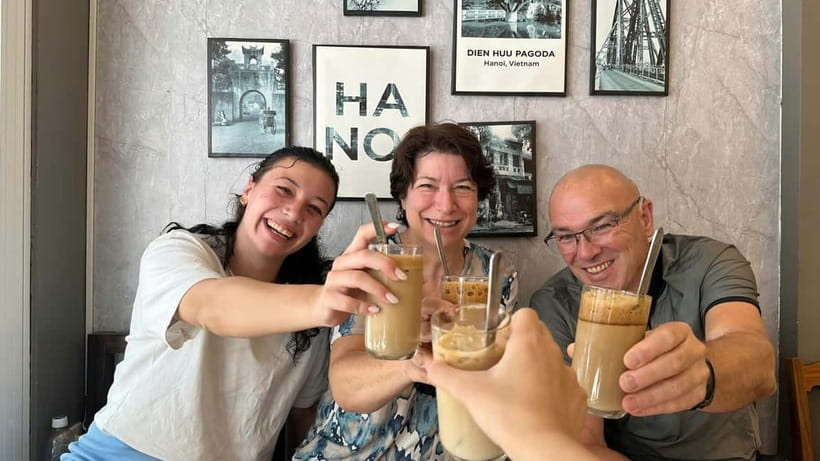
The meeting point is a cozy local café in a quiet corner of Hanoi’s Old Quarter, near the Hanoi Opera House and the French Quarter. It is also close to Hoàn Kiếm Lake, which makes the class easy to pair with a morning walk or a day of sightseeing.
From the street, you move into a local home where people actually live. That matters. This is not a polished hotel classroom or a staged farm visit. Voices drift in from outside, ordinary household life continues around you, and the coffee warms the room as you work.
The setting gives the class its character. You handle ceramic tools from local pottery villages, feel the coffee grounds, watch foam form, and hear the city settle into its slower coffee rhythm. Air conditioning, clean restrooms, a dishwasher, and sterilized utensils keep the experience comfortable and practical.
The space is wheelchair accessible. A pet-friendly garden is available, and childcare service can be arranged. Babies under one year and people over 95 are not suitable for the activity, according to the stated restrictions.
Other Hanoi days travellers weigh against this one:
- Hanoi Jeep Tour: Food, Culture and Fun by Vietnam Army Jeep
★ 5.0 · 15,222 reviews - Full-Day Ninh Binh Highlights Tour from Hanoi
★ 5.0 · 7,761 reviews - Hanoi: Ha Long Bay Day Cruise – Swimming, Meal, Kayaking
★ 4.7 · 7,415 reviews
The first lesson: tasting Vietnamese coffee properly
The workshop begins with the ingredients and the thinking behind Vietnamese coffee. You learn about beans from Vietnam’s Central Highlands, including the fact that seasonal harvests can change the coffee’s taste through the year.
The coffee used here is Vietnamese specialty coffee selected after tastings across the country. Fresh eggs, milk, and coconut are prepared daily. Nothing is pre-made or artificial, which becomes especially important when you reach egg and coconut coffee, where texture matters as much as flavor.
The useful lesson is not only how to follow a recipe. You learn how locals taste and adjust coffee. That can mean changing the sweetness, controlling bitterness, altering strength, or balancing a thick topping against a strong base.
This is the difference between a class you simply watch and one you can repeat at home. You are encouraged to notice what changes when you use more coffee, less sweetener, a different amount of milk, or a slightly different foam. The recipes remain true to Vietnamese styles, but they are not treated as rigid rules.
Using the phin filter for black and brown coffee
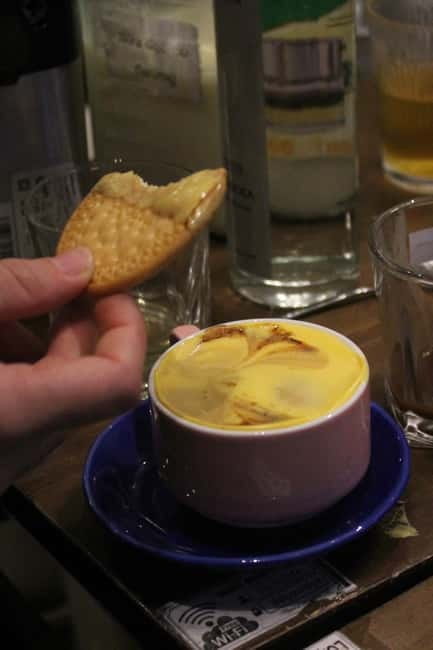
The phin is the small metal filter at the heart of Vietnamese coffee culture. It sits over your cup and lets hot water pass slowly through compacted coffee grounds. The process is simple, but the result depends on small choices such as grind, water, pressure, and patience.
You get to handle the brewing rather than watch the instructor do it. The black version gives you a clear look at the coffee itself. This is the boldest cup, with none of the sweet or creamy additions used in the other recipes.
Brown coffee adds milk, typically creating the familiar sweet, powerful combination associated with Vietnamese café culture. The workshop explains how to balance the coffee and milk instead of drowning the beans in sweetness.
If you usually avoid black coffee, you may still find this part useful. One participant who normally dislikes black coffee found the class version pleasant, which suggests that the tasting and adjustment process can change how you approach a strong cup.
The lesson also corrects common home mistakes. One participant discovered that their usual Vietnamese coffee method was wrong, despite having made it for years. You leave with a better sense of how the phin should work and how to repeat the brew without specialist equipment.
Whisking egg coffee into a Hanoi classic
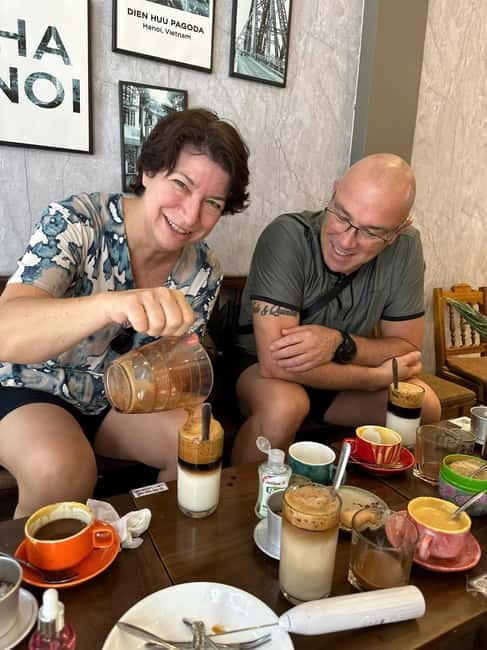
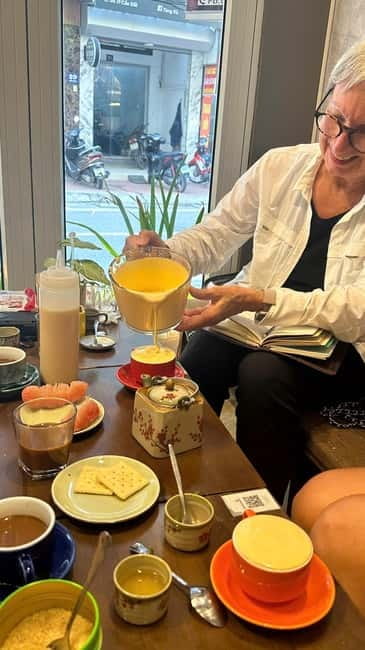
Egg coffee is the workshop’s most famous stop for good reason. Hanoi’s egg coffee is not simply coffee with a raw egg stirred in. The egg mixture is whipped into a soft, sweet foam, then paired with strong coffee underneath.
You prepare the topping yourself, learning how to create the right texture and how to combine it with the coffee. The guide also explains the history of the drink and its place in Hanoi’s café culture.
This is one of the more social parts of the class because everyone is watching foam develop and comparing results. It is also a good example of the workshop’s wider approach: the instructor explains not only what to do, but why the drink tastes and feels this way.
The egg coffee is sweet and rich, so it may be too much for you if you prefer a plain cup. Still, even people who are unsure about unusual coffee recipes tend to get something useful from learning the technique. The recipe can later be adjusted at home with the suggested substitutes.
A different kind of day out, same stretch of Vietnam:
- Hanoi: Water Puppet Show Tickets
★ 4.6 · 7,029 reviews - Hanoi Motorbike Tour: Food, Culture and Fun by Vintage Motorbike
★ 5.0 · 6,699 reviews - Hanoi: Guided Food Tour with Train Street Visit
★ 4.9 · 6,239 reviews - Hanoi Cooking Class: Culture, Local Market & Meaning CSR Impact
★ 5.0 · 5,147 reviews
White, coconut, and salted coffee
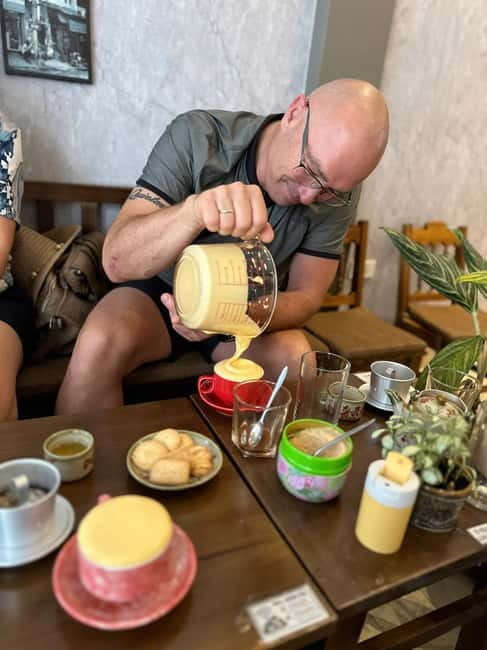
The white or silver coffee offers another way to soften the force of Vietnamese coffee. The exact balance depends on the recipe used in your session, but the workshop treats it as a separate style rather than simply repeating brown coffee with a new name.
Coconut coffee is often the favorite in this class. It is rich, smooth, and lightly sweet, with coconut adding a thicker, softer character to the strong coffee. The coconut is prepared fresh, so the drink has a cleaner taste than a version made from a pre-mixed syrup.
You also make salted coffee, a style that uses salt to temper bitterness and sharpen the flavor. It is a useful lesson in balance. A small change can make strong coffee taste rounder without simply adding more sugar.
The class is strongest when you compare these drinks side by side. Black coffee shows the bean. Brown coffee shows the classic sweet combination. Egg coffee changes the texture. Coconut coffee brings a tropical creaminess, while salted coffee shows how a tiny amount of seasoning can alter the whole cup.
The guides make the class work

The instructors are Vietnamese and speak Vietnamese and English. The guide roster includes Jade, Eddie, Daisy, Tyler, Jessica, Zoey, Mint, Ngoc, and others, so the specific person leading your session may vary.
The best part of the instruction is its clear, patient pace. Jade is praised for explaining each recipe and sharing food, market, bar, and café suggestions. Eddie is described as attentive and thorough, especially when showing all six types. Daisy brings stories about coffee and Vietnam’s past, while Tyler is noted for a warm, friendly approach.
The guides grew up in Hanoi’s Old Quarter and learned about coffee through family, street cafés, chefs, grandparents, and years of tasting. That background gives the discussion a local angle. You hear about Hanoi mornings, old cafés, changing tastes, and the way Vietnamese coffee developed into the styles you see today.
Do not expect a formal lecture with dates and long speeches. The stories flow around the brewing. Ask questions as you work. The guides are there to explain the process, but also to help you understand what each drink says about everyday life in Hanoi.
Several guides also provide a local map or suggestions for places to eat and drink. These tips can be useful early in your stay, especially if you want to find cafés beyond the most obvious tourist stops.
What the one to two hours really includes
The stated duration is one to two hours. The variation likely depends on the number of coffees made, the group size, and how many questions come up.
A shorter session may focus on four styles. A longer session can include all six. You work through each recipe rather than simply receiving a line of tasting cups, so the pace has some flexibility.
The group limit is 10 people, but smaller sessions are possible. One person had a private class because nobody else had booked the same time slot. That is not guaranteed, but it shows how the format can feel personal when demand is light.
The class includes coffees and teas, so you have something to drink as the session begins or between recipes. Your instructor also takes photographs, giving you a few records of the activity without needing to stop and manage your own camera constantly.
Because the drinks are prepared one after another, caffeine is the main practical issue. You may be fine with coffee, but six tastings can add up quickly. I would book it in the morning or early afternoon, especially if you are sensitive to caffeine. It is also smart to avoid stacking another coffee tasting immediately afterward.
Why $22 can be good value
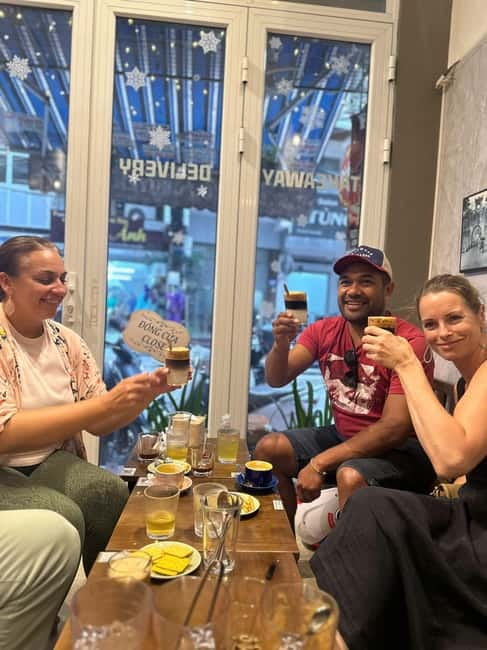
At $22 per person, this is not the cheapest way to drink coffee in Hanoi. A street café will give you a cup for far less.
The comparison is not really between one cup and $22, though. The class includes four to six drinks, fresh ingredients, guided preparation, cultural context, full recipes, tea, photographs, and local recommendations. You are paying for instruction and access to several styles in one sitting, not just for liquid refreshment.
The value is strongest if you want to make the drinks again at home. The recipes and advice about substitutions mean the class continues after your trip. You also learn techniques that do not require fancy equipment, including how to use a phin filter and how to balance sweetness, bitterness, and strength.
It is less suitable if you dislike sweet drinks, avoid caffeine, or only want a quick introduction to Vietnamese coffee. The activity is built around tasting several substantial drinks. For coffee fans, couples, solo visitors, and families who can use the childcare option, the price is fair.
Planning the class around your Hanoi days
The Old Quarter location makes this easy to fit into a wider itinerary. You can combine it with the Opera House, the French Quarter, Hoàn Kiếm Lake, or a meal nearby.
I would choose an early time if you want to use the guide’s restaurant and café suggestions during the same day. It also helps you spread the caffeine out instead of drinking six samples late in the evening.
The meeting point is described as a café hidden in a peaceful corner of the Old Quarter. Check the exact starting time and location details when booking, since the activity offers different availability. Allow enough time to find the café without rushing through Hanoi traffic.
Cancellation is flexible up to 24 hours before the activity for a full refund, and you can reserve now and pay later. That is useful if your Hanoi plans are still changing.
Who should book this coffee workshop?
I would recommend it first to anyone who has already tasted Vietnamese coffee and wants to understand what is in the cup. It is also a strong first-day activity because the local advice can help shape the rest of your time in Hanoi.
It suits coffee lovers, curious cooks, couples, solo visitors, and small groups of friends. You do not need professional brewing skills. The instructor guides each step, and the recipes are designed to be practical at home.
You should think twice if you do not drink caffeine, dislike condensed milk or sweet toppings, or prefer a quiet sightseeing activity with little participation. You will be working with coffee, eggs, milk, coconut, and seasonings, not simply sitting back while someone serves you.
Final call: book it for the skills, not just the cups
This Hanoi coffee workshop earns its place in a short itinerary because it gives you both a taste of local life and a useful skill. I especially like the lived-in setting, the fresh ingredients, and the chance to compare six different coffee styles with your own hands.
Book it if you want more than a café stop and can handle a serious caffeine session. Choose a morning slot, ask your guide for local food recommendations, and save the recipes for home. At $22, it is a sound buy for coffee drinkers who want to understand Hanoi one cup at a time.
FAQ
How many Vietnamese coffees will I make?
You will make four to six coffees, depending on the session. The available styles are black, brown, egg, white or silver, coconut, and salted coffee.
How long does the coffee workshop last?
The activity lasts one to two hours. Starting times vary, so check availability when choosing your booking.
Where does the activity meet?
You meet at a cozy local café in a peaceful corner of Hanoi’s Old Quarter, near the Hanoi Opera House and the French Quarter. It is also positioned near the Red River, Vinh Tuy Bridge, and Hoàn Kiếm Lake.
Is the class conducted in English?
Yes. The instructors speak Vietnamese and English.
How large is the group?
The activity is limited to 10 participants. Some time slots may have fewer people, and a private session can occur if nobody else books the same slot.
Are the coffee ingredients fresh?
Fresh eggs, milk, and coconut are prepared daily. The activity states that nothing is pre-made or artificial, and the coffee comes from Vietnam’s Central Highlands.
Do I receive the recipes?
Yes. Full recipes are included, with home-friendly suggestions and substitutes. Some sessions also provide a local map with recommendations for cafés, restaurants, markets, and bars.
Is the activity wheelchair accessible?
Yes, the activity is listed as wheelchair accessible. It also includes air conditioning, clean restrooms, a dishwasher, and sterilized utensils.
Can I cancel or pay later?
You can cancel up to 24 hours in advance for a full refund. You can also reserve your place and pay later, so you do not need to pay at the time of booking.
Recently reviewed around Hanoi
- Female Riders Vespa Night Street Food + Train Street food 4 Hours★ 5.0 · 35 reviews
- Beautiful Female Riders Vespa Red River Countryside Tour 5 Hours★ 5.0 · 23 reviews
- Red River Delta Countryside+ Rural Villages, rice Paddies fields★ 5.0 · 134 reviews
- The insider’s Hanoi 4.5 hours All highlight Places & Train Street★ 5.0 · 41 reviews
- The insider’s Hanoi + Train Street 4,5 Hours Female Ao Dai Riders★ 5.0 · 53 reviews
- Street Foods Hanoi Kim Tours Vietnam★ 5.0 · 140 reviews
- Hanoi Jeep Tour – Ba Vi National Park Full Day Tour★ 5.0 · 21 reviews
- Ninh Binh Full Day Tour from Hanoi to Hoa Lu, Trang An & Mua Cave★ 5.0 · 31 reviews
Hanoi Tours, compared.

Hanoi Jeep Tour: Food, Culture and Fun by Vietnam Army Jeep
Read our review →
Full-Day Ninh Binh Highlights Tour from Hanoi
Read our review →
Ha Long Bay Day Cruise – Swimming, Meal, Kayaking
Read our review →

Hanoi Motorbike Tour: Food, Culture and Fun by Vintage Motorbike
Read our review →

Hanoi Cooking Class: Culture, Local Market & Meaning CSR Impact
Read our review →