Reviewed · TOURS
Hanoi: Incense Village, Hat, and Lacquer Artisanal Tour
Quang Phu Cau is the star of this Hanoi day trip: bundles of red and pink incense are spread out to dry, turning small village workspaces into eye-catching photo scenes. You also visit Chuong, where families have made Vietnam’s famous conical hats for more than 300 years, and you get to paint one yourself.
I like the hands-on activities and the chance to see craft work at a family scale rather than only in a city souvenir shop. I also like the practical half-day format, which gets you back to Hanoi in time for lunch, plus guides such as Anna, Flow, Sophia, and Lana who are often praised for clear explanations and helping with photos.
The main drawback is that the half-day trip does not include lunch, and the full itinerary can feel busy. Factories may be noisy, and acrylic or lacquer paint smells can bother you if you are sensitive to them.
In This Review
- Key points before you book
- Why these craft villages are worth your time
- From Hanoi’s Old Quarter to Chuong Hat Village
- Quang Phu Cau and the incense-making process
- The full-day lacquer village
- How the guide shapes the day
- Transport, timing, and comfort
- Train Street as an optional finish
- What the $15 price really buys you
- Who should choose this tour
- FAQ
- How long does the Hanoi craft village tour last?
- Which villages are included in the half-day option?
- What is added on the full-day tour?
- Can I paint my own conical hat?
- Is lunch included?
- Where does hotel pickup operate?
- Are paint smells and factory noise an issue?
- Should you book this Hanoi craft tour?
Key points before you book
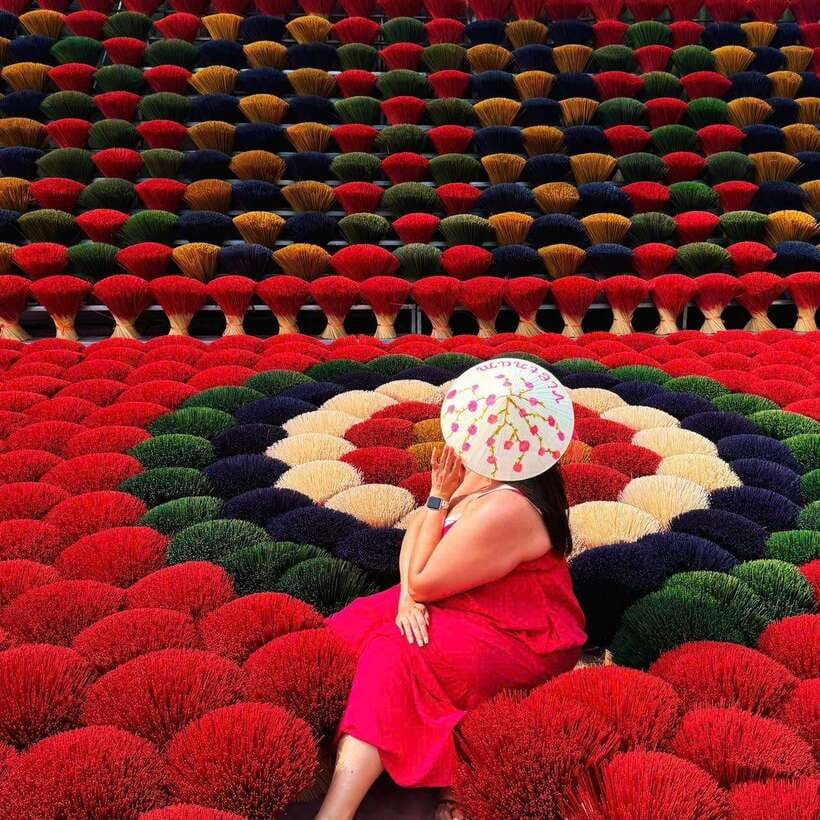
- Quang Phu Cau’s colorful incense yards: See incense sticks dyed, bundled, dried, and prepared by hand.
- A 300-year conical hat tradition: Visit Chuong village and learn how the familiar Vietnamese hat is assembled.
- Your own painted hat: Decorate one conical hat and take it home as part of the tour.
- A full-day lacquer stop: Add a family-run lacquer workshop, a home-cooked lunch, and a chance to paint lacquer.
- Photo help from the guide: Guides often help solo visitors and couples get good pictures at the villages.
- Flexible return options: Finish at your Hanoi hotel or at Train Street, where you continue independently.
Why these craft villages are worth your time
Hanoi is full of food tours, temples, and old streets. Those are good reasons to stay in the city, but this trip gives you a look at the work behind three familiar Vietnamese objects: incense, conical hats, and lacquer art.
That matters because the villages are not staged museums. People still produce goods there, often in family workshops and small factories. You see manual work, drying yards, tools, and the steady repetition needed to make items in quantity.
The half-day option visits the hat and incense villages. It lasts about six hours, with a morning departure around 7:45 and return near 13:30, or an afternoon departure around 11:45 and return near 17:30. The full-day option begins between 7:45 and 8:15 and adds lunch and the lacquer village.
At the listed price of $15 per person, this is strong value if you want transport, an English-speaking guide, entrance fees, water, and a craft activity without arranging several separate taxi rides. The full-day option gives you more stops, but the half-day version is the better fit if your Hanoi schedule is tight.
Other Hanoi days travellers weigh against this one:
- Hanoi Jeep Tour: Food, Culture and Fun by Vietnam Army Jeep
★ 5.0 · 15,222 reviews - Full-Day Ninh Binh Highlights Tour from Hanoi
★ 5.0 · 7,761 reviews - Hanoi: Ha Long Bay Day Cruise – Swimming, Meal, Kayaking
★ 4.7 · 7,415 reviews
From Hanoi’s Old Quarter to Chuong Hat Village
Pickup is offered from hotels in Hanoi’s Old Quarter, in Hoan Kiem District. If your hotel is outside that area, contact the operator through WhatsApp or Zalo for the nearest meeting point.
The drive gives your guide time to explain the day and introduce the crafts. Guides such as Hoang Zoo have used WhatsApp and even shared live locations to make meeting easier, a useful touch when Hanoi traffic or a busy pickup area causes confusion.
Chuong has been associated with conical hat making for more than three centuries. The visit shows you that a non la is not simply a straw hat picked up at a market. It takes prepared materials, careful shaping, stitching, and finishing.
You can watch artisans work and see how the hat is put together. The exact rhythm of the stop depends on the group and the workshop, but the point is clear: this is skilled handwork that looks simple only after someone has spent years doing it.
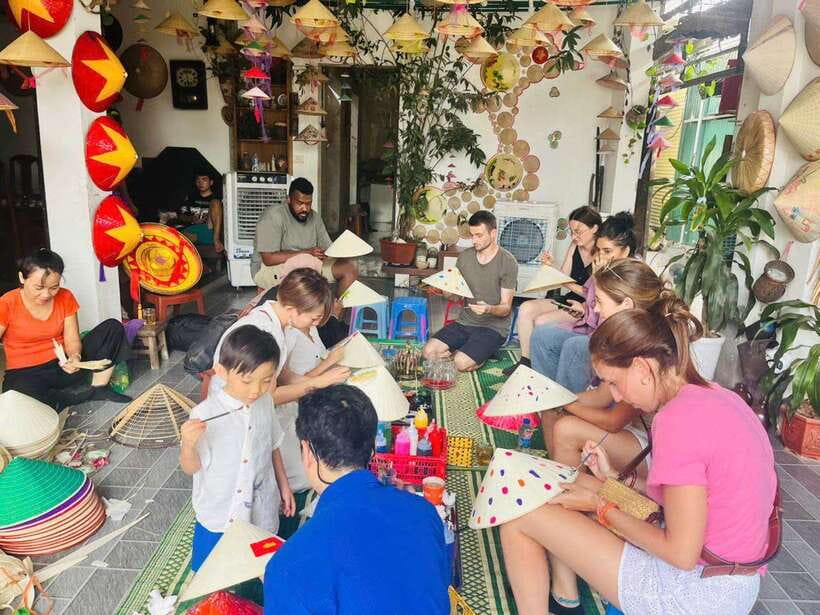
The best part is the painting activity. You receive one conical hat and can decorate it with your own design before taking it home. Several guides, including Flow and Lana, are praised for being patient while people worked, and for taking pictures during the process.
I would not expect a formal art class. You are making a personal souvenir, not a museum-quality object. That is part of the charm. The finished hat carries your own slightly uneven brushwork, which makes it more useful as a memory than as a perfect factory product.
The village stop can also include a walk through a local market area. You may encounter ordinary village life along the way, rather than a polished tourist complex. Wear comfortable shoes because the tour involves walking between stops and workshop areas.
Quang Phu Cau and the incense-making process
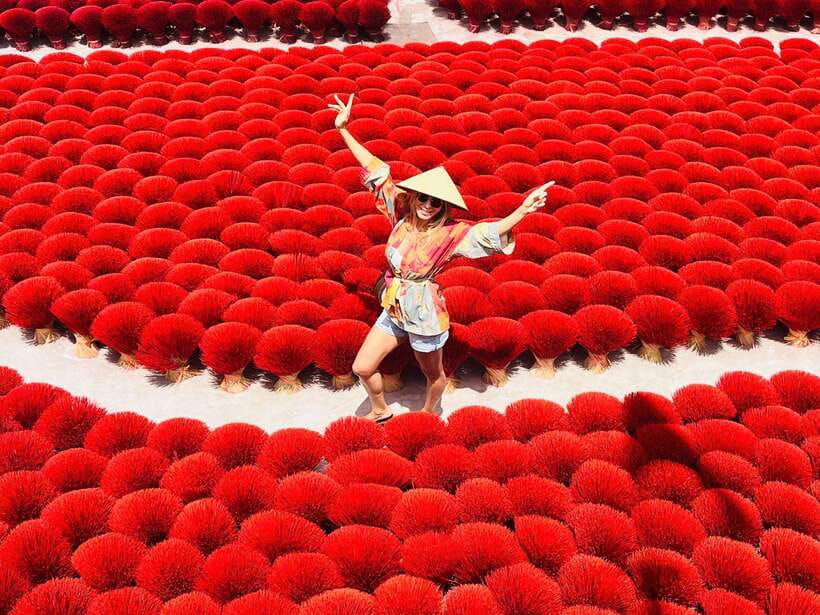
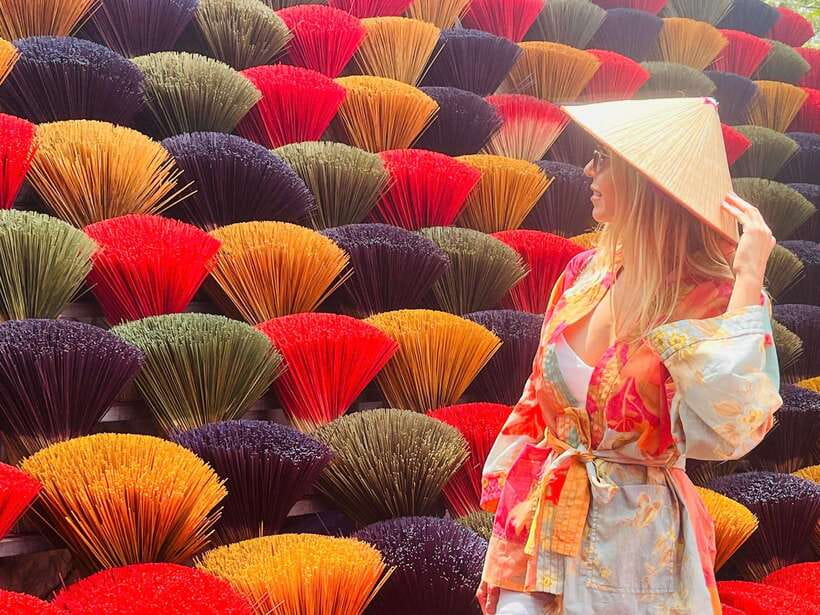
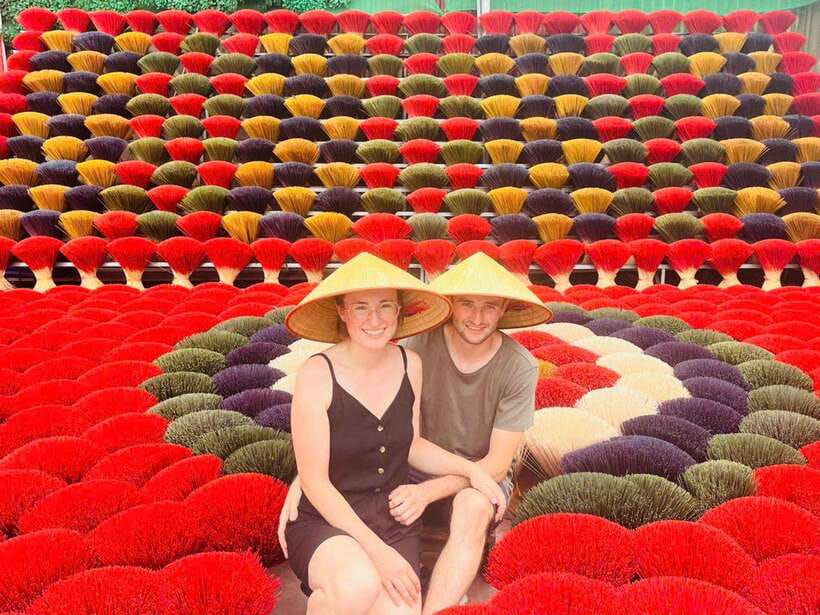
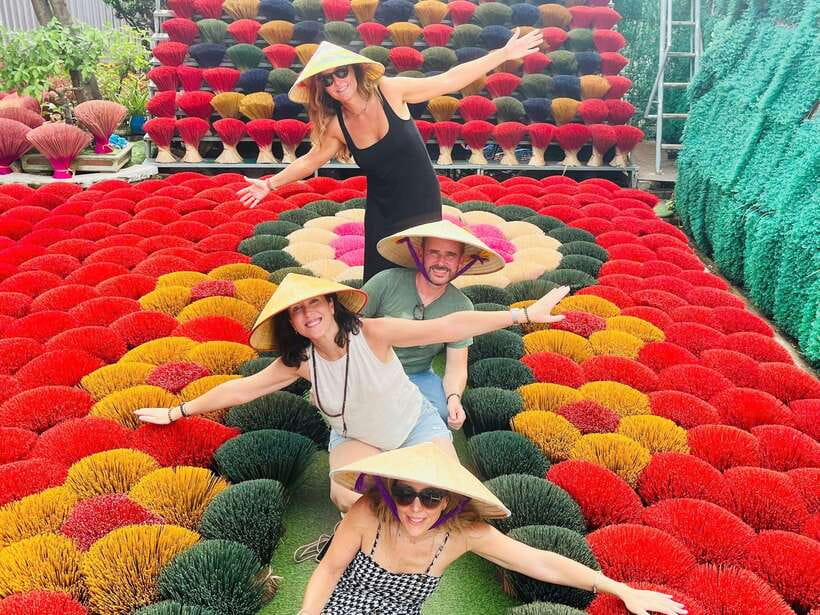
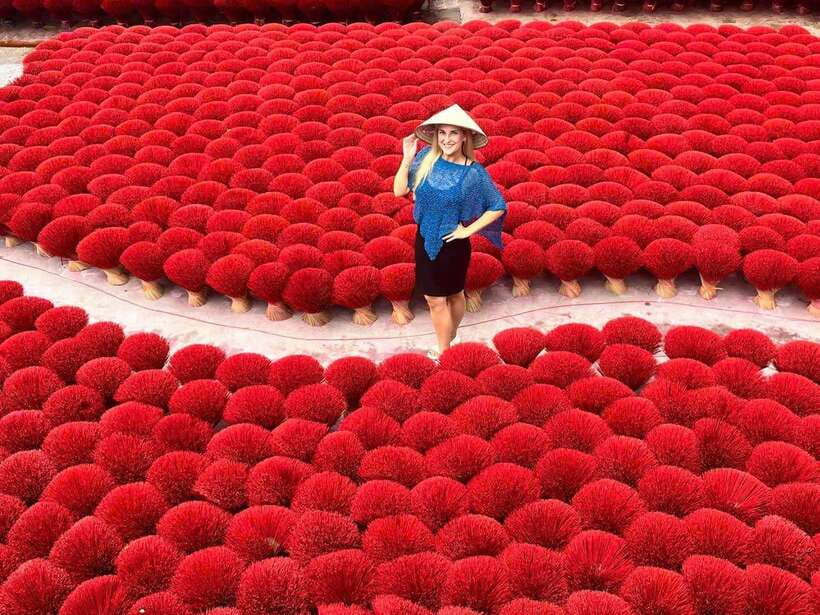
Quang Phu Cau has produced incense for more than 100 years. The village is famous for its bundles of dyed sticks, usually arranged in fan-like groups that create the striking red, pink, and yellow scenes many people come to photograph.
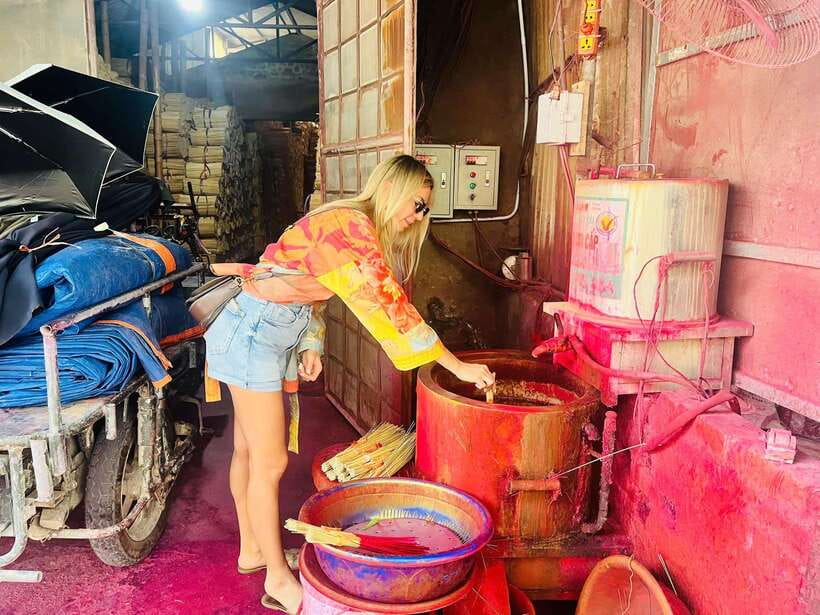
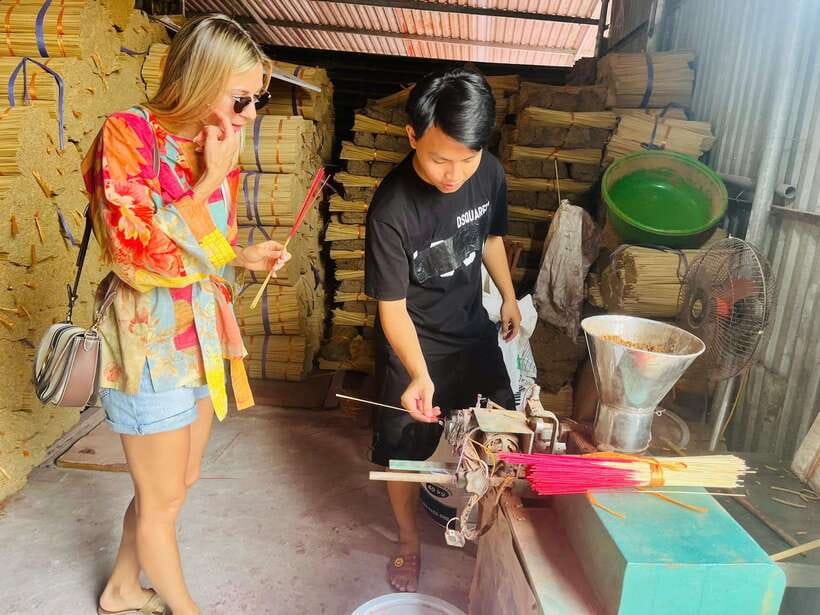
Your guide takes you toward the center of the village and introduces the work at a family scale. You may see incense sticks being dyed, laid out to dry, gathered, and prepared for the next stage. A family specializing in dyeing shows how a basic wooden stick becomes part of the colorful display.
This is the stop where photography can take over, so give yourself a moment to look past the camera. The color is the obvious attraction, but the deeper point is the labor. Incense making involves repeated hand movements and long hours, and the visit gives you a better sense of the work than a quick purchase in Hanoi can.
The tour also includes a nearby factory, where you learn how incense is made from the beginning. This adds useful context to the smaller family workshop. At one point, the process may look like a photogenic village scene; at another, you see the production side and the manual work required to supply a larger market.
Some versions of the visit give you the chance to try making incense. It is a brief activity, but it helps you understand how much repetition goes into the finished sticks. The smell is part of the setting, along with the sounds of manual production and village traffic.
If you want to buy incense, ask your guide or the workshop staff about what is available. The tour includes incense souvenirs, but one useful point to clarify before you go is exactly which items are included and which are for sale. There is no stated promise of a large shopping stop, and the visit is not built around aggressive selling.
The incense area is not a quiet gallery. It can be dusty, active, and noisy. One useful account of the trip noted that factory noise made it hard to hear the guide at times. Stay close during explanations, and ask your guide to repeat anything you miss.
The full-day lacquer village
The full-day version adds a lacquer-art village after the hat stop and lunch. The meal is described as home-cooked and may be served at a local artisan’s house or a riverside restaurant.
Lunch is an important difference between the two choices. The half-day option does not include food, so eat before departure or bring snacks. On the full-day version, lunch breaks up the craft visits and gives you a chance to sit down before the final workshop.
At the lacquer village, you visit a large family-run factory and a local artist’s home. The guide explains how lacquer products are made and shows you the careful stages behind the finished artwork. You may also have the chance to paint a lacquer piece.
The painting material is not included in the tour price. The activity description specifically notes that the lacquer piece used for painting is an extra cost, so ask about the price before beginning if you want to take your work home.
Lacquer work is a quieter, more detailed craft than the incense stop. The finished pieces can look polished and delicate, but the process requires patience and controlled decoration. This stop is a good reason to choose the full-day itinerary if you enjoy making things and want more than a photo visit.
There is a practical warning here. The artisans use acrylic paint or lacquer paint at most of the places visited. If strong paint smells give you headaches or make you uncomfortable, the half-day tour may be easier, since it skips the lacquer workshop.
A different kind of day out, same stretch of Vietnam:
- Hanoi: Water Puppet Show Tickets
★ 4.6 · 7,029 reviews - Hanoi Motorbike Tour: Food, Culture and Fun by Vintage Motorbike
★ 5.0 · 6,699 reviews - Hanoi: Guided Food Tour with Train Street Visit
★ 4.9 · 6,239 reviews - Hanoi Cooking Class: Culture, Local Market & Meaning CSR Impact
★ 5.0 · 5,147 reviews
How the guide shapes the day
The guides are a major part of this trip. You are moving between working villages, so a good guide helps turn separate stops into a connected story.
Anna is frequently praised for her energy, clear English, helpful explanations, and ability to take good photos. Sophia is described as friendly and careful about making sure people are comfortable. Flow is noted for patience, humor, and helping solo visitors get pictures.
Lana has been especially effective with communication through WhatsApp and with explaining the craft processes. Hanh has adapted a pickup point at short notice, while Hoang Zoo has used live location sharing to make the meeting process easier. These small actions matter more than grand speeches when you are dealing with Hanoi traffic and unfamiliar village roads.
The guide also affects how much you learn. You can simply walk around and photograph the incense, or you can ask why the sticks are dyed, how the hat is shaped, and what makes lacquer work different from ordinary painting. The tour is at its best when you stay curious and ask questions.
Several guides also act as informal photographers. That is useful for solo visitors, couples, and anyone who wants a picture that includes more than an outstretched arm. Still, bring your own phone and do not expect a professional photo service or edited images.
A private group is available. It costs more than joining a shared departure, but the benefit is control. You can ask more questions, spend longer at a workshop, or move at a slower pace without waiting for a larger group. A private booking was particularly useful for people who wanted to see each stop without feeling rushed.
Transport, timing, and comfort
The tour uses a comfortable bus and includes pickup and return in the Old Quarter hotel area. Hanoi traffic can delay the start, especially around holidays. One New Year’s Day departure had to change from hotel pickup to a meeting at the tour office, and the bus felt too warm during that trip.
That is not a reason to reject the tour, but it is a reason to keep your schedule open around the pickup window. Do not book a timed attraction immediately after the planned return unless you have a generous buffer.
The morning half-day option is useful if you want the afternoon for Hanoi’s museums, food, shopping, or a rest. The afternoon option works if you prefer a slower morning, but you return around early evening.
The tour involves walking around villages, workshop floors, and factory areas. Comfortable shoes are specifically recommended. This is not suitable for wheelchair users, and pets are not allowed.
You receive one water bottle. Bring extra water if you know you drink a lot in warm weather, along with sun protection and a small snack for the half-day trip. These are simple preparations, but they make a difference when the schedule runs longer because of traffic.
Train Street as an optional finish
The bus can drop you at Hanoi’s famous Train Street instead of taking you directly to your hotel. If you choose this, you can explore the area on your own and arrange a taxi or Grab back to your hotel.
This is a useful option if Train Street is already on your Hanoi list. It saves you a separate trip across the city and turns the end of the tour into a convenient handoff.
It is not part of the guided village program, so you should treat it as an optional drop-off, not as a guided visit. If you do not want to go there, stay on the bus for hotel drop-off.
What the $15 price really buys you
At $15 per person, the value comes from combining several expenses into one simple outing. You get Old Quarter transport, an English-speaking guide, entrance fees, water, and one conical hat to decorate and keep.
The half-day version is especially good value for a first visit to Hanoi. You see two distinctive craft villages and take part in two activities without giving up a whole day. The low price also makes sense for solo visitors who would otherwise pay separately for transport to villages outside the city.
The full-day trip is better for anyone who wants a slower, broader look at local crafts. It includes lunch and the lacquer village, but you spend much longer away from Hanoi. The lacquer painting material is extra, as are personal purchases and drinks.
Tips for the guide and driver are not included. They are optional, as are any souvenirs. You should never feel that buying incense, hats, or lacquer goods is required, and the tour is not presented as a shopping-focused outing.
Free cancellation up to 24 hours before departure and the option to reserve now and pay later make the booking less rigid. Still, check the available start time and pickup instructions before you commit, especially if your hotel is outside the Old Quarter.
Who should choose this tour
I would recommend the half-day version if you want strong photographs, a practical craft activity, and a quick break from Hanoi’s city center. It suits first-time visitors, solo visitors, couples, and families who like seeing how ordinary objects are made.
Choose the full-day version if lacquer art interests you, you want lunch included, or you prefer a day built around workshops rather than rushing back to the city. A private group is worth considering if your party wants its own pace or has lots of questions.
This is not the right outing if you want a quiet luxury tour, polished museum displays, or no exposure to paint smells, factory noise, and manual work areas. The villages are working places, and that means conditions can be active and a little rough around the edges.
FAQ
How long does the Hanoi craft village tour last?
The half-day option lasts about six hours. The morning schedule runs approximately from 7:45 to 13:30, while the afternoon schedule runs approximately from 11:45 to 17:30. The full-day option lasts one day, with pickup between 7:45 and 8:15.
Which villages are included in the half-day option?
The half-day tour visits Chuong Conical Hat Crafting Village and Quang Phu Cau Incense Village. It can also finish with an optional drop-off at Hanoi Train Street.
What is added on the full-day tour?
The full-day option adds Hanoi Lacquer Crafting Village and includes a home-cooked lunch. It also includes the hat and incense villages and can offer optional drop-off at Train Street.
Can I paint my own conical hat?
Yes. One conical hat per person is included, and you can decorate it with paint and take it home.
Is lunch included?
Lunch is included only with the full-day option. The half-day tour does not include lunch, so eat before departure or bring snacks.
Where does hotel pickup operate?
Pickup and hotel drop-off are available for hotels in Hanoi’s Old Quarter area, in Hoan Kiem District. If you stay outside that area, contact the operator through WhatsApp or Zalo for advice on the nearest meeting point.
Are paint smells and factory noise an issue?
The artisans use acrylic or lacquer paint at most of the places visited, so people sensitive to these smells should take note. Some factory areas can also be noisy, which may make it harder to hear the guide.
Should you book this Hanoi craft tour?
Book it if you want to see a working side of Hanoi and prefer doing something with your hands instead of only taking photographs. The half-day option is my pick for most people, since it combines the best photo stop, the most memorable craft activity, and a manageable schedule for $15 per person.
Choose the full day if you want the lacquer workshop and included lunch, and do not mind giving up most of a day outside central Hanoi. Pack comfortable shoes, keep room in your schedule for traffic, and ask questions at the workshops. That is how this inexpensive outing becomes more than a colorful photo stop.
Recently reviewed around Hanoi
- Female Riders Vespa Night Street Food + Train Street food 4 Hours★ 5.0 · 35 reviews
- Beautiful Female Riders Vespa Red River Countryside Tour 5 Hours★ 5.0 · 23 reviews
- Red River Delta Countryside+ Rural Villages, rice Paddies fields★ 5.0 · 134 reviews
- The insider’s Hanoi 4.5 hours All highlight Places & Train Street★ 5.0 · 41 reviews
- The insider’s Hanoi + Train Street 4,5 Hours Female Ao Dai Riders★ 5.0 · 53 reviews
- Street Foods Hanoi Kim Tours Vietnam★ 5.0 · 140 reviews
- Hanoi Jeep Tour – Ba Vi National Park Full Day Tour★ 5.0 · 21 reviews
- Ninh Binh Full Day Tour from Hanoi to Hoa Lu, Trang An & Mua Cave★ 5.0 · 31 reviews
Tours, compared.

Cu Chi Tunnels Tour from HCM City – Morning or Afternoon
Read our review →
Hanoi Jeep Tour: Food, Culture and Fun by Vietnam Army Jeep
Read our review →

Ho Chi Minh City Street Food Tour & Sightseeing By Motorbike
Read our review →
Full-Day Ninh Binh Highlights Tour from Hanoi
Read our review →
Cu Chi Tunnels-Tapioca Small Group Tour Morning or Afternoon
Read our review →
Cu Chi Tunnels and Mekong Delta Signature Tour
Read our review →