Reviewed · HALF-DAY
Half-Day Mindfulness Meditation Retreat in Hanoi
The most interesting part of this Hanoi experience is its blend of Buddhist ritual and practical meditation. You do not simply sit quietly and try to clear your mind. You chant sutras, learn how to behave in the pagoda, practice qigong and mindful breathing, walk with attention, and speak with monks about Buddhist teachings.
I like the chance to ask monks about their way of life, since that turns an abstract spiritual lesson into a real conversation. I also like the closing meal and animal-release activity, which connect Buddhist compassion with simple actions. The main consideration is that this is a serious, structured retreat, not a casual sightseeing stop. Four hours of chanting, lessons, meditation, and ritual may feel demanding if you want a fast-paced Hanoi morning.
In This Review
- Key points to know before you book
- Beginning with Buddhist rules and solemn chanting
- Lessons on Buddhist ethics that reach beyond the pagoda
- Qigong and mindful breathing before meditation
- Walking meditation and the art of touching peace
- Speaking with monks about renunciation and Buddhist life
- Releasing animals as a lesson in compassion
- A grateful vegetarian meal and a simple farewell
- What the $60 price really covers
- Who will appreciate this four-hour retreat
- Should you book the Hanoi mindfulness retreat?
- FAQ
- Where does the mindfulness retreat take place?
- How long does the experience last?
- How much does the retreat cost?
- Is lunch included?
- Is transportation included?
- What meditation practices are included?
- Will I chant Buddhist sutras?
- Can I speak with monks?
- Does the retreat include animal release?
- Is the ticket available on a phone?
Key points to know before you book
- Four hours at a Hanoi pagoda: The retreat gives you enough time for several activities without taking up a full day.
- Sutras come first: You begin by chanting Buddhist texts and learning the rules of the pagoda.
- Meditation has several forms: Expect qigong, mindful breathing, walking meditation, and seated meditation.
- A conversation with monks: You can learn about Buddhist doctrine, renunciation, and the noble life associated with monastic practice.
- Vegetarian lunch included: The meal gives the retreat a communal finish and is included in the $60 price.
- No air-conditioned vehicle included: Transportation is not part of the listed inclusions, so check how you will reach the pagoda.
Beginning with Buddhist rules and solemn chanting
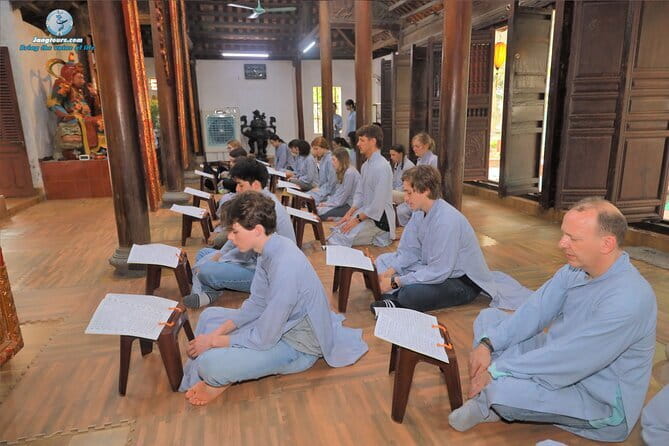
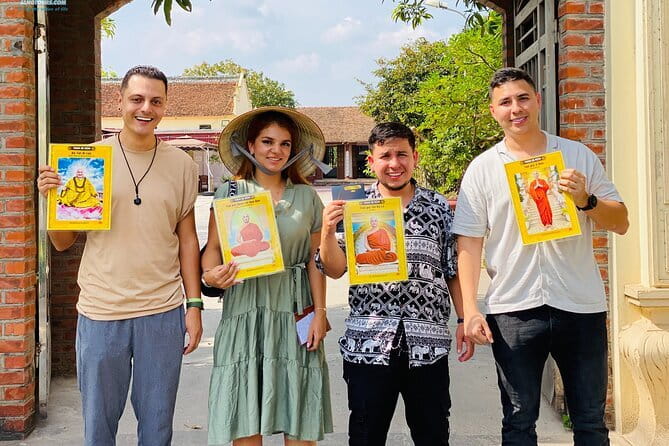
The retreat begins at a pagoda in Hanoi. Your guide explains the rules in the first lesson, an important opening because a pagoda is not simply another sightseeing site. The setting calls for attention, quiet conduct, and respect for the rituals taking place around you.
The first activity is chanting sutras. These texts contain the teachings of Buddha, so the chanting is not presented as a performance for visitors. It is a way to begin the retreat through sound, repetition, and concentration.
I like this start because it gives the morning a clear purpose. You are not asked to jump straight into meditation without context. First, you learn how the practice is connected to Buddhist teaching. If you have never taken part in a Buddhist ritual, the chanting may feel unfamiliar at first. That is part of the point, but you should come ready to observe and participate with care.
The exact language of the sutras and the amount of English explanation are not specified. If that matters to you, ask about it before booking. The experience does promise instruction about the rituals and Buddhist doctrines, but it does not list a named guide or a detailed language policy.
More Hanoi trips worth a second look
- Hanoi Half-day with Food + Fun + Culture By Russian Jeep
★ 5.0 · 1,243 reviews - Hanoi City Half-Day Private Tour: Train Street And All Highlights
★ 5.0 · 298 reviews - Hanoi Highlights: Half-day City Tour
★ 5.0 · 298 reviews
Lessons on Buddhist ethics that reach beyond the pagoda
After chanting, the program turns to Buddhist doctrine and ethical lessons. The stated aim is not only to explain beliefs, but to help you carry ideas about ethics and life into your own routine.
The retreat places special attention on gratitude, loving-kindness, and compassion. These ideas can sound broad when treated as slogans. Here, they are linked to ritual, meditation, the animal-release activity, and a shared meal. That practical connection is one of the stronger reasons to choose this experience over a simple meditation class.
You should expect the teaching portion to be reflective rather than academic. The information provided does not name specific Buddhist texts, schools, or doctrines covered in the lesson. It does promise an explanation of profound Buddhist teachings and ways to apply them in daily life.
I find that useful for a short retreat. You are not trying to become an expert in four hours. You are being given a framework for considering how attention, kindness, and ethical choices fit together. Still, anyone seeking a detailed course in Buddhist philosophy may find the time too brief.
Qigong and mindful breathing before meditation
The physical portion begins with qigong and mindful breathing. Qigong adds gentle movement to the retreat, while breathing practice helps you pay attention to the body and the present moment.
The program connects these exercises with good health. That makes this section a useful bridge between the more formal chanting and the quieter meditation sessions. You are not expected to treat meditation as only a mental exercise. Your posture, breathing, movement, and focus all play a part.
No fitness level or physical requirements are provided, so you should not assume the exact intensity. The experience is described as practice for good health, not as strenuous exercise. If you have physical concerns, ask the operator for more detail before booking.
I like this sequence because the retreat does not rely on one technique. Some people find it easier to settle their minds after moving and breathing. Others may prefer to sit first. This program uses both approaches, giving you more than one way to find focus.
Walking meditation and the art of touching peace

The next stage is walking meditation. You move with attention instead of treating walking as a way to get from one activity to the next. The goal is to enjoy a quiet moment while noticing the act of walking itself.
This may be the most approachable form of meditation for beginners. Sitting still can feel difficult when your mind is active. Walking gives you a simple physical rhythm to follow. The activity describes this section as part of the art of touching peace, a phrase that points to meditation as a direct experience rather than a theory.
After walking meditation, you learn meditation methods designed to focus the mind and support true happiness. The program does not specify the exact method, sitting position, or length of the session. You should expect instruction, but not a detailed timetable for each exercise.
For me, that lack of detail is both a benefit and a limitation. The flexible format may allow the guide to respond to the group. At the same time, you cannot predict precisely how long you will spend chanting, walking, breathing, or sitting. If you need a tightly timed schedule, this retreat may feel less certain than a standard class.
A different kind of day out, same stretch of Vietnam:
- Hanoi Jeep Tour: Food, Culture and Fun by Vietnam Army Jeep
★ 5.0 · 15,222 reviews - Full-Day Ninh Binh Highlights Tour from Hanoi
★ 5.0 · 7,761 reviews - Hanoi: Ha Long Bay Day Cruise – Swimming, Meal, Kayaking
★ 4.7 · 7,415 reviews - Hanoi: Water Puppet Show Tickets
★ 4.6 · 7,029 reviews
Speaking with monks about renunciation and Buddhist life

The most anticipated part of the program is a conversation with monks. This is where the retreat moves from guided practice to direct discussion.
The conversation covers Buddhist doctrine, the noble life of people who have renounced worldly pleasures, and the ideals behind monastic life. Those subjects offer a useful window into why Buddhist practice is more than a relaxation method. Meditation sits within a wider system of discipline, ethics, compassion, and detachment.
I especially value this part because it gives you a chance to consider questions that a guide’s short explanation may not cover. You can think about why someone would leave ordinary pleasures behind, how doctrine shapes daily choices, and what monks believe a meaningful life should look like.
The supplied information does not say how long the conversation lasts, how many monks participate, or whether questions are translated. It is wise to keep questions respectful and focused. You are entering a religious setting, not attending a debate or a staged cultural show.
Releasing animals as a lesson in compassion

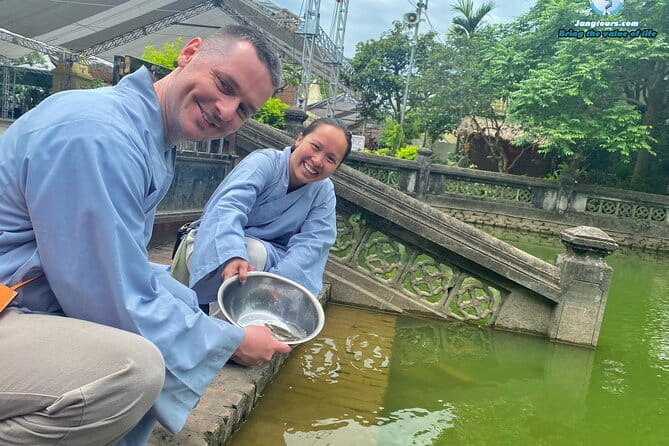
The retreat then turns compassion into an activity: releasing animals. This practice is linked to the Buddhist concern for living beings and gives the lesson a concrete form.
For you, the importance is less about spectacle and more about intention. The activity asks you to think about kindness toward life and the responsibilities that come with compassion. It also provides a change of pace after the quieter meditation and discussion.
The exact animals, location, and procedure are not stated. Because of that, you should avoid assuming what you will release or how the activity is arranged. Follow the guide’s instructions and treat the ritual with the same respect as the chanting.
This is one of the retreat’s more distinctive features. Many meditation programs end with a final breathing exercise or a short farewell. Here, the program continues its ethical theme through an action connected with Buddhist ritual.
A grateful vegetarian meal and a simple farewell
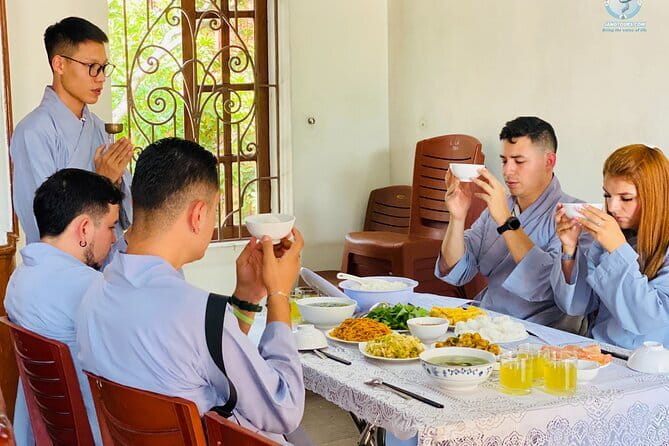
Lunch is included, and the meal is vegetarian. The program presents it as a grateful meal, so eating is part of the retreat rather than a separate restaurant stop.
That distinction matters. A shared vegetarian meal gives you time to slow down and connect the teachings with an ordinary act. Gratitude is not limited to the meditation cushion. It can shape how you receive food, notice other people, and finish a communal experience.
The menu is not provided, and the information does not mention options for allergies, vegan diets, or other dietary needs. If you have restrictions beyond vegetarian food, contact the operator before booking. Do not assume substitutions are available.
The retreat closes with an exchange of gifts and a farewell. This creates a defined ending after the lessons and rituals. You leave not only after eating, but after a final gesture of connection with the people who led the experience.
What the $60 price really covers
At $60 per person, this is not the cheapest way to spend four hours in Hanoi. Its value depends on what you want from the morning.
The price includes a structured retreat at a pagoda, instruction in several meditation practices, Buddhist lessons, a monk conversation, animal release, a vegetarian lunch, and the closing exchange of gifts. That is a broader program than a single meditation class, and the inclusion of lunch means you do not need to arrange a separate midday meal.
The cost does not include an air-conditioned vehicle. Transportation is an important point because the experience takes place at a pagoda, but no pickup arrangement or transport service is listed. You should confirm where the pagoda is and how to get there before paying. A cheap taxi or ride can change the total cost, especially if you are staying far from the meeting point.
A mobile ticket is included as a feature, which makes the booking simple once your transport is sorted. The average booking lead time is 47 days, suggesting that you should not leave this until the last morning if your Hanoi schedule is fixed.
Who will appreciate this four-hour retreat
I would recommend this experience to you if you want a respectful introduction to Buddhist practice with more substance than a short temple visit. It suits curious visitors who are willing to chant, listen, move slowly, and take part in unfamiliar rituals.
It is also a good match if you want several forms of meditation in one session. Qigong, mindful breathing, walking meditation, and seated meditation give you a useful comparison. You may discover that one method suits you better than another.
The retreat may not suit you if you want to spend the morning photographing Hanoi, moving between landmarks, or choosing your own pace. It also may not be right if you dislike religious ritual or feel uncomfortable participating in chanting and animal release.
The experience does not list group size, specific guide names, pickup service, exact pagoda details, or a detailed breakdown of the four hours. Those gaps do not make the program a poor choice, but they do make a pre-booking question worthwhile.
Should you book the Hanoi mindfulness retreat?
Book it if you want a focused half-day built around Buddhist practice, not a sightseeing tour with a spiritual label. The strongest features are the range of meditation exercises, the chance to speak with monks, and the way gratitude and compassion continue through the meal and animal-release activity.
Think twice if you need air-conditioned transport, a precise schedule, or detailed information about the teaching language and dietary arrangements. At $60, the retreat offers fair value when you take part in the full program, but transport is extra and the religious format requires genuine attention.
For a thoughtful morning away from Hanoi’s ordinary sightseeing rhythm, I would put this on your shortlist. Confirm the pagoda meeting details and practical arrangements first, then arrive ready to listen, participate, and slow down.
FAQ
Where does the mindfulness retreat take place?
The retreat takes place at a pagoda in Hanoi, Vietnam. The specific pagoda name is not provided.
How long does the experience last?
The retreat lasts approximately four hours.
How much does the retreat cost?
The listed price is $60 per person.
Is lunch included?
Yes. A vegetarian lunch is included in the experience.
Is transportation included?
No. An air-conditioned vehicle is specifically listed as not included.
What meditation practices are included?
The program includes mindful breathing, walking meditation, and meditation instruction. It also includes qigong as part of the physical and breathing practice.
Will I chant Buddhist sutras?
Yes. Chanting solemn sutras is the first main activity after the introduction to pagoda rules.
Can I speak with monks?
Yes. The retreat includes a conversation with monks about Buddhist doctrine, monastic life, renouncing worldly pleasures, and Buddhist ideals.
Does the retreat include animal release?
Yes. Releasing animals is included as an activity connected with compassion.
Is the ticket available on a phone?
Yes. The experience offers a mobile ticket.
Recently reviewed around Hanoi
- Female Riders Vespa Night Street Food + Train Street food 4 Hours★ 5.0 · 35 reviews
- Beautiful Female Riders Vespa Red River Countryside Tour 5 Hours★ 5.0 · 23 reviews
- Red River Delta Countryside+ Rural Villages, rice Paddies fields★ 5.0 · 134 reviews
- The insider’s Hanoi 4.5 hours All highlight Places & Train Street★ 5.0 · 41 reviews
- The insider’s Hanoi + Train Street 4,5 Hours Female Ao Dai Riders★ 5.0 · 53 reviews
- Street Foods Hanoi Kim Tours Vietnam★ 5.0 · 140 reviews
- Hanoi Jeep Tour – Ba Vi National Park Full Day Tour★ 5.0 · 21 reviews
- Ninh Binh Full Day Tour from Hanoi to Hoa Lu, Trang An & Mua Cave★ 5.0 · 31 reviews
Half-Day, compared.
Cu Chi Tunnels Half-Day Tour: Vietnam War Underground Network
Read our review →
Cu Chi Tunnels Half-Day Tour: Big Group Vietnam War Experience
Read our review →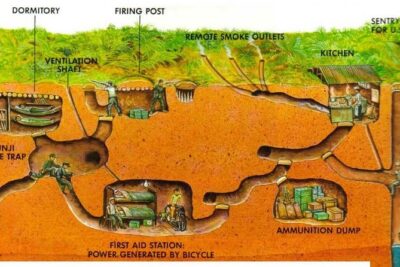
Small-Group Cu Chi Tunnel Half-day Tour: Morning or Afternoon
Read our review →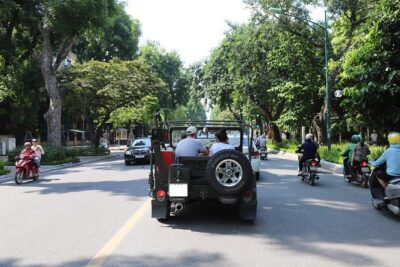
Hanoi Half-day with Food + Fun + Culture By Russian Jeep
Read our review →
Ho Chi Minh City Private Half-Day Tour by U.S Army Jeep
Read our review →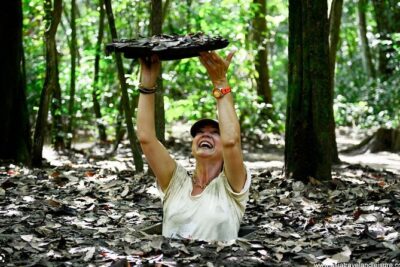
Ben Duoc ‘Less-Crowded’ Cu Chi Tunnels Half-Day Tour
Read our review →
Afternoon Cu Chi Tunnels – Small Group Half-Day Tour
Read our review →