
Reviewed · CAT BA TOURS
Half day Deep Water Solo
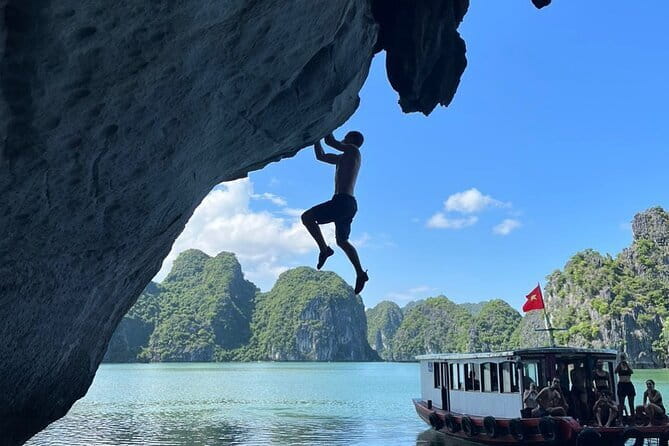
Cat Ba’s Deep Water Solo trip turns the bay into your climbing gym. You climb limestone walls without ropes, then drop into warm seawater when your grip gives out. The guides start you on a five-meter 4a route, explain safe landings, and help you choose harder problems without pushing you past your comfort level.
I like the range of routes, from easy climbs and low traverses to serious 7c+ lines at Three Brothers. I also like the relaxed finish: swimming, two drinks, fruit, and a quiet boat ride through the bay. The main drawback is simple: you need a moderate level of fitness, and five hours of repeated climbing and water entries can be tiring.
In This Review
- Key points to know before you book
- What Deep Water Solo means at Cat Ba
- Meeting the group at 120 Núi Ngọc
- The boat ride to Sea Face
- Sea Face gives beginners room to grow
- Three Brothers raises the difficulty
- How the guides shape the experience
- Swimming, drinks, and the ride home
- What the $58 price includes
- Who will enjoy this most
- Practical details that affect your day
- Should you book the Cat Ba Deep Water Solo half-day?
- FAQ
- Where does the activity start and finish?
- How long does the Deep Water Solo trip last?
- What climbing level do I need?
- What equipment is included?
- Is hotel pickup included?
- What happens if bad weather cancels the trip?
Key points to know before you book
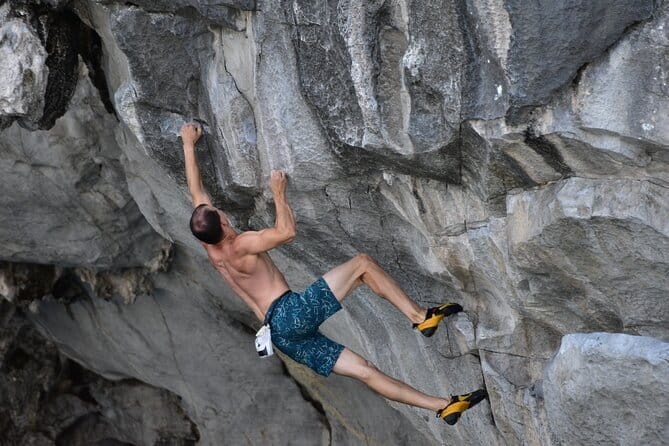
- Two climbing walls: Sea Face has about 15 routes from 4a to 7a, while Three Brothers offers about 17 routes from 5b to 7c+.
- A gentle first climb: You begin with a 5-meter 4a route to practise movement and landing technique.
- Options for different abilities: Most Sea Face routes sit between 5a and 6b, with traverses available if you prefer lower jumps.
- Small group size: The maximum is 11 people, which helps the guides give practical advice between climbs.
- A full package: Boat travel, harbor taxi, entrance fee, climbing shoes, chalk, two drinks, and fruit are included.
- Weather matters: Poor conditions can cancel the trip, with a new date or full refund offered.
What Deep Water Solo means at Cat Ba
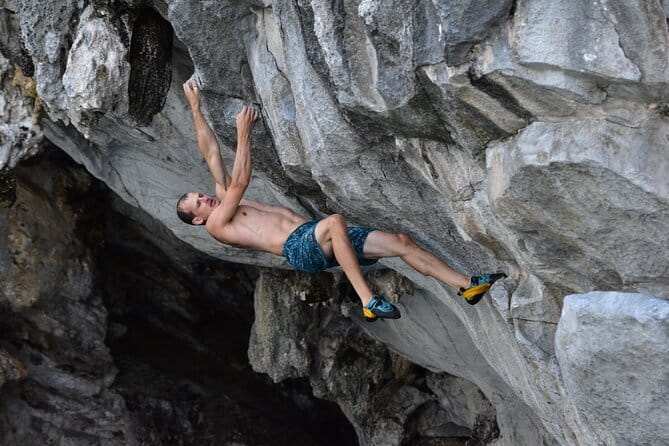
Deep Water Solo, often shortened to DWS, is rope-free climbing above deep water. You start at the base of a sea cliff, climb as high as you choose, then drop into the water when you fall or reach the top.
That sounds wild, but the outing is arranged in sensible stages. You are not sent straight to a tall wall. The first climb is an easy 4a route, only about five meters high, and the guides use it to show you how to land properly. This first attempt matters more than it may seem. A relaxed entry into the water helps you stop treating the jump as the main event.
You can then choose your level. Strong climbers can work toward harder routes, while beginners can repeat easier climbs, use the traverses, or simply enjoy the setting and learn the movement. You do not need to be an expert, but you should be comfortable with a moderate physical challenge and ready to climb several times in warm, humid conditions.
Other Cat Ba days travellers weigh against this one:
- Lan Ha – Ha Long Bay – Dau Be island 2D/1N from Cat Ba in less touristy areas.
★ 5.0 · 3,460 reviews - Full day trip to Lan Ha-Ha Long Bay from Cat Ba, avoid the crowds
★ 5.0 · 3,317 reviews - Cat Ba: Lan Ha, HaLong bay full day- biking, kayaking, lunch
★ 4.8 · 1,166 reviews
Meeting the group at 120 Núi Ngọc
You meet at 120 Núi Ngọc in Cat Ba Town 15 minutes before departure. This early arrival is for a useful reason: the team fits you with climbing shoes before the car takes you to the harbor.
Good shoe fit makes a real difference on limestone. Shoes that are too loose make small footholds harder to use, while shoes that are too tight can make the session unpleasant before it really begins. Chalk is supplied too, so you do not need to bring climbing equipment.
Hotel pickup and drop-off are not included. You need to reach the meeting point yourself, then return there at the end. From the office, the included taxi transfer takes you to the boat. This keeps the meeting plan fairly clear, but it also means you should allow time to get to Núi Ngọc on your own.
The group limit is 11 people. That is not a private outing, but it is small enough for the guides to discuss routes and offer tips as people wait their turn. Expect a social rhythm, with bursts of climbing followed by time on the boat or at the wall.
The boat ride to Sea Face
The boat carries you out toward the first climbing wall, called Sea Face. The ride is part of the experience rather than just a transfer. It gives you time to look at the limestone formations, settle your nerves, and hear the basic instructions before your first climb.
The guides explain how to jump and how to land. They also describe each route before you start, including its name, grade, and any difficult movement to watch for. That briefing is valuable because you can plan your attempt instead of standing at the wall with no idea what comes next.
The setting adds a special layer to the activity. You are not climbing indoors with padded flooring and fixed holds. You are reading real limestone above the sea, then judging when and how to leave the wall. The guides’ route advice helps bridge the gap between ordinary gym climbing and this more open, exposed style.
Sea Face gives beginners room to grow

Sea Face is the right place to build confidence. It has about 15 routes graded from 4a to 7a, with most falling between 5a and 6b. That spread gives the guides several ways to match the climbing to your strength and experience.
The opening 4a route is about five meters high. Use it to practise three things: finding your footholds, controlling your body on the wall, and entering the water safely. You may find the first jump more challenging mentally than physically. Once you have done it, the next climb usually feels easier to judge.
The moderate grades are useful for climbers who have some experience but do not want a contest. You can try a harder route, stop after a few moves, and reset without turning the session into an all-or-nothing test. The staff can recommend routes based on how you handle the first climb.
Sea Face also includes traverse routes. These let you move sideways along the rock rather than climbing to a high point and making a large jump. They are a good choice if you want to focus on climbing technique, or if the height feels like too much. You still get the sea-cliff setting without needing to choose the highest possible exit.
One point to remember: grades help, but they do not tell the whole story. A route’s height, exposure, and movement can affect how difficult it feels. Listen to the guide’s description before choosing, especially if your only climbing experience has been indoors.
A different kind of day out, same stretch of Vietnam:
- From Ha Noi/Cat Ba: Full-Day Cruise to Lan Ha bay – Ha Long Bay
★ 5.0 · 504 reviews - Lan Ha – Ha Long bay with local experts (small group guaranteed)
★ 5.0 · 342 reviews - Half Day Hiking to Cat Ba National Park with a Guide
★ 4.8 · 312 reviews - From Hanoi/Cat Ba: Lan Ha Bay Full-Day Boat Trip
★ 4.8 · 264 reviews
Three Brothers raises the difficulty

After Sea Face, the boat heads to Three Brothers, the harder wall. This area has about 17 routes graded from 5b to 7c+. It is aimed more at climbers who have found their rhythm and want a bigger physical or technical challenge.
You do not have to attempt the hardest lines. The lower grades still offer useful choices, and watching stronger climbers work through difficult movements can be part of the fun. The route range makes Three Brothers worthwhile for mixed groups, since one person can try a 5b while another tests a much harder line.
The change from Sea Face gives the outing a natural progression. You start with basic technique and confidence, then decide how far you want to go. This is a better setup than a trip built around one intimidating wall, especially if your group includes a first-timer and an experienced climber.
Still, the second wall may feel demanding after several climbs. You should pace yourself. Deep Water Solo is fun partly because the jumps refresh you, but your fingers, shoulders, and legs still do the work. If you are already tired, an easier route or a swim break may be the smarter choice.
How the guides shape the experience
The guides are central to the day. Names connected with the guiding team include Hai, Tinh, Mikey, and Ting. Their job is not just to get you onto the rock. They explain the grades, point out hard movements, advise on route choice, and help you make sensible decisions about height.
That coaching is especially helpful for a first attempt. A beginner may not know how to read the rock or how to prepare for the final move. A guide can turn the route into small instructions: use a certain foothold, shift your weight, look for the next handhold, and decide where you want to enter the water.
The personal approach also suits older or less experienced climbers. A 60-year-old novice can use the easier routes and enjoy the boat, water, and scenery without needing to match a younger climber’s pace. At the other end, experienced climbers can work on harder lines and watch the strongest people in the group handle 7-level routes.
You should still speak up about your comfort level. The route grades and guide advice help, but only you know how your body feels. The best day is not the one with the highest jump. It is the one where you finish feeling challenged rather than worn out or pressured.
Swimming, drinks, and the ride home
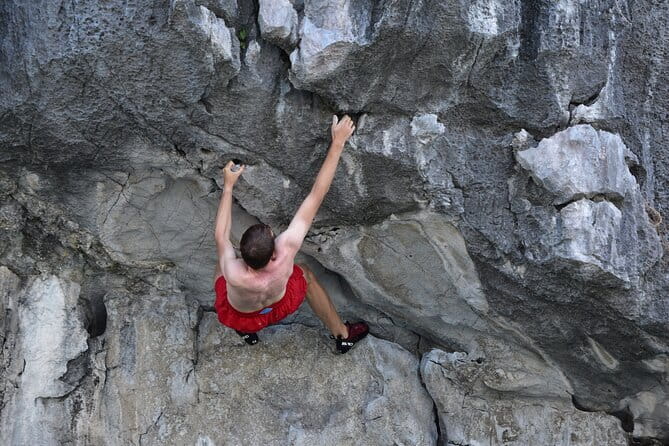
Once the climbing is finished, you get about 10 to 15 minutes to swim, enjoy two drinks, eat fruit, and relax before the boat returns to the harbor. This is a short break, not a full beach stop, so treat it as a cooldown rather than a long afternoon at the water.
That pause is well placed. You have just spent several hours using your arms and legs, and a swim gives you a chance to cool down. It also lets you enjoy the setting without staring at the next route. If some people in your group do not climb every line, this is their chance to join the day in a calmer way.
The included drinks and fruit add practical value. You are not paying extra for every small refreshment once the climbing ends. Bring your own expectations into line with the timing, though. Ten to 15 minutes passes quickly, and the boat must return on schedule.
The trip ends back at the original meeting point. There is no hotel transfer afterward, so plan your evening around getting back to Núi Ngọc.
What the $58 price includes

At $58 per person, this is not the cheapest half-day activity in Cat Ba, but the price covers more than a basic boat ride. You get the boat, entrance ticket, experienced climbing guides, climbing shoes, chalk, the taxi to and from the harbor, two drinks, and fruit.
The equipment is important. Buying or carrying climbing shoes and chalk would be inconvenient for a short holiday activity, and the provided gear means you can arrive without a full kit. The boat and harbor taxi also remove two separate transport costs.
The value depends on how much you climb. If you spend most of the session trying routes and using the instruction, the package offers a good amount for five hours. If you are nervous about heights and plan to attempt only one or two low routes, the cost may feel higher. You are paying for access to the sea walls, the boat, the guides, and the setting, not simply for a short jump into the water.
The maximum group size of 11 supports the price too. It keeps the outing shared rather than private, but it is not a huge crowd. For climbers who want individual coaching throughout, a private arrangement would be worth asking about, though no private option is specified here.
Who will enjoy this most
This outing suits several types of visitors:
- You climb indoors and want to try real sea cliffs without arranging equipment yourself.
- You are a beginner who wants a guided introduction rather than a solo attempt.
- You enjoy active half-day trips and are comfortable with repeated climbing and water entries.
- Your group has mixed abilities and needs both easy and hard routes.
- You want a memorable Cat Ba activity that combines a boat trip, limestone climbing, and swimming.
It is less suitable if you dislike heights, cannot manage moderate physical activity, or want a slow sightseeing cruise with little exertion. The guides can offer easier lines and traverses, but this remains a climbing trip. You should also be ready for weather to affect the schedule.
A first-time climber may feel nervous before the first jump. That is normal. The five-meter starter route gives you a controlled way to learn the basic feeling, and the warm water makes the landing less daunting than a cold-water setting would be.
Practical details that affect your day
Confirmation arrives when you book. You should reach the office 15 minutes early for shoe fitting, and you need to arrange your own way to 120 Núi Ngọc. The activity lasts about five hours and returns to the same meeting point.
The tour requires good weather. If poor conditions force a cancellation, you can choose another date or receive a full refund. You can also cancel for a full refund if you do so at least 24 hours before the start time. Cancellations or changes inside that window are not refunded or accepted.
The activity is commonly booked about 17 days ahead. That is a useful planning clue if your Cat Ba dates are fixed, especially since the group is capped at 11 people. Booking earlier also gives you more flexibility if weather changes your plans.
Wear something suitable for climbing and water, though the exact clothing requirements are not specified. You should expect to get wet and to spend much of the outing outdoors. The provided climbing shoes and chalk are the main technical items supplied.
Should you book the Cat Ba Deep Water Solo half-day?
I would book it if you want an active Cat Ba experience with real route choices, clear instruction, and a strong sense of place. The mix of Sea Face’s approachable grades, Three Brothers’ harder lines, and low traverses makes the outing workable for beginners, occasional climbers, and experienced climbers in the same group.
The best reason to choose it is the range. You can learn on a 4a route, work toward a 6b, watch someone tackle a 7c+, or keep things low and technical. The guides, including Hai, Tinh, Mikey, and Ting, add the safety briefing and route advice that make a first DWS attempt far less mysterious.
Skip it if you want a quiet half-day or if moderate physical effort and height are not appealing. For everyone else, $58 buys a well-filled five hours, with equipment, transport to the harbor, refreshments, and two striking climbing areas included.
FAQ
Where does the activity start and finish?
It starts at 120 Núi Ngọc, TT. Cát Bà, Cát Hải, Hải Phòng 180000, Vietnam, and ends back at the same meeting point.
How long does the Deep Water Solo trip last?
The activity lasts about five hours.
What climbing level do I need?
A moderate level of physical fitness is required. The routes range from 4a to 7c+, with easy starter routes and traverses for people who do not want to jump from a high point.
What equipment is included?
Climbing shoes and chalk are included. The package also covers the boat and entrance ticket.
Is hotel pickup included?
No. Hotel pickup and drop-off are not included, but taxi transport to and from the harbor is included.
What happens if bad weather cancels the trip?
You will be offered another date or a full refund. You can also receive a full refund if you cancel at least 24 hours before the start time.
Recently reviewed around Cat Ba
- Sunset and Plankton Bioluminescent Night Kayak Lan Ha Bay★ 5.0 · 18 reviews
- Most favorite full day boat tour with kayaking in Lan Ha bay, Ha Long bay★ 5.0 · 61 reviews
- 2 Days 1 Night Lan Ha, Ha Long Bay Tour With Licensed Guide★ 5.0 · 56 reviews
- Cat Ba: Sunset & Bioluminescent Kayaking on Lan Ha Bay★ 5.0 · 25 reviews
- Rock Climbing Tour at Moody Beach★ 5.0 · 87 reviews
- 2 Days 1 Night Lan Ha Bay Adventure★ 5.0 · 39 reviews
- Sunset Tour in Lan Ha Bay | 4-star Daiichi Cruise★ 5.0 · 24 reviews
- Half Day Hiking to Discover Cat Ba National Park with a Guide★ 5.0 · 66 reviews
Cat Ba Tours, compared.

Lan Ha – Ha Long Bay – Dau Be island 2D/1N from Cat Ba in less touristy areas.
Read our review →
Full day trip to Lan Ha-Ha Long Bay from Cat Ba, avoid the crowds
Read our review →
Lan Ha, HaLong bay full day- biking, kayaking, lunch
Read our review →
From Ha Noi/Cat Ba: Full-Day Cruise to Lan Ha bay – Ha Long Bay
Read our review →
Lan Ha – Ha Long bay with local experts (small group guaranteed)
Read our review →
Half Day Hiking to Cat Ba National Park with a Guide
Read our review →
From Hanoi/Cat Ba: Lan Ha Bay Full-Day Boat Trip
Read our review →
Cat Ba/Ha Noi: Lan Ha and Monkey Island Full Day Boat Trip
Read our review →Browse the lists this tour appears in