
Reviewed · MARBLE MOUNTAINS TOURS
Da Nang: Marble Mountains And Son Tra Peninsula Exploration
The best part of this Da Nang outing is the contrast: you move from dark Buddhist caves inside the Marble Mountains to wide coastal views at Son Tra Peninsula. Along the way, you see working stone-art shops and learn why these places matter, rather than simply stopping for a photo.
I like the one-way elevator ride at Marble Mountains, which saves some effort, and I like the personal feel of a private or small-group trip. Guides such as Emily, Mark, Minh, Tin, and Eric have been praised for clear explanations, patience, and taking photos. The main drawback is time. Four hours can feel tight, especially if you want a slow climb or longer at Son Tra.
In This Review
- Key points to know before you book
- What this four-hour outing actually delivers
- Marble Mountains: caves, pagodas, and a steep climb
- Am Phu Cave and the Buddhist afterlife
- Non Nuoc Stone Carving Village and the question of shopping
- Son Tra Peninsula and the Lady Buddha viewpoint
- The Cham Museum question
- Guides, drivers, and the value of a small group
- Who will enjoy this tour most
- Timing, weather, and what to bring
- Is $43 a fair price?
- Should you book Marble Mountains and Son Tra?
- FAQ
- How long does the experience last?
- Where does hotel pickup take place?
- Which language does the guide speak?
- Is the experience private or shared?
- What is included in the price?
- Is the Cham Museum included?
- Is the Marble Mountains climb difficult?
- Are children allowed to join?
- Can I cancel the booking?
Key points to know before you book

- Am Phu Cave gives Marble Mountains a dramatic Buddhist focus: Its Heaven and Hell scenes add meaning to the climb beyond the views.
- Non Nuoc is more than a shopping stop: You can watch the local tradition of marble sculpture and see the skill behind the finished pieces.
- Lady Buddha is the visual high point: Son Tra Linh Ung Pagoda offers broad views over Da Nang, the coast, and Marble Mountains.
- The pace is brisk: Marble Mountains receives about 1.5 hours, while the stone-carving village and pagoda receive about 30 minutes each.
- The trip suits active sightseers: Stairs and uneven walking at Marble Mountains make comfortable shoes important.
- The Cham Museum may not be included: It appears among the highlights, but the scheduled stops do not list it, so confirm this before booking.
What this four-hour outing actually delivers
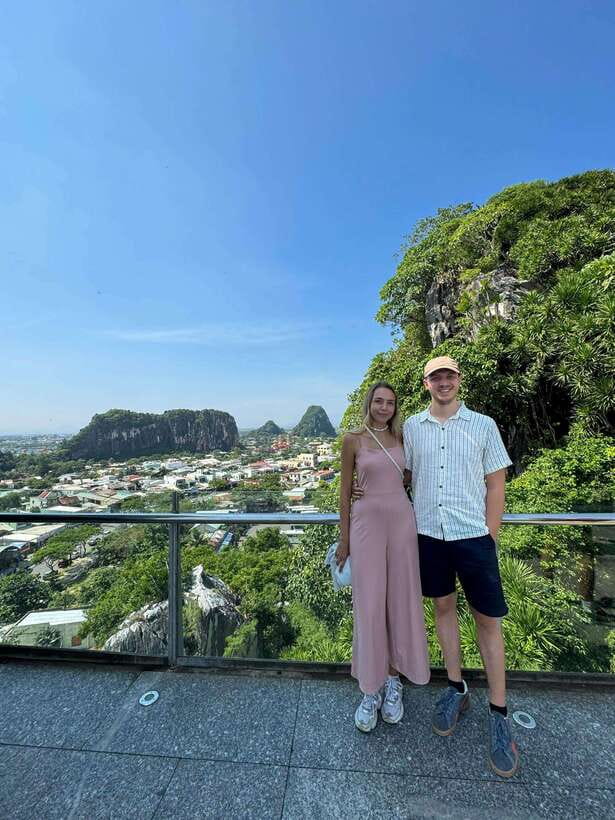
At $43 per person, this is a compact sightseeing trip built around two major Da Nang landmarks. You visit Marble Mountains south of the city, stop at Non Nuoc Stone Carving Village, then head north to Son Tra Peninsula and Linh Ung Pagoda.
That route covers a lot in half a day. You get religious sites, local craft, mountain viewpoints, and a large seaside statue without arranging separate taxis or figuring out the order yourself. Transportation, entrance fees, bottled water, an English-speaking guide, travel insurance, and one elevator ride at Marble Mountains are included.
I see the value in that package if you have limited time in Da Nang. The price is less compelling if you prefer to linger, climb slowly, or spend a long time taking in each viewpoint. One four-hour visit can show you the essentials, but it does not leave much room for a relaxed pace.
Pickup and drop-off are offered at hotels in central Da Nang. Son Tra Peninsula itself is excluded from the pickup area, so you need to check that your accommodation qualifies. Private and small-group arrangements are available, which can make a real difference on a short outing.
Other Da Nang days travellers weigh against this one:
- Full Day Golden Bridge and Ba Na Hills Small Group Tour
★ 5.0 · 2,369 reviews - Morning Small group to Marble Mountains – Am Phu Cave – Monkey Mountain
★ 5.0 · 1,097 reviews - Da Nang: Ba Na Hills and Golden Bridge Tour
★ 5.0 · 938 reviews
Marble Mountains: caves, pagodas, and a steep climb
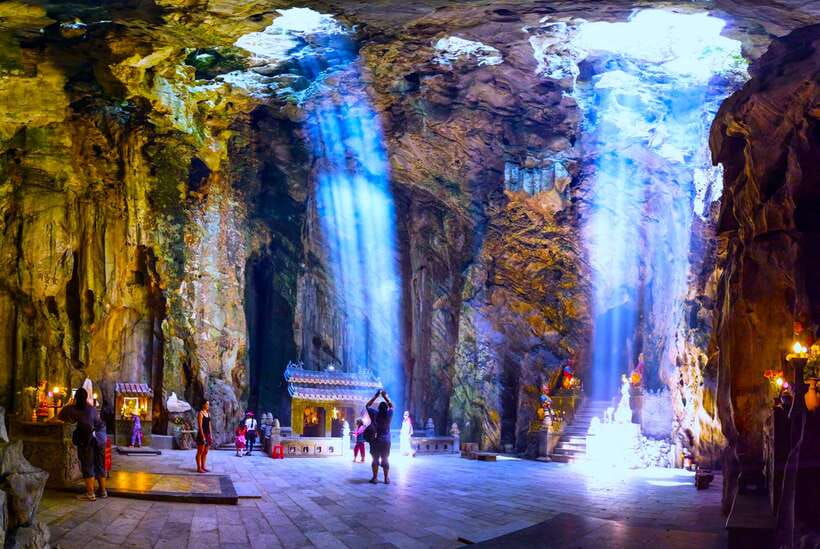
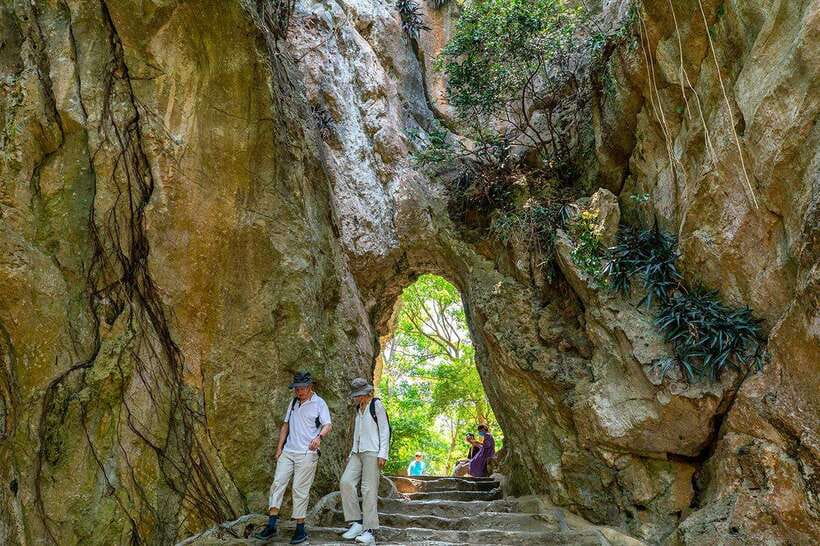
Marble Mountains is a cluster of five marble and limestone peaks. Each mountain carries the name of one of the five elements: metal, wood, water, fire, and earth. The names give the site a simple structure, but the real appeal is physical. You climb through stone passages, enter caves, reach Buddhist shrines, and emerge at viewpoints over the coast.
The visit lasts about 1.5 hours. That is enough to see the main religious spaces and enjoy the views, though you will need to keep moving. The stone steps can be uneven, and the climb is not a good match for anyone who has trouble with stairs or steep walking.
The included one-way elevator is useful. It reduces the effort at one end of the visit, but it does not remove the need to walk through the mountain. Wear shoes with a firm sole, and bring water even though a bottle is provided. Loose sandals are a poor choice on stone steps.
The caves are what make Marble Mountains memorable. Light filters into the openings, incense and statues give the chambers a quiet religious mood, and the rock walls make each stop feel different from the last. Your guide can explain the Buddhist symbols and local beliefs, which adds much more than simply entering, photographing, and leaving.
Am Phu Cave and the Buddhist afterlife
Am Phu Cave is one of the most unusual stops. It presents a theatrical version of Heaven and Hell, linked to Buddhist ideas about the afterlife. You see a visual lesson about moral conduct, judgment, punishment, and reward.
The subject matter may feel intense, especially for young children, but it gives the cave a clear purpose. This is not just a natural hollow in the mountain. It is a place where religion is presented through statues and scenes that are easy to understand, even if you know little about Vietnamese Buddhism.
I would pay close attention here instead of rushing straight to the next viewpoint. The guide’s explanation helps connect the cave to the wider spiritual character of Marble Mountains. Several guides on this experience have been praised for giving useful cultural context, and that is exactly where their presence matters most.
Non Nuoc Stone Carving Village and the question of shopping
At the foot of the mountains, the group spends about 30 minutes at Non Nuoc Stone Carving Village. The village has more than 200 years of marble-sculpting tradition. Local craftspeople produce religious figures, decorative objects, and other marble goods in a range of sizes.
I like this stop because it shows the hands-on skill behind the polished sculptures seen across the region. You can study the carving work closely and get a better idea of how much effort goes into shaping hard stone. The visit also gives context to the name Marble Mountains, since the craft and the mountains are closely linked in the local story.
Thirty minutes is enough for a look around, but not enough for a long workshop visit or extended shopping. Personal purchases are not included, and shopping, drinks, phone use, and other personal costs are your responsibility. If you are interested in buying something, check size, weight, packing, and shipping details before committing.
This stop may feel less important to someone focused only on temples and views. For me, it earns its place because it connects the natural material of the mountains with a living local craft. Just keep your expectations clear: the scheduled time is short.
A different kind of day out, same stretch of Vietnam:
- Da Nang & Hoi An: Food, Sightseeing, Culture & Hidden Gems
★ 5.0 · 806 reviews - Marble Mountains – Am Phu Cave – Monkey Mountain Sunset tour
★ 5.0 · 781 reviews - Ba Na Hills with Golden Bridge Private Tour
★ 5.0 · 708 reviews - Marble Mountains – Hoi An Ancient Town Sunset Daily Ingroup Tour
★ 5.0 · 690 reviews
Son Tra Peninsula and the Lady Buddha viewpoint
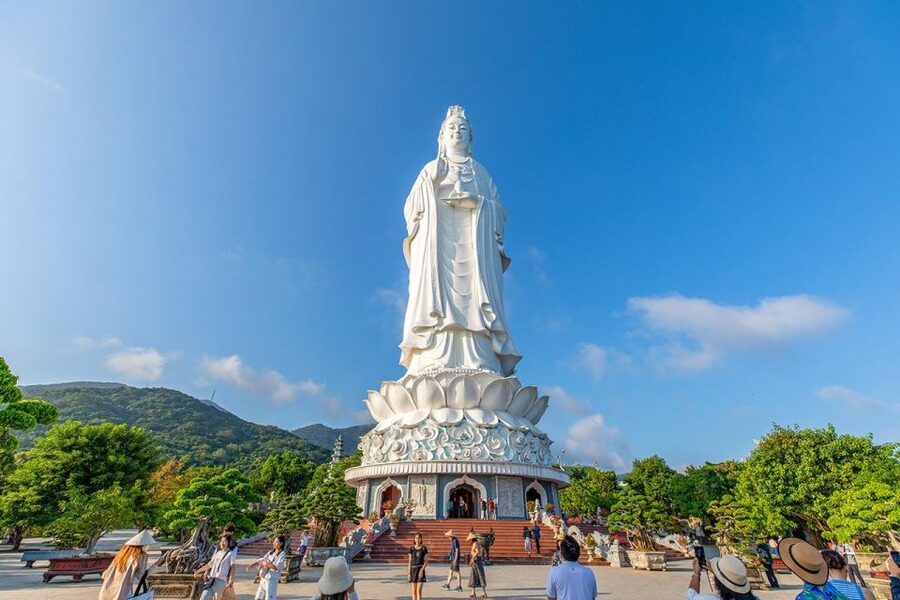
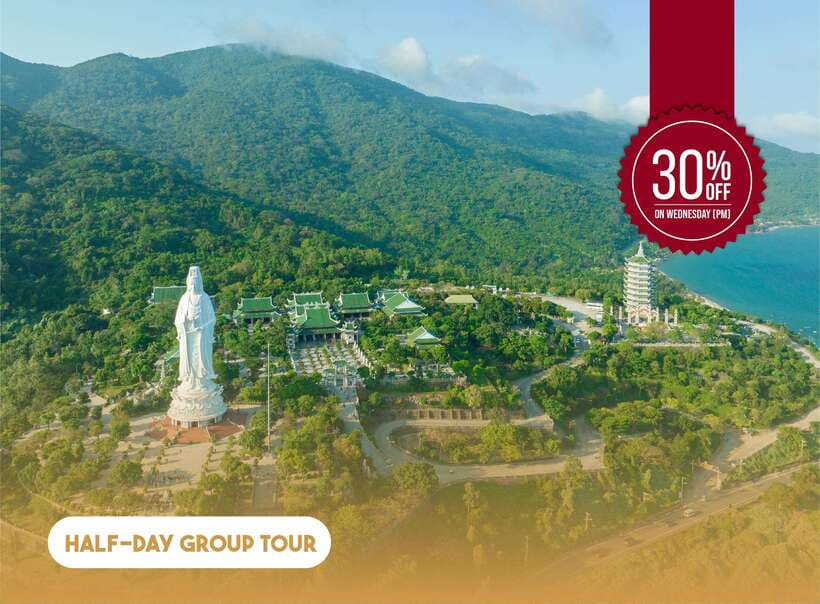
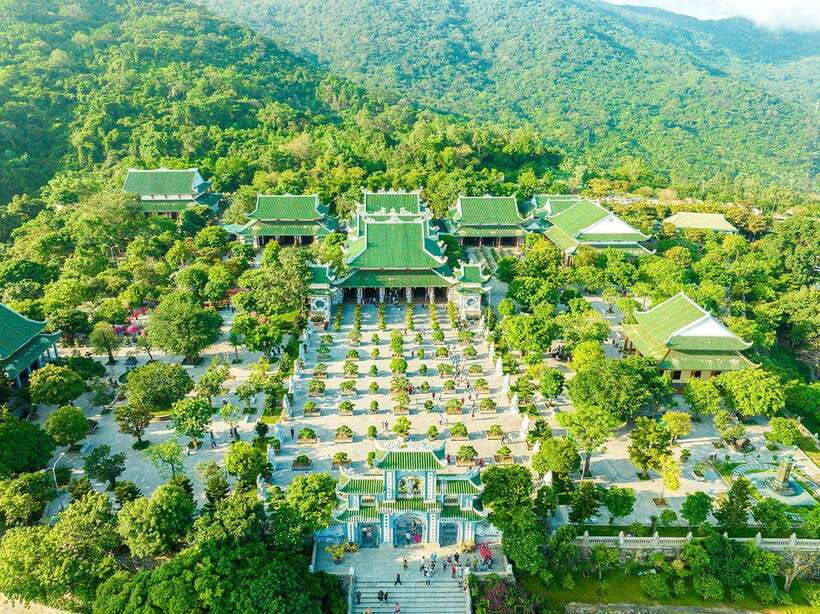
The route then heads north to Son Tra Peninsula, about 10 kilometers northeast of Da Nang. The peninsula rises to 693 meters above sea level, and the visit focuses on Son Tra Linh Ung Pagoda.
The great visual marker here is the Lady Buddha statue, one of the tallest in Vietnam. The statue faces the sea and overlooks Da Nang from the pagoda grounds. From this high point, you can look toward the city, the coast, the peninsula, and, on clear days, back toward the Marble Mountains.
This is a strong second half to the outing. Marble Mountains gives you close, enclosed spaces and a physical climb. Son Tra opens the view wide. The contrast keeps the trip from feeling like a repetition of temples and stone.
The scheduled stop lasts around 30 minutes, including walking and sightseeing. That is enough to see the statue and take photographs, but it can feel rushed if the weather is good and you want to sit, study the pagoda, or wait for a clearer view. One rating specifically described the peninsula and pagoda portion as too hurried and suggested six hours would have been better.
That is the central tradeoff of this experience. You can see both major sites in one morning or afternoon, but you will not have unlimited time at either one. If your priority is a broad introduction, the schedule works. If your priority is quiet reflection and extended photography, look for a longer private arrangement.
The Cham Museum question
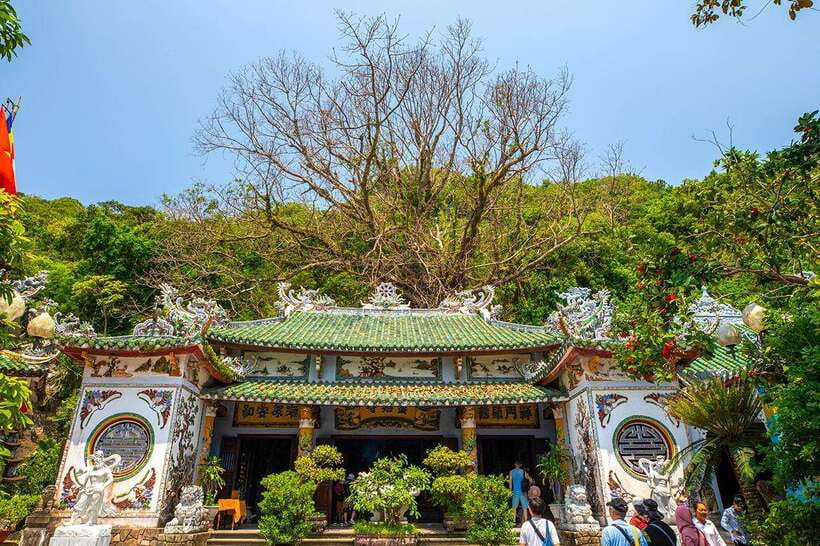
The Cham Museum is named among the attractions associated with the experience, and it contains the world’s largest collection of Cham sculptures. That would be a valuable addition for anyone interested in central Vietnam’s ancient art and religious culture.
However, the scheduled route supplied for this outing lists Marble Mountains, Non Nuoc Stone Carving Village, and Chua Linh Ung, then returns to Da Nang. It does not list the Cham Museum as a timed stop. I would ask the operator to confirm exactly what is included before paying, especially if the museum is one of your main reasons for booking.
Do not assume that an attraction shown in the general description is part of the four-hour route. The listed stops suggest that Marble Mountains and Son Tra are the core experience.
Guides, drivers, and the value of a small group
The guide can make or break a short cultural outing. You have limited time, so a good explanation at the right moment saves you from wandering past an important shrine or missing the meaning of a cave.
The English-speaking guides named in the feedback include Emily, Eric, Mark, Tin, Minh, and Huanh. Guide assignments can change, so you should not book on the assumption that one particular person will lead your trip. Still, the consistent strengths attached to the guiding service are useful: clear information, friendly communication, flexibility with families, patience, and help with photos.
Emily was praised for explaining local traditions during Lunar New Year and for taking many pictures. Mark was singled out for giving enough background to make the sites easier to understand independently. Minh was described as punctual, friendly, and informative. Tin received practical praise, along with the advice to wear comfortable shoes.
The driver also matters. You spend part of the four hours in the vehicle, and a smooth pickup keeps the half-day schedule on track. One group arriving by cruise ship received help arranging a taxi back to the ship, but you should still confirm your own port transfer needs in advance. The included pickup is for central Da Nang hotels, not every possible arrival point.
A private or small-group option is worth considering for families, couples, or anyone who wants to ask questions. A small group may also let the guide adjust the pace slightly. It cannot change the fixed travel time entirely, but it can make the outing feel less mechanical.
Who will enjoy this tour most
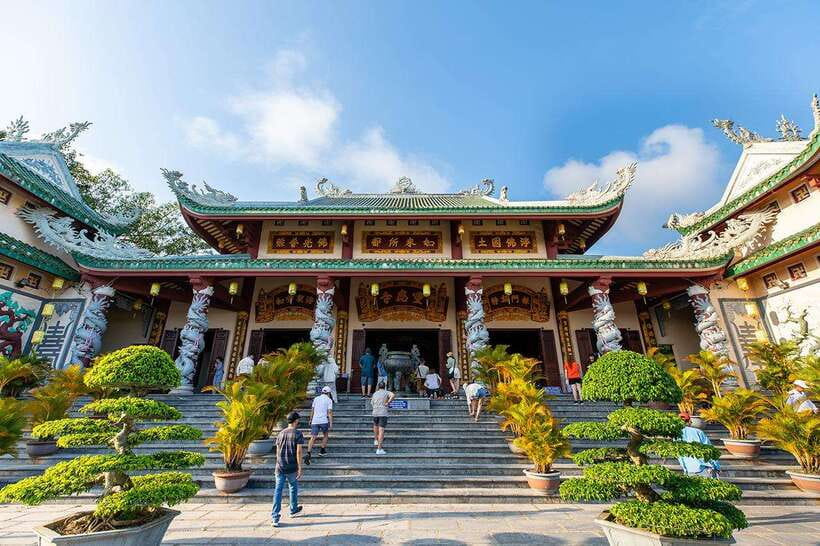
I would choose this experience if you want a clear introduction to two of Da Nang’s best-known sights and do not want to manage transport yourself. It works especially well for a first visit, a short city stay, or a free half day between larger plans.
It also suits people who enjoy cultural explanation rather than only scenic stops. The caves, Buddhist imagery, stone carving, and Cham-related context give the day more substance than a simple viewpoint drive.
Families can join, with children aged 0 to 5 free and children aged 6 to 10 receiving a 50 percent discount. Children still need to manage the stairs and walking at Marble Mountains. Only one child may accompany one adult at the child rate; a second child pays the adult price.
I would be cautious if you have limited mobility. One reviewer specifically noted that the mountain is not suitable for people with disabilities because of the many stairs. The elevator helps with one part of the visit, but it does not make the entire site step-free.
The outing can also suit cruise passengers, but only with careful timing. Pickup and return arrangements need to match your ship schedule, and the standard hotel pickup details do not automatically cover the port.
Timing, weather, and what to bring
You can select from available starting times, so an early departure may help you avoid some crowds and stronger heat. An early-morning group received especially good conditions and smoother visits at several places, though weather is never guaranteed.
Afternoon departures can work well if you prefer a slower start, but heat may make the Marble Mountains climb harder. The route includes outdoor viewpoints, stone steps, and walking around the pagoda, so light clothing and comfortable shoes are sensible.
Bring a camera, sun protection, and modest clothing suitable for Buddhist religious sites. A bottle of water is included, but extra drinks are a personal expense. If you have medical or dietary needs, provide specific information when booking. Special celebrations can also be noted ahead of time.
The company offers free cancellation up to 24 hours before departure and allows you to reserve now and pay later. Those terms are useful if your Da Nang plans may change.
Is $43 a fair price?
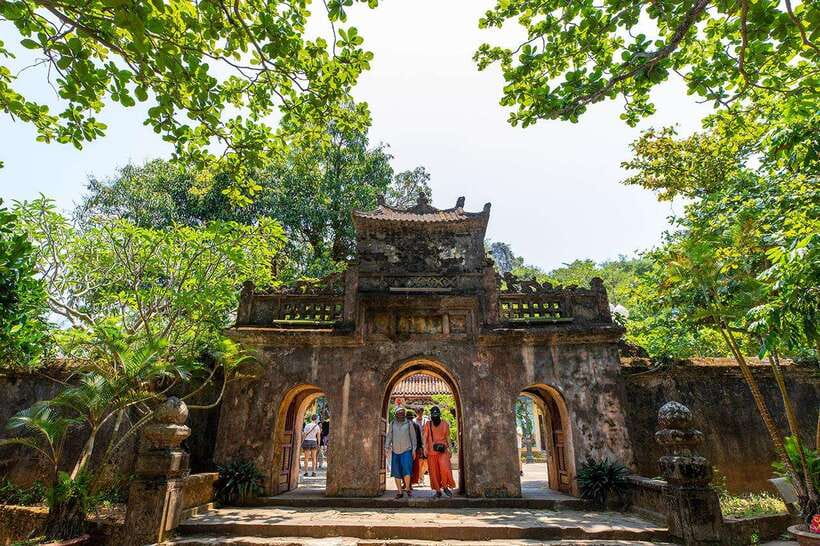
For $43, you are paying for convenience as much as admission. Entrance fees, transportation, guide service, hotel pickup and drop-off in central Da Nang, bottled water, the elevator, and travel insurance are included. That removes several small costs and the need to arrange separate rides between sites.
The value is strongest for a private or genuinely small group, particularly if your guide is as attentive as Emily, Mark, Minh, or the other praised guides have been. Help with photographs and flexible explanations can make a short trip feel personal.
The value is weaker if you want a leisurely six-hour exploration. The four-hour schedule gives you a useful overview, but the Son Tra viewpoint and pagoda may receive only a quick visit. Personal spending and drinks are extra, and the Cham Museum needs confirmation.
My advice is simple: book it for breadth and ease, not for a slow, meditative day.
Should you book Marble Mountains and Son Tra?
Book this tour if you want Da Nang’s caves, pagodas, stone craft, and Lady Buddha in one organized half day. The mix is strong, the route is sensible, and the guide adds cultural meaning that you could easily miss alone.
Choose a private option if you care about photography, have children, or want the best chance of adjusting the pace. Ask two questions before booking: Is the Cham Museum actually included, and can the Son Tra stop receive more time?
Skip it if stairs are a serious concern or if you dislike tight schedules. In that case, visit fewer sites at a slower pace. For most active visitors with only four free hours, though, this is a practical and worthwhile introduction to Da Nang.
FAQ
How long does the experience last?
The experience lasts four hours. Starting times depend on availability when you book.
Where does hotel pickup take place?
Pickup and drop-off are included at hotels in Da Nang City Center. Son Tra Peninsula is excluded from the pickup area.
Which language does the guide speak?
The live guide speaks English. Other languages may be available on request for an additional charge.
Is the experience private or shared?
Private and small-group options are available.
What is included in the price?
The price includes transportation, entrance fees, bottled drinking water, an English-speaking guide, one-way elevator access at Marble Mountains, travel insurance, and central Da Nang hotel pickup and drop-off.
Is the Cham Museum included?
The Cham Museum is named among the highlights, but it is not listed as a scheduled stop. Confirm its inclusion before booking.
Is the Marble Mountains climb difficult?
The visit includes many stone steps and walking through caves and pagoda areas. The one-way elevator reduces some effort, but the site is not suitable for people who cannot manage stairs.
Are children allowed to join?
Yes. Children aged 0 to 5 can join free of charge. Children aged 6 to 10 receive a 50 percent discount. One child may accompany one adult under the child policy, while a second child pays the adult price.
Can I cancel the booking?
You can cancel up to 24 hours in advance for a full refund. You can also reserve now and pay later.
Recently reviewed around Da Nang
- Private car from Danang to Hoi An★ 5.0 · 20 reviews
- Your Incredible Scooter Adventure On Hai Van Pass★ 5.0 · 67 reviews
- Surf Lessons★ 5.0 · 42 reviews
- Four-Hands Harmony (Perfect · Synchronized · Flow)★ 5.0 · 78 reviews
- Private Customize car rental 4 hours – 8 hours- 12 hours Da Nang★ 5.0 · 22 reviews
- Da Nang Street Food Private Tour With Local Students★ 5.0 · 24 reviews
- Dry Deep Bodywork (Dry | Thai–Shiatsu based)★ 5.0 · 45 reviews
- Sport Revival (Sports | Muscle Recovery)★ 5.0 · 46 reviews
Marble Mountains Tours, compared.
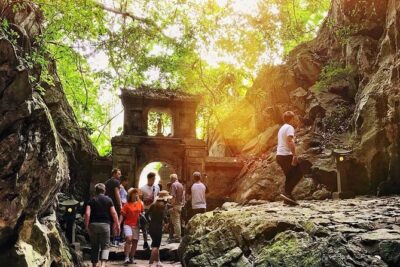
Morning Small group to Marble Mountains – Am Phu Cave – Monkey Mountain
Read our review →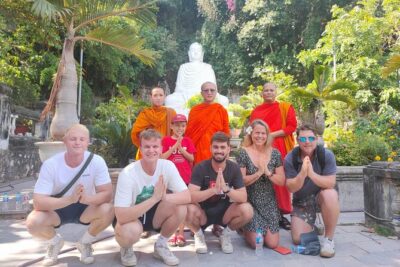
Marble Mountains – Am Phu Cave – Monkey Mountain Sunset tour
Read our review →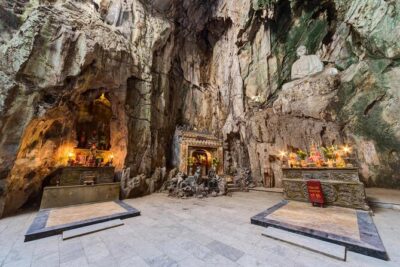
Marble Mountains – Hoi An Ancient Town Sunset Daily Ingroup Tour
Read our review →
Lady Buddha, Marble Mountains, Coconut Jungle & Hoian City Tour
Read our review →
Linh Ung Pagoda – Marble Mountains – Hoi An Ancient Town Daily Ingroup Tour
Read our review →
My Son Sanctuary & Marble Mountains Guided Tour
Read our review →
Guided Tour to Marble Mountains & Hoi An Walking Tour , Night Market, Boat Ride
Read our review →
Monkey mountain-Huge Lady Buddha-Marble mountains & Am Phu caves
Read our review →Browse the lists this tour appears in